

Both carpet beetles and clothes moths damage wool, silk, fur, feathers, and other animal-fiber textiles. The damage looks similar — holes in sweaters, patches missing from rugs, bare spots on upholstery. Treatment is substantially different for the two pests, and using the wrong approach extends the damage while the actual culprit keeps eating.
Five minutes of identification saves weeks of frustration. Here’s how to tell them apart and what to do about each.
At Simple Pest, we handle both across San Diego and Sacramento. Here’s the breakdown.
Quick Identification
Carpet Beetles

- Adult: small round beetle, 1/16 to 1/8 inch long.
- Color varies by species — black, mottled, or patterned with white, yellow, and brown scales.
- Larvae: hairy, segmented “bristly carpet sharks” up to 1/4 inch long.
- Larvae are the damaging stage.
- Adult beetles feed on pollen outside and don’t damage fabrics.
Clothes Moths

- Adult: small buff or golden moth, about 1/2 inch wingspan.
- Weak fliers; tend to flutter rather than fly directly.
- Larvae: small cream-colored caterpillars up to 1/2 inch long.
- Larvae spin silken tubes or cases on fabrics.
- Adult moths don’t feed but mate and lay eggs on susceptible fabrics.
Key Distinguishing Signs
- Carpet beetle damage: irregular holes and thinning without webbing.
- Clothes moth damage: small holes plus silken tubes, cases, or webbing on fabric.
- Carpet beetle larvae visible on fabric: yes, often.
- Clothes moth larvae visible: only within protective silken cases or tubes.
If you see webbing on the fabric, it’s clothes moths. If damage is happening but no webbing is present, it’s more likely carpet beetles.
Carpet Beetle Biology
Life Cycle

Eggs laid on susceptible materials hatch in 1 to 3 weeks. Larvae develop through multiple molts over several months to a year, depending on conditions and food availability. Adults emerge, fly outside to feed on pollen, mate, and return indoors to lay eggs.
What Larvae Eat
- Wool carpets and rugs.
- Wool clothing (sweaters, blankets, coats).
- Silk.
- Fur.
- Feathers (pillow fill, down comforters).
- Leather.
- Felt.
- Taxidermy mounts.
- Natural bristle brushes.
- Dog food and pet hair.
- Dead insects (can sustain populations in wall voids).
- Lint and dust containing skin and hair particles.
Synthetic materials (polyester, nylon, acrylic) are not consumed, though larvae may crawl across or damage them incidentally.
Signs of Activity
- Shed larval skins (look like empty hairy shells, sometimes brownish).
- Small holes or thinning in fabrics.
- Larvae visible on or near susceptible items.
- Adult beetles seen near windows, on lamps, or crawling on walls.
- Damage concentrated in dark, undisturbed locations.
Where They Establish
- Closets with stored wool items.
- Under furniture where rugs lie.
- In wall-to-wall carpet, especially along walls and under furniture.
- In stored bedding and linens.
- In wool area rugs.
- In taxidermy, feathered decorations, or natural history collections.
- Under baseboards where lint accumulates.
- In air ducts (feeding on accumulated lint and skin particles).
Clothes Moth Biology
Life Cycle
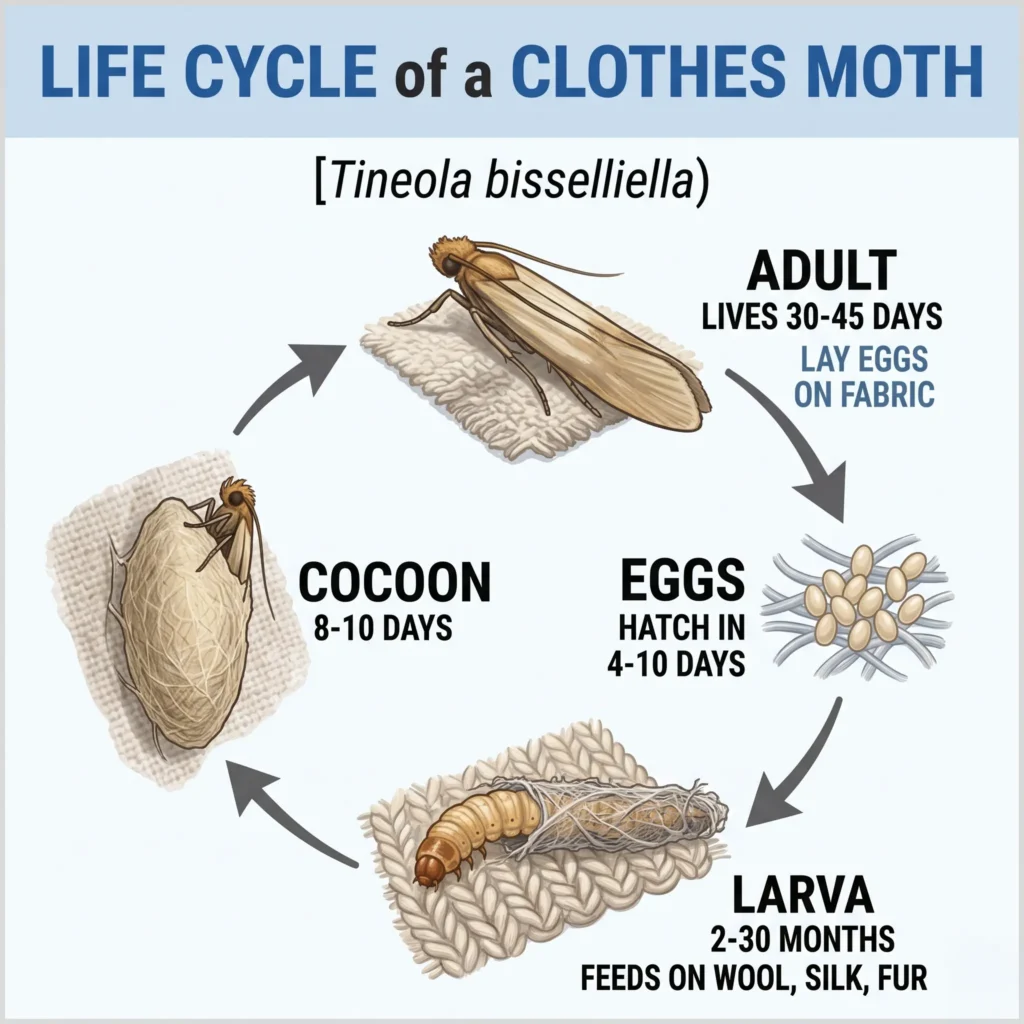
Eggs laid on fabric hatch in 4 to 10 days. Larvae develop through multiple instars while feeding on keratin (animal fibers). Larval stage lasts 35 days to several years depending on conditions and food. Pupation occurs within a silken case. Adult moths emerge, mate, and lay eggs.
Species
- Webbing clothes moth (Tineola bisselliella): larvae build webbing on fabric as they feed.
- Casemaking clothes moth (Tinea pellionella): larvae carry a silken case that they live inside.
Both damage similar materials.
What Larvae Eat
- Wool, silk, cashmere, angora, and other animal fibers.
- Fur.
- Feathers.
- Leather.
- Felt.
Clothes moths are more exclusively focused on animal-fiber textiles than carpet beetles. They don’t commonly consume dead insects, dog food, or the broader diet of carpet beetles.
Signs of Activity
- Silken webbing on fabric surface.
- Silken cases attached to fabric or stored items.
- Small larvae or pupae in cases.
- Small holes in fabrics.
- Moths flying in the room.
- Damage concentrated on undisturbed stored items.
Where They Establish
- Undisturbed stored clothing (seldom-worn wool coats, sweaters).
- Under-bed storage.
- Attic storage boxes.
- Cedar chests that aren’t sealed well.
- Wool carpets in low-traffic areas.
- Wool upholstery, especially on seldom-used furniture.
- Natural fiber accessories (wool scarves, fur trim).
Similarities and Differences in Damage
Appearance
- Carpet beetle damage: often appears as irregular grazing or thinning, sometimes with bare spots where larvae have consumed fibers. Edges of holes may appear frayed.
- Clothes moth damage: often small, round holes with webbing or silken tube residue near the damage. Larvae tend to create more focused damage than carpet beetles.
Pattern
- Carpet beetles may spread damage across large areas as larvae move and feed.
- Clothes moths often concentrate damage in specific folds or areas where larvae have been protected.
Location
- Both prefer dark, undisturbed locations.
- Carpet beetles more commonly affect wall-to-wall carpet, rugs, and broader fabric areas.
- Clothes moths more commonly affect stored clothing and items in closets.
Treatment: Carpet Beetles
Source Elimination
- Identify and remove infested items.
- Discard severely damaged items.
- Wash or dry clean washable items.
- Deep clean the area.
Vacuuming
Intensive vacuuming is a core part of carpet beetle control:
- Vacuum thoroughly, including edges, corners, and under furniture.
- Use a beater bar or brush attachment for carpet.
- Empty the vacuum canister outdoors immediately.
- Consider bagless vacuums that can be emptied directly into sealed trash.
Larvae, eggs, and shed skins are removed physically. Repeat weekly during active infestation.
Heat Treatment
- Washable items: wash in hot water (120°F+) for 30 minutes.
- Non-washable: dry clean, which kills all life stages.
- Items that can tolerate heat: place in a hot attic or vehicle interior (140°F+) for several hours.
Freezing
- Non-washable items: freeze at 0°F for 4 days to kill all life stages.
- Items must be in sealed plastic bags to prevent recontamination.
Professional Treatment
- Residual insecticide applied to edges of carpeting, under furniture, and along baseboards.
- Dust products (silica-based, boric acid) in wall voids and under carpet edges.
- Professional treatment typically coordinated with intensive cleaning.
Outdoor Source Management
Adult beetles enter homes from outside. Some homes have persistent pressure from bird nests, wasp nests (sources of feathers and dead insects), or stored organic materials. Addressing these sources reduces future entry.
Treatment: Clothes Moths
Source Elimination
- Identify and remove infested items.
- Severely damaged items may need to be discarded.
- Repairable items should be treated before storing.
Heat or Freeze Treatment
- Same principles as carpet beetles.
- Washable items: hot water wash or dryer on high heat for 30 minutes.
- Non-washable items: freeze for 4 days or dry clean.
Storage Changes
- Store cleaned wool items in sealed containers (plastic bins, garment bags).
- Cedar chests are helpful but not sufficient alone if not truly sealed.
- Moth balls or cedar blocks are supplementary, not primary, control.
- Keep items in frequent rotation — clothes moths establish in undisturbed storage.
Pheromone Traps
- Clothes moth pheromone traps attract and catch adult males.
- Useful for monitoring and light population reduction.
- Not sufficient as sole treatment for established infestations.
Professional Treatment
- Residual insecticide in affected closets and storage areas.
- Coordination with cleaning and storage improvements.
Ongoing Management
- Regular inspection of stored items.
- Replace storage organization periodically.
- Avoid long-term storage of untreated wool items.
Common Mistakes
Assuming One Pest Without Confirming
Using clothes moth pheromone traps when the actual problem is carpet beetles produces no reduction. Using carpet beetle treatment approaches when the actual problem is clothes moths misses the stored clothing source.
Partial Cleanup
Missing one infested item (a single wool blanket in under-bed storage, a forgotten wool rug in a closet) re-seeds the population within weeks.
Relying on Moth Balls Alone
Moth balls (paradichlorobenzene or naphthalene) repel but don’t kill. Effective only in truly sealed storage, and the chemical residue raises health concerns in living spaces.
Ignoring Wall Voids
Heavy infestations often have populations in wall voids feeding on accumulated debris (dead insects, lint, hair). Surface treatment without addressing wall voids extends the problem.
Replacing Without Investigating
Replacing a damaged wool rug without investigating the source means the new rug gets damaged too.
Prevention
Storage Practices
- Clean items before storing.
- Use sealed containers for wool and natural fiber items.
- Don’t store damp items.
- Rotate and inspect stored items annually.
- Vacuum closets before returning items after cleaning.
Ongoing Cleaning
- Vacuum carpets weekly, especially under furniture and along edges.
- Move furniture periodically for full cleaning underneath.
- Dust and vacuum closet floors.
- Clean baseboards and corners.
Bird and Animal Nest Management
- Remove abandoned bird nests from eaves and outbuildings.
- Address wasp nests.
- Eliminate sources of dead insects that support carpet beetles in wall voids.
Monitoring
- Pheromone traps for clothes moths in closets and storage areas.
- Regular visual inspection of susceptible items.
- Pay attention to small damage before it becomes extensive.
San Diego vs. Sacramento
In San Diego, carpet beetles and clothes moths are active year-round. Coastal humidity supports consistent populations. Urban and suburban properties see both species with moderate pressure.
In Sacramento, both pests are active with slight seasonal peaks in spring and summer. Heated homes support populations through winter. Storage practices in older homes with seasonal clothing rotation create conditions favorable to clothes moths particularly.
When Professional Work Is Worth It
For isolated clothes moth or carpet beetle issues with clear source identification, homeowner cleanup and storage changes resolve the problem. Professional work earns its keep when:
- Multiple rooms or extensive damage suggests a widespread issue.
- Source identification is unclear despite investigation.
- Historic or valuable textiles require specialized handling.
- Recurrence after DIY treatment.
- Household with significant wool or natural fiber items requiring ongoing management.
The Tri-Zone™ Defense System addresses exterior pressure that can contribute to carpet beetle entry, particularly around bird nests and nest materials in eaves. Simple Pest handles carpet beetle and clothes moth work across San Diego and Sacramento with species-specific treatment rather than one-size-fits-all broadcast approaches.


