
Bed bug treatment isn’t over when the technician leaves. The weeks after treatment determine whether the problem is actually resolved or whether the population is quietly rebuilding. Without a monitoring protocol, homeowners often assume success too early — and then deal with resurgence that gets blamed on treatment failure when it’s actually detection failure.
The monitoring work is simple but requires consistency over 6 to 8 weeks. Done right, it catches any surviving population before it reestablishes. Skipped or done casually, it leaves the door open for the problem to return.
At Simple Pest we handle bed bug work across San Diego and Sacramento, and the post-treatment phase is where we see the success-vs-failure split most clearly. Here’s what the protocol actually looks like.
Why Post-Treatment Monitoring Matters
Bed Bug Life Cycle

Bed bugs have multiple life stages (egg, nymph, adult). Treatment targeting adults may not kill eggs that haven’t hatched yet. Eggs hatch in 6-10 days, and new nymphs may appear days or weeks after treatment.
Treatment Coverage Gaps
Even thorough treatment has potential coverage gaps:
- Deep wall void populations.
- Bed bugs inside electronics.
- Bed bugs in furniture seams missed during treatment.
- Adjacent rooms with spillover populations.
Detection Difficulty
Small surviving populations are nearly invisible. A few bed bugs in a wall void produce no visible evidence for weeks. By the time visible signs return, the population has grown substantially.
Treatment Protocols Include Follow-Up
Professional treatment protocols typically include:
- Initial treatment.
- Follow-up treatment 2-3 weeks later to address hatched eggs.
- Possible third treatment if monitoring suggests residual activity.
Homeowner monitoring between and after professional visits is what makes this work.
The Monitoring Protocol
Duration
Minimum 6-8 weeks of active monitoring. Extend if any evidence appears during the monitoring window.
Detection Tools
Interceptor Cups
Plastic cups placed under each leg of beds, couches, and other furniture. Bed bugs attempting to climb up or down get trapped in the smooth interior of the cup:
- Climb-up pattern: bed bugs approaching from floor get caught trying to reach the bed.
- Climb-down pattern: bed bugs leaving the bed to feed elsewhere get caught.
Check interceptors weekly. Any catch indicates surviving population.
Sticky Traps
- Placed along bed frames.
- Under the bed.
- In drawer bottoms.
- In closets near the bed.
- Along baseboards.
Less specific than interceptors but catches various life stages.
Visual Inspection
Weekly thorough visual inspection of:
- Mattress seams and piping.
- Box spring (all surfaces).
- Headboard joints.
- Bed frame joints.
- Nightstand drawer cavities.
- Behind nightstands.
- Wall-floor junctions near the bed.
- Outlet covers near the bed (electrical boxes can harbor bed bugs).
- Picture frames hung near the bed.
- Window trim.
Look for:
- Live or dead bed bugs.
- Shed skins (translucent).
- Small dark spots (fecal marks).
- Rust-colored smears (blood spots).
- Eggs (1mm white ovals, often in clusters).
Skin Inspection
Pay attention to:
- New bite clusters on exposed skin after sleeping.
- Unexplained welts appearing overnight.
- Pattern of bites on areas that would be exposed during sleep.
Not all people react to bed bug bites visibly. Absence of bites doesn’t prove absence of bed bugs, but presence of bites after treatment is a warning signal.
Weekly Monitoring Routine
Sunday Inspection (or chosen weekly day)
1. Check all interceptor cups. Log any catches.
2. Check sticky traps. Log any catches.
3. Conduct thorough visual inspection of bed, box spring, headboard, and nearby furniture.
4. Check common travel paths (baseboards, outlet covers).
5. Document findings with notes and photos.
Daily Awareness
- Check skin for new bites.
- Pay attention to any insect sightings in the bedroom.
- Note any changes (new spots on sheets, discomfort while sleeping).
Log Keeping
- Date of each inspection.
- Findings (live bugs, evidence, interceptor catches, skin findings).
- Actions taken.
- Photos of evidence for reference.
Log keeping is particularly important because recall becomes unreliable over 6-8 weeks.
Finding Something During Monitoring
Minor Evidence (Single Bug, Single Catch)
- Photograph and save the evidence.
- Contact pest control provider for consultation.
- Do not treat DIY.
- Continue monitoring with increased frequency.
- Likely indicates small surviving population or spillover from adjacent area.
Moderate Evidence (Multiple Bugs, Consistent Catches)
- Contact pest control provider immediately.
- Provider will schedule follow-up treatment.
- Document everything before treatment.
- Continue monitoring after follow-up treatment.
Bite Activity Without Visible Bugs
- Save any physical evidence that does appear.
- Continue and intensify monitoring.
- Consider canine bed bug detection (available in some markets) for confirmation.
- Coordinate with pest control provider on assessment.
Encasements and Long-Term Protection

Mattress and Box Spring Encasements
Installed at treatment time and kept in place for 18+ months:
- Traps any bed bugs inside mattress or box spring.
- Prevents new bed bugs from establishing inside.
- Makes monitoring easier (smooth exterior, no seams).
- Quality encasements are bed-bug proof.
Keep encasements intact. Rips or holes compromise protection.
Interceptor Cups Long-Term
- Leave interceptor cups in place under bed legs indefinitely.
- Check monthly after initial 6-8 week intensive monitoring.
- Provides ongoing early detection if bed bugs return.
Laundry and Clothing Protocol
During Treatment Period
- All washable clothing and bedding laundered on hot water, dried on high heat.
- Non-washable items treated per provider recommendations (heat, freezing, dry cleaning).
- Clothing kept in sealed plastic bags until laundered.
After Treatment
- Continue normal laundry practices.
- Be cautious about bringing in items from other locations (hotel travel, friends’ homes) during the monitoring period.
Housekeeping During Monitoring
Vacuuming
- Regular vacuuming of bedroom and surrounding areas.
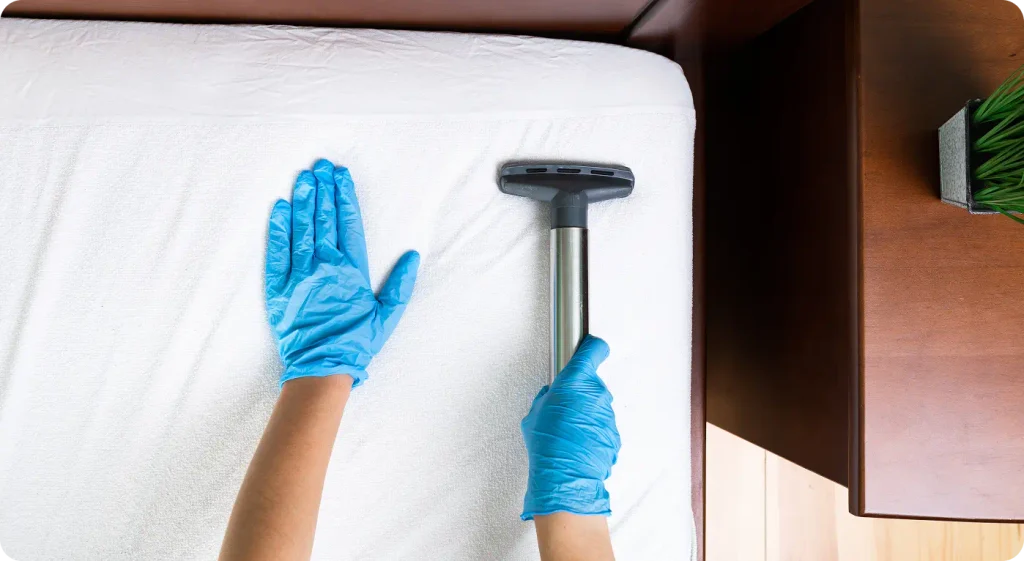
- Careful vacuuming of bed, box spring (top surface), headboard, and nearby furniture.
- Empty vacuum contents into sealed bag and dispose outside immediately.
Avoid Moving Items
- Don’t move furniture during the monitoring period (disturbs treatment residual).
- Don’t reorganize closets.
- Don’t bring in new furniture.
- Keep the treated space stable.
Minimize Clutter
- Reduce items on the floor and in clutter zones.
- Makes inspection easier.
- Reduces bed bug harborage potential.
Common Post-Treatment Mistakes
Declaring Victory Too Early
Assuming success after 2-3 weeks without evidence. Eggs may still hatch into the 4-6 week window. Monitor the full period.
Skipping Interceptor Cups
Relying on visual inspection alone misses small populations. Interceptors are passive and catch bed bugs that visual inspection would miss.
Applying DIY Treatments
Spraying over-the-counter products after professional treatment disrupts the professional treatment residual and can scatter remaining populations.
Moving Back Into the Treated Room Too Quickly
If the provider recommended keeping items out or reduced use of the room during initial treatment, follow recommendations.
Not Reporting Evidence Promptly
Waiting to see if a single sighting was “just one” before contacting the provider delays follow-up treatment.
Bringing in Used Furniture During Monitoring
Introducing any furniture from unknown sources during the monitoring period risks re-introducing bed bugs, complicating the monitoring picture.
Follow-Up Treatment Schedule
Standard Professional Protocol
- Initial treatment.
- First follow-up: 10-14 days later (targets newly hatched nymphs).
- Second follow-up: 4-6 weeks after initial (catches any remaining population).
- Additional visits as monitoring indicates.
Homeowner Participation
- Maintain access for scheduled visits.
- Don’t interrupt the sequence.
- Report between-visit findings to inform next visit’s focus.
Heat Treatment Protocols
Heat treatment (whole-room or whole-home heating to lethal temperatures) can kill bed bugs at all life stages in a single treatment. Follow-up monitoring still applies but typically with less need for repeat chemical treatment.
Chemical Treatment Protocols
Chemical-only treatments typically require the multi-visit approach to address hatching eggs.
What “Success” Looks Like
After 6-8 weeks of monitoring with:
- No catches in interceptors.
- No evidence in visual inspections.
- No new bites.
- No unusual observations.
You can reasonably conclude the treatment was successful. Continue passive monitoring (monthly interceptor checks) for an additional several months.
Declaring Victory Requires Patience
Some homeowners request early declaration of success for peace of mind. Appropriate timing:
- 6 weeks of clean monitoring is the minimum.
- 8-12 weeks provides higher confidence.
- 6 months of passive monitoring without evidence is strong confirmation.
Managing the Emotional Component
Sleep Disruption
Many bed bug patients have difficulty sleeping in the treated room for weeks or months post-treatment. Common experiences:
- Imagined sensations of crawling.
- Waking to check for bed bugs.
- Anxiety about recurrence.
This is normal. Strategies:
- Trust the monitoring protocol — you will catch evidence if there’s anything to catch.
- Maintain interceptors and encasements as ongoing reassurance.
- Give yourself time to adjust.
- Counseling can help if sleep disruption persists significantly.
Financial Recovery
Treatment costs are substantial. Recovery strategies:
- Don’t replace furniture unnecessarily — bed bugs don’t typically require furniture replacement.
- Use encasements rather than buying new mattresses.
- Consider the treatment cost a one-time investment if monitoring confirms success.
If Recurrence Occurs
Don’t Panic
Recurrence after initial successful treatment can happen due to:
- Reintroduction (travel, visitors, used items).
- Unresolved population that escaped initial treatment.
- Shared wall situations (apartments).
Document Carefully
- Photos and notes of evidence.
- Timeline of what’s changed since treatment.
- Any recent introductions to the home.
Contact Original Provider
- Most providers have warranty or guarantee provisions.
- Provider will assess whether it’s original population or reintroduction.
- Follow-up treatment appropriate to the situation.
San Diego vs. Sacramento
In San Diego, bed bug treatment success rates are substantial across professional providers. Tourism and high-density housing create ongoing pressure, so post-treatment monitoring for potential reintroduction is particularly important.
In Sacramento, bed bug treatment is widely available. Downtown hotels and multi-family housing drive ongoing cases. Post-treatment monitoring protocol matters in all settings but especially in apartments where neighboring unit pressure may persist.
When Professional Work Is Worth It
For bed bug treatment, professional work is essentially required. DIY treatment almost always fails and extends the timeline. Professional monitoring consultation during the post-treatment period is part of the service relationship.
The Tri-Zone™ Defense System focuses on exterior pest pressure at the fence line, yard, and foundation — bed bugs are an indoor issue and not part of the exterior service. Simple Pest handles bed bug treatment across San Diego and Sacramento with emphasis on treatment protocols that include follow-up visits and homeowner monitoring coordination through the critical post-treatment weeks.


