

Tick protection for kids is different from tick protection for adults. Kids explore in dense vegetation, sit on the ground, play in leaf piles, and often can’t tell you where they’ve been. They also can’t inspect themselves reliably and may not notice a tick or a bite until there’s a problem. The responsibility for protection falls to parents, and the work involves gear, habits, and post-activity checks.
Done consistently, tick protection for active kids is straightforward and effective. Done sporadically, it falls short in exactly the high-exposure moments where it matters.
At Simple Pest we handle yard tick work and share prevention guidance across San Diego and Sacramento — especially in the Sacramento foothills where tick exposure is elevated. Here’s the protocol that actually works for families with kids.
Where Kids Encounter Ticks in California

Sacramento Foothills and Oak Woodlands
The most significant California tick exposure for kids:
- Hiking trails in El Dorado, Placer, and Nevada counties.
- Oak woodland preserves and parks.
- American River Parkway and other riparian areas.
- Sierra foothill recreation.
- Property adjacent to open space.
Ixodes pacificus (western blacklegged tick, Lyme vector) is established in these areas.
San Diego Backcountry
Coastal sage scrub, oak woodlands, and canyon habitats support tick populations. Pacific Coast tick fever is more common than Lyme in Southern California, with Lyme present at lower levels.
Urban Settings
Urban tick exposure is minimal for most kids. Suburban yards with tick-relevant habitat (open space adjacent, dense ground cover, deer presence) can have localized exposure.
School and Camp Settings
Outdoor education programs, day camps, and field trips to natural areas are common tick exposure situations for otherwise low-exposure urban and suburban kids.
Clothing Strategy
Long Sleeves and Long Pants
The single most effective physical protection:
- Long pants tucked into socks.
- Long sleeves when moving through vegetation.
- Light colors for better visibility of crawling ticks.
Kids often resist long clothing in warm weather. The tradeoff is real — cover protects, but overheating and resistance reduce compliance. Lightweight breathable fabrics help.
Permethrin-Treated Clothing
Permethrin is a clothing treatment (not for skin) that kills ticks on contact. Durable clothing treatment lasts through multiple washes. Available:
- Pre-treated outdoor clothing (commercially treated, 70+ washes).
- Home-treated clothing using spray kits (6 washes).
- Professional treatment services.
For kids who spend significant time in tick habitat, a set of permethrin-treated clothes for hiking and outdoor adventures is one of the highest-impact interventions.
Closed-Toe Shoes
- Socks high enough to tuck pants into.
- Closed-toe shoes (no sandals in tick habitat).
- Boots for rougher trail work.
Hats
Limited tick protection benefit, but hats reduce ticks dropping from overhead vegetation in brushy conditions.
Repellent Products

DEET
EPA-registered and effective:
- 10-30% DEET for children per AAP guidance.
- Not for infants under 2 months.
- Avoid hands (which go in eyes and mouth).
- Wash off when coming indoors.
Picaridin
Effective and less irritating than DEET:
- 20% picaridin is effective and appropriate for kids.
- Less odor and less damage to plastics and synthetic fabrics.
Oil of Lemon Eucalyptus (OLE) / PMD
- EPA-registered.
- Not recommended for children under 3 per label.
- Shorter duration than DEET or picaridin.
What to Avoid
- Combined sunscreen + repellent products. Sunscreen needs more frequent reapplication than repellent.
- Essential oil “natural” repellents as sole protection. Effects are short and variable.
- Repellent use on infants (alternative strategies — clothing, mosquito nets on strollers).
During Outdoor Activity
Stay on Trails
- Cleared trails have less direct vegetation contact than bushwhacking.
- Avoid sitting on logs or in leaf piles.
- Teach kids to walk on the trail, not along the edge in grass.
Use Picnic Blankets
- Don’t sit directly on grass or leaf litter in tick habitat.
- Blankets or ground cloths provide a check zone.
Limit Contact with Dense Vegetation
- Avoid pushing through tall grass or brush.
- Keep pets on trails rather than in vegetation.
Check Periodically
- Glance at kids’ clothing and exposed skin during outdoor activity.
- Check for crawling ticks before they attach.
The Post-Activity Tick Check
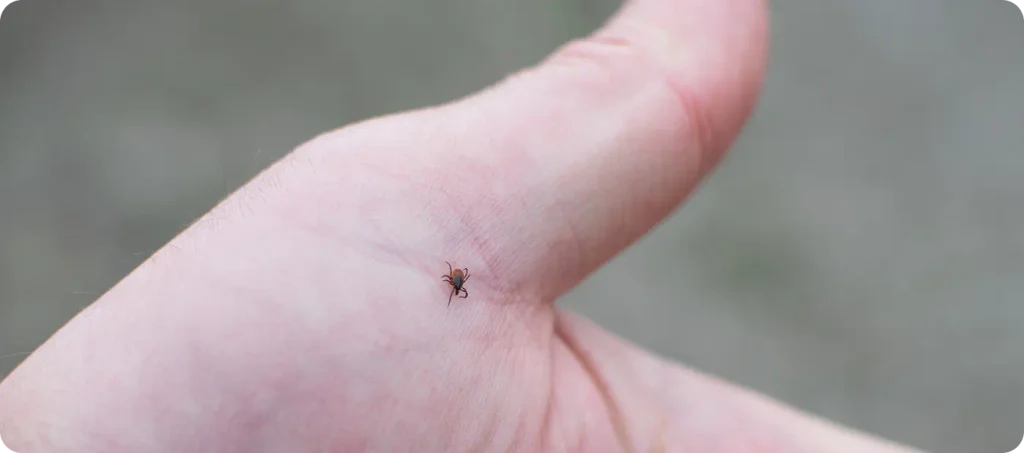
This is where most tick prevention succeeds or fails. Ticks often crawl on skin for hours before attaching, so catching them before attachment prevents bites entirely.
Full-Body Check
Within a few hours of coming indoors from tick habitat, check:
- Scalp (ticks favor the hairline).
- Behind and inside ears.
- Back of neck.
- Underarms.
- Waistband area.
- Groin area.
- Behind knees.
- Between toes.
Ticks tend to attach in warm, moist, covered areas. These check zones catch most attached ticks.
Visual and Tactile
- Look for ticks visually.
- Run fingers through hair and over skin — small ticks may be felt as bumps before they’re seen.
- Use a mirror or partner to check areas you can’t see.
For Young Children
- Parents do the check.
- Make it routine and non-traumatic.
- “Tick inspection” becomes part of the after-hike routine.
Shower Within Hours
Showering after outdoor activity:
- Washes off unattached crawling ticks.
- Provides opportunity for thorough body check.
- Ideally within 2 hours of return from tick habitat.
Laundry Protocol
Clothes Worn in Tick Habitat
- Run through the dryer on high heat for at least 10 minutes before washing.
- High heat kills ticks; wet washing alone doesn’t reliably kill them.
- Ticks survive regular washing but not high heat.
Backpacks and Gear
- Inspect before storing.
- Leave outdoors or in garage overnight if possible.
- Check pockets and seams.
If You Find an Attached Tick
- Use fine-tipped tweezers.
- Grip close to the skin.
- Pull straight up with steady pressure.
- Don’t twist, squeeze, burn, or suffocate. This can break the mouthparts off in your skin.
- Clean the bite area after removal.
- Save the tick in a sealed container with date and location noted.
What to Watch For
Over the 30 days after a tick bite:
- Expanding red rash at the bite site (erythema migrans, Lyme disease indicator).
- Flu-like symptoms (fever, headache, muscle aches, fatigue).
- Unusual rash anywhere on the body.
- Joint pain or swelling.
- Facial drooping (Bell’s palsy).
Any of these warrant a pediatrician call with disclosure of the tick bite.
Prophylactic Antibiotics
For specific high-risk situations (attached blacklegged tick, prolonged attachment 36+ hours, ability to start treatment within 72 hours), physicians may prescribe single-dose doxycycline as prevention. This is a physician decision. For kids, age and weight considerations apply.
Yard Tick Reduction for Families
For properties in tick habitat:
Habitat Modification
- Maintain 3-foot mulch or gravel barrier between lawn and brushy areas.
- Keep grass mowed short.
- Clear leaf litter.
- Reduce brush piles.
- Trim brush away from play areas.
Limit Play Area Exposure
- Locate play structures in open lawn, away from tick habitat edges.
- Avoid dense ground cover in play zones.
- Consider wood chip or gravel surfaces rather than grass near habitat edges.
Pet Tick Control
- Use veterinarian-prescribed tick prevention for dogs and cats.
- Check pets after outdoor activity.
- Dogs in particular can bring ticks into the house and yard.
Professional Yard Treatment
For properties in significant tick habitat, professional yard tick treatment reduces tick load during active season. Most appropriate for foothill properties, open-space adjacent properties, and properties with pets and frequent outdoor use.
School and Camp Communication
Day Camps and Outdoor Programs
- Ask about tick prevention practices.
- Send kids in appropriate clothing.
- Apply repellent before drop-off.
- Do check protocols at home after pickup.
Schools with Outdoor Education
- Review tick prevention information if provided.
- Coordinate with teachers on post-activity expectations.
- Don’t assume schools will do thorough tick checks.
Common Child Exposure Situations
Summer Camp in Tick Habitat
Multi-day camps in foothill or wooded areas warrant:
- Permethrin-treated camp clothing.
- Parent instruction to camp staff on check protocols.
- Post-camp full-body check at home before laundry.
- Monitoring for symptoms in the weeks following.
Grandparents’ Rural Property
Visits to rural or semi-rural family property with tick habitat:
- Same clothing and repellent protocol as hikes.
- Post-visit checks.
- Awareness of tick exposure patterns specific to the property.
Unstructured Outdoor Play
Kids who play outdoors in backyards or neighborhoods with marginal tick exposure:
- Repellent for extended play in vegetation.
- Routine post-play checks during tick season.
- Yard habitat reduction if home property has any tick pressure.
San Diego vs. Sacramento
In San Diego, tick exposure for most kids is limited to backcountry hikes and some neighborhoods adjacent to canyon or open space. Pacific Coast tick fever is the more common concern; Lyme disease is present at lower levels. Awareness rather than intensive daily precautions fits most urban and suburban families.
In Sacramento, foothill counties have meaningful tick exposure. Kids with frequent outdoor activity in El Dorado, Placer, Nevada, Amador, and similar counties warrant sustained attention to clothing, repellent, yard modification, and post-activity checks. The established Ixodes pacificus population in these areas makes Lyme disease prevention a genuine concern.
When Professional Work Is Worth It
For tick protection practices, parent-led protocols handle the prevention. Professional work earns its keep when:
- Property has ongoing tick pressure in yard areas where children play.
- Family spends significant time in tick habitat (foothill property, frequent wilderness access).
- Pet and human tick pressure combine to create ongoing exposure.
- Local tick population is particularly active and yard treatment timing benefits from professional application.
The Tri-Zone™ Defense System addresses tick pressure at the fence line, yard, and foundation — particularly the transition zone between maintained lawn and natural habitat. Simple Pest handles tick work across San Diego and Sacramento for households in tick-relevant habitat, with emphasis on yard-level pressure reduction as a foundation for the personal protection protocols above.