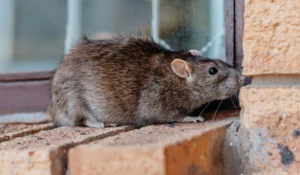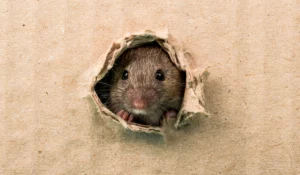

The attic is where most rodent infestations become serious. Rodents that enter through rooflines, vent gaps, or utility penetrations establish in attic spaces, nest in insulation, and reproduce through winter. By the time homeowners notice activity — scratching sounds at night, droppings in stored items, strange odors — the population has typically been established for weeks or months.
The work that prevents this isn’t complicated, but it’s specific. Generic “seal the house” advice misses the attic-specific entry points that matter most. Here’s what to look for and how to seal it.
At Simple Pest Management we handle attic rodent work across San Diego and Sacramento. The exclusion work on the attic side is some of the highest-leverage pest prevention available.
Why the Attic Is the Critical Zone
Preferred Nesting Habitat
Attics offer:
- Warmth (heat rises from conditioned spaces below).
- Dryness.
- Quiet.
- Insulation material perfect for nesting.
- Protection from predators.
- Proximity to structural voids for travel.
Rodents that access the attic find everything they need for extended occupancy.
Access to the Rest of the House
From the attic, rodents travel through:
- Wall voids to ground floor living spaces.
- Ceiling penetrations (light fixtures, HVAC, plumbing).
- Pipe chases.
- Eventually into kitchens, pantries, and bedrooms.
Attic entry is often the precursor to whole-house pest problems.
Chewing Damage Risk
Rodents in attics chew:
- Electrical wiring (fire risk).
- Plumbing (water damage risk).
- HVAC components.
- Structural wood.
- Insulation (reducing R-value).
Even before the population becomes large, damage accumulates.
Detection Lag
Rodent activity in attics often goes undetected for weeks or months because:
- Attics aren’t regularly visited.
- Noise is muffled by insulation.
- Droppings aren’t visible unless someone enters the attic.
- Smell takes time to develop.
Early detection requires proactive inspection, not passive waiting.
Rodent Species in California Attics
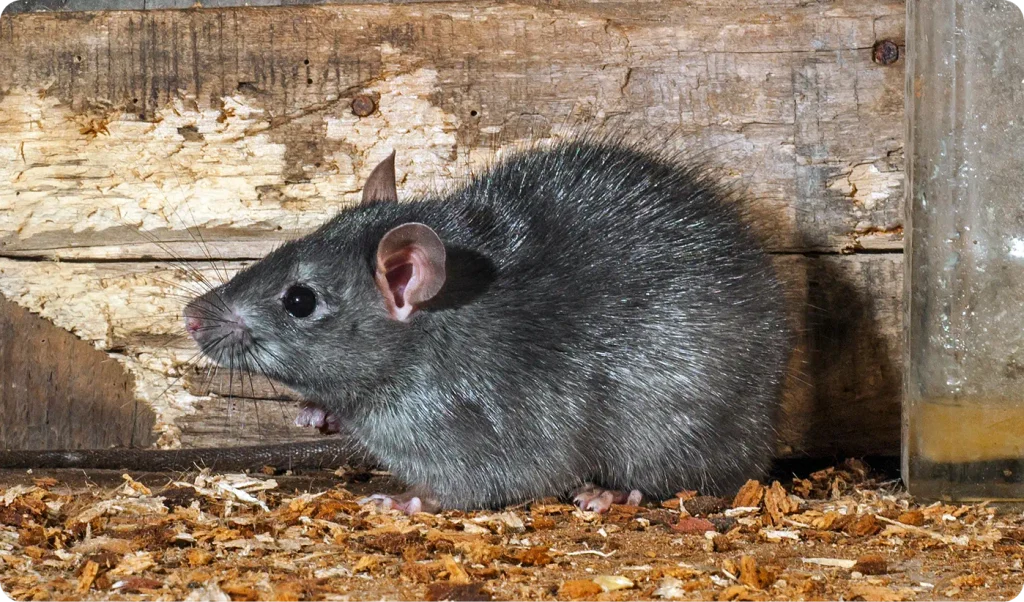
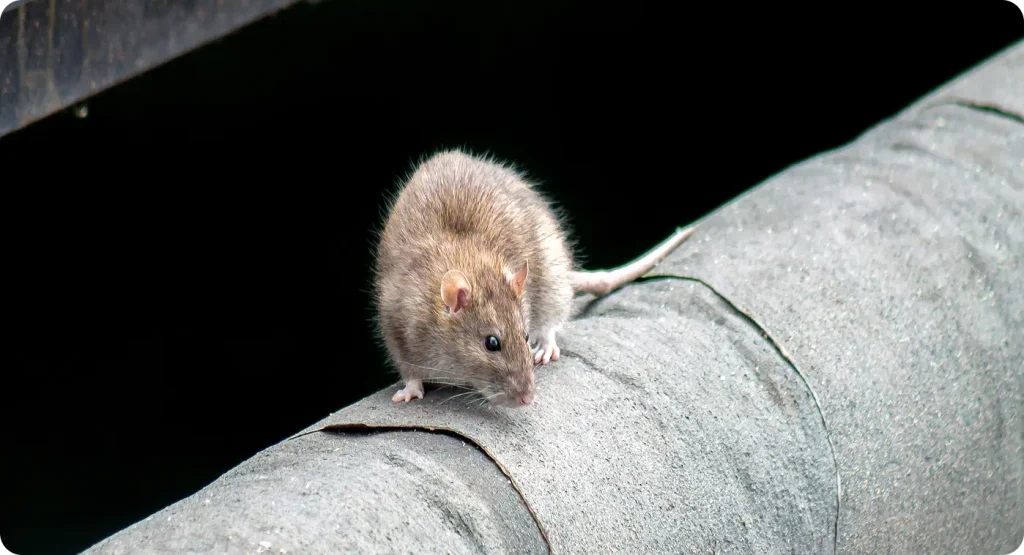
Roof Rat (Rattus rattus)
The dominant attic rodent in most California cities:
- Excellent climbers.
- Access via rooflines, trees, utility lines.
- Prefer higher elevations in structures.
- Slim build allows access through small openings.

Norway Rat (Rattus norvegicus)
- Larger, less climbing-inclined.
- More common in basements and crawl spaces than attics.
- Occasionally in attics via interior wall voids.
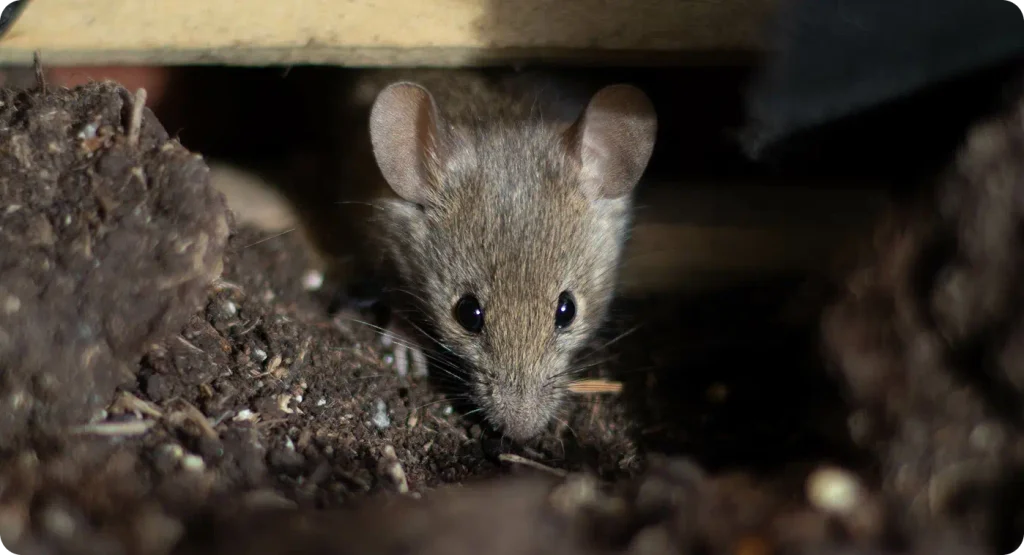
House Mouse (Mus musculus)
- Common in attics but less prevalent than rats.
- Access through very small openings (1/4 inch).
- Establishes breeding populations quickly.
Native Species
- Deer mice (Peromyscus) in more rural attics.
- Wood rats in some properties with adjacent natural habitat.
- Relevant for hantavirus considerations in cleanup.
Entry Points to Inspect
Roof Line
The #1 entry zone for roof rats:
- Gaps where roof meets walls.
- Gaps at dormer junctions.
- Broken or missing shingles.
- Flashing that has separated from walls.
- Gaps around roof-penetrating pipes.
Inspect from the ground with binoculars and from a ladder where safe. Look for gaps visible from outside.
Attic Vents
- Gable vents.
- Ridge vents.
- Soffit vents.
- Turbine vents (whirlybirds).
All should have intact screening (ideally 1/4 inch hardware cloth). Plastic and weathered wire screening tears easily.
Damaged or missing screens are among the most common rat and mouse entry points.
Eaves and Soffits
- Gaps between eave trim and wall.
- Holes in soffit material.
- Separation at corners.
- Damage from water, UV, or prior wildlife activity.
Chimney
- Missing or damaged chimney caps.
- Gaps at the chimney chase in the attic.
- Flue cover integrity.
Roof Vents for Bathrooms, Kitchens, and HVAC
- Gaps around vent pipe penetrations.
- Damaged vent covers or caps.
- Unscreened exhaust vents.
Attic Access Hatches
- Gaps around the hatch itself.
- Weather stripping on access doors.
- Sealing between attic and interior spaces.
Interior Wall Penetrations into the Attic
- Gaps around recessed lights in ceilings.
- Gaps around ceiling fan boxes.
- HVAC ducts entering the attic.
- Plumbing vents.
- Electrical penetrations.
These are interior routes from wall voids into attic space.
Conducting the Attic Inspection
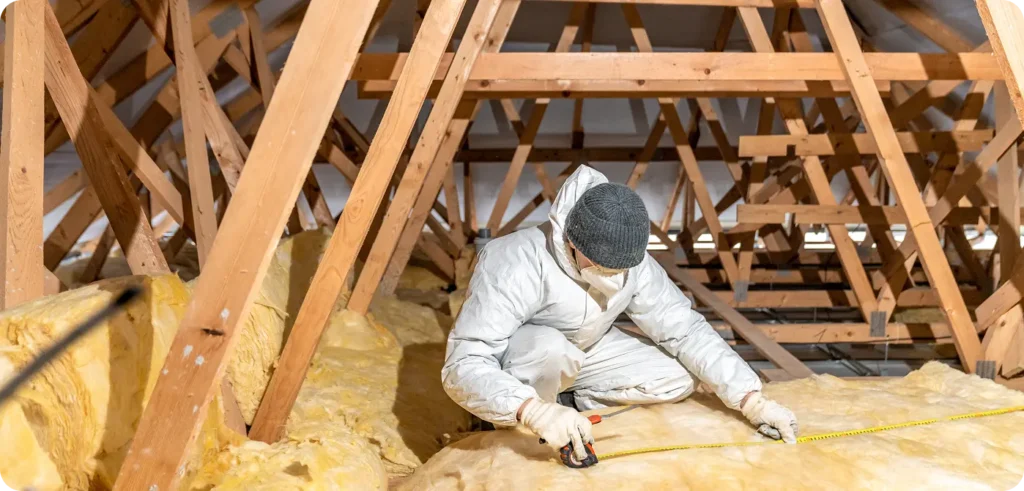
Safety First
- Use appropriate PPE: N95 or better respirator, gloves, eye protection, coveralls.
- Work on stable surfaces (joists, attic catwalk, decking).
- Good lighting.
- Temperature considerations — attics are very hot in summer and cold in winter.
- Don’t work alone if possible.
Visual Inspection
- Walk or crawl the accessible attic area.
- Check insulation surface for:
- Droppings (black or dark brown, rice-shaped for rats, smaller for mice).
- Depressions or disturbance from nesting.
- Tunneling through insulation.
- Nest material accumulation.
- Smears or grease marks on joists and beams.
Moisture and Damage Inspection
- Water staining on sheathing.
- Mold on wood surfaces.
- Chewed wiring.
- Chewed plumbing.
- Damaged insulation.
Entry Point Identification
- Follow travel patterns (grease marks, droppings concentrated in certain areas).
- Trace back to likely entry points.
- Note locations for sealing work.
Documentation
- Photos of evidence and suspected entry points.
- Notes for pest control coordination if hiring out treatment.
Sealing Work
Materials
Hardware Cloth
- 1/4 inch mesh size for mice.
- 1/2 inch acceptable for rat-only situations.
- Stainless steel for longevity.
- Cut to fit openings and secure with screws or staples.
Metal Flashing
- For larger gaps or areas needing solid surface.
- Screw or nail in place.
Copper Mesh
- For filling irregular gaps as a rodent-resistant substrate.
- Expanding foam over mesh provides finished appearance.
Expanding Foam
- Only as a finishing layer over mesh or in sealed areas.
- Not as primary exclusion — rodents chew through foam.
Caulk
- For small gaps under 1/4 inch.
- Silicone or polyurethane-based for durability.
Steel Wool
- Temporary plug for small openings.
- Rusts over time — steel wool plus caulk is better than wool alone.
- Copper mesh is superior for permanent applications.
Specific Sealing Tasks
Attic Vents
- Remove damaged screening.
- Install 1/4 inch hardware cloth behind the vent cover.
- Secure with screws.
- Re-install vent cover.
Soffit Gaps
- Fill gaps with hardware cloth if large.
- Cover with metal flashing for structural gaps.
- Caulk smaller gaps.
Roofline Gaps
- Work on roof is dangerous — consider professional work for significant roof-level sealing.
- For small accessible gaps, caulk with appropriate roofing sealant.
- Damaged flashing typically requires replacement, not patching.
Pipe Penetrations
- Mesh around the pipe.
- Caulk or foam over mesh.
- Don’t rely on foam alone.
Chimney
- Install properly sized chimney cap.
- Seal any gaps in chimney chase in the attic.
Ceiling Penetrations
- Sealable covers over recessed lights (IC-rated fixtures required).
- Sealing around ceiling fan boxes.
- Foam gaskets on electrical penetrations.
When Sealing Reveals Active Infestation
If inspection reveals current rodent activity:
Don’t Seal Completely Yet
Sealing with rodents inside traps them and produces:
- Dead rodents in inaccessible locations.
- Severe odor issues.
- Secondary pest attraction (flies, carpet beetles).
- Incomplete resolution because survivors find other exits or remain active.
Treat First
- Snap traps placed along rodent travel paths (grease marks, droppings).
- Multiple traps (6-12 minimum).
- Bait (peanut butter, chocolate, nesting material).
- Check every 1-2 days.
- Trap until no new catches for 2 weeks.
Confirm Absence
- No new droppings appearing.
- No activity at bait placements.
- No sounds at night.
- Sticky trap monitoring for continued assurance.
Then Seal
Once confidence that the population is controlled, complete the exclusion work.
Post-Exclusion Cleanup
Safety Considerations
Rodent cleanup carries disease risk:
- Hantavirus (particularly deer mice in some regions).
- Salmonella.
- Various bacterial pathogens.
Use proper PPE: N95+ respirator, gloves, coveralls, eye protection.
Cleanup Protocol
- Ventilate the attic for 30+ minutes before entering.
- Don’t sweep or vacuum dry droppings or nesting material (aerosolizes particles).
- Mist contaminated areas with disinfectant (1:10 bleach and water solution or commercial disinfectant).
- Wait 5+ minutes for disinfection.
- Remove contaminated insulation with a shovel or similar tool into sealed heavy-duty trash bags.
- Clean hard surfaces with disinfectant.
- Seal bags and dispose per local guidance.
Insulation Replacement
Heavy contamination typically warrants replacement of affected insulation. Contaminated insulation:
- Retains odors.
- May harbor pathogens.
- Has reduced R-value from compression and tunneling.
Professional attic cleanup and insulation replacement may be cost-effective for extensive contamination.
Maintaining Exclusion Over Time
Annual Inspection
- Visual check of attic once per year, ideally in fall.
- Review roof line from ground level.
- Check vent screens and chimney cap.
Ongoing Landscape Management
- Trim trees back from the roof (at least 4 feet).
- Manage vines and climbing shrubs.
- Address other entry-enabling conditions.
Monitoring
- Sticky traps in attic corners for ongoing surveillance.
- Attention to odors, sounds, and visual evidence.
Re-Sealing as Needed
- Weather, settling, and age compromise seals over time.
- Replace damaged screens promptly.
- Re-caulk as joints fail.
When to Call Professional Help
Roof Work
Professional work strongly preferred for:
- Extensive roofline gaps.
- Damaged flashing.
- Chimney cap installation.
- Soffit repair.
Safety and quality both favor professional roof-level exclusion.
Active Infestation
- Multiple rodents confirmed.
- Damage already occurring.
- Extent of activity unclear.
Complex Buildings
- Multi-story homes with many potential entry points.
- Older homes with complex rooflines.
- Commercial buildings.
Cleanup After Infestation
- Heavy contamination.
- Insulation replacement needed.
- Disease risk concerns.
San Diego vs. Sacramento
In San Diego, roof rats are the dominant attic rodent. Coastal and canyon-adjacent homes see the heaviest pressure. Year-round activity. Mediterranean-style homes with tile roofs and complex rooflines have more potential entry points than simple construction.
In Sacramento, roof rats, Norway rats, and mice all occur in attics. Fall migration produces seasonal peaks. Foothill properties see heavier pressure. Older central Sacramento neighborhoods with craftsman and Victorian architecture have complex attics with many potential entry points.
When Professional Work Is Worth It
For moderate sealing work on accessible entry points, homeowner action handles the project. Professional work earns its keep when:
- Roof-level work required.
- Active infestation in the attic.
- Extensive damage or contamination.
- Attic access is limited or difficult.
- Multiple suspected entry points without clear identification.
- Integration with trapping or baiting needed.
The Tri-Zone™ Defense System addresses rodent pressure at the fence line, yard, and foundation — important for reducing the rodent population attempting to access attics in the first place. Simple Pest handles attic rodent work across San Diego and Sacramento, with emphasis on exclusion first, treatment second, and cleanup where warranted.