You’ve resolved the burrowing pest problem. The traps have been successful, or the professional treatment is complete, and fresh mounds aren’t appearing. Now you’re looking at the aftermath — dead patches, raised tunnels, collapsed soil, damaged roots, and spots where bulbs or shrubs disappeared entirely.
Repair work falls into three layers: cosmetic restoration, functional repair (leveling, reseeding, replanting), and prevention of the next round. Skipping the prevention layer means doing this work again in a year or two.
At Simple Pest Management we handle burrowing pest work across San Diego and Sacramento, and the repair conversation is part of most projects. Here’s the practical approach.
Assess the Damage
Surface Tunnels and Ridges
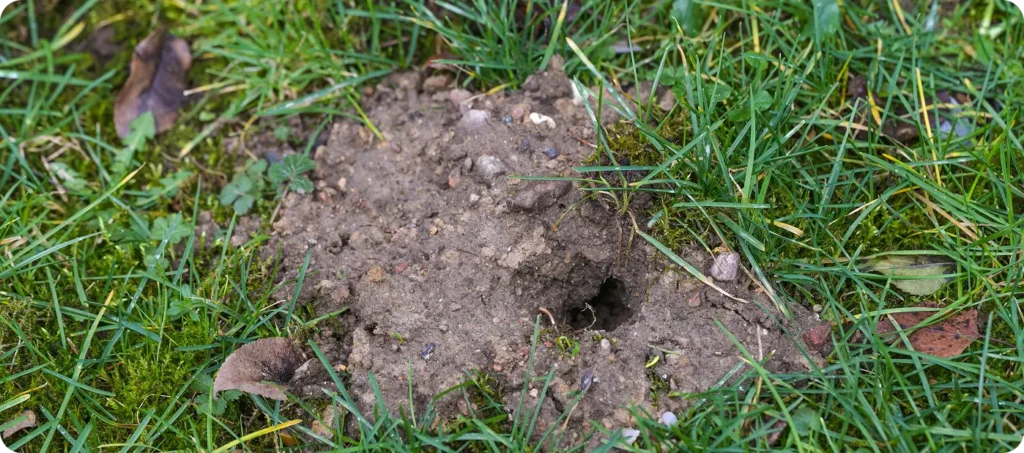
Moles leave raised ridges where surface tunnels run. The turf above may survive or may die depending on how long the tunnels were active and soil conditions.
Mound Damage
Gophers and moles both produce mounds of excavated soil. Large mounds kill the grass beneath and leave bare soil patches when spread.
Dead Patches
Voles killing grass in runways leave linear dead patches. Gophers eating roots can kill larger patches of lawn from below with no obvious surface disturbance until the grass starts browning.
Shrub and Tree Damage
Voles girdling bark at the base of shrubs can kill the plant. Gopher damage to roots of established trees and shrubs may show as decline that persists after the gopher is gone.
Bulb and Garden Plant Loss
Gophers eat tulip bulbs, hosta crowns, carrot roots, and similar. Damaged plants may not recover even after the gopher is removed.
The Lawn Repair Process
Step 1: Confirm No Active Burrowing
Before repairing, make sure the problem is actually resolved:
- No new mounds for 2 weeks.
- No new surface tunneling.
- Flatten any existing ridges and watch for re-raising.
- Soil probe areas with historical activity — active tunnels should have collapsed or be stable.
Repairing while burrowing is still active means doing the work twice.
Step 2: Level the Ground
- Walk over raised mole ridges to collapse them.
- Spread gopher mounds or rake them level.
- Fill obvious holes with topsoil.
- For larger collapsed areas, add topsoil to bring to grade.
- Compact lightly to prevent future settling.
Step 3: Address Soil Quality
Burrowing pest activity disrupts soil structure:
- Air pockets from collapsed tunnels settle over time.
- Soil brought to the surface often has different characteristics than topsoil.
- Compaction may occur in some areas, loose soil in others.
Consider:
- Light tilling of affected areas if extensive.
- Top-dressing with quality topsoil or compost.
- Testing pH if concerned about soil disruption effects.
Step 4: Reseed or Resod
Reseeding
- For small to moderate bare patches.
- Use grass seed matched to your existing lawn variety.
- Rake seed lightly into soil.
- Top with a light layer of straw or seed-starter mulch.
- Keep consistently moist until germination (typically 7 to 21 days).
- Avoid foot traffic during establishment.
Resodding
- For larger bare areas or where quick recovery is needed.
- Prepare soil (level, add topsoil as needed).
- Lay sod tightly with staggered joints.
- Water deeply after installation.
- Water lightly daily for first week, then as needed for establishment.
Timing Considerations
- Cool-season grasses: fall (September-October) and spring (March-April) are best.
- Warm-season grasses: late spring to early summer.
- Avoid planting during extreme heat or cold.
Step 5: Water Appropriately
New seed and sod need consistent moisture:
- Daily light watering for first 2-3 weeks.
- Transition to deeper, less frequent watering as plants establish.
- Avoid runoff or over-saturation.
- Adjust for weather conditions.
Garden and Shrub Repair
Assessing Plant Damage
Some plants recover from burrowing damage, others don’t:
- Trees and shrubs with more than 50% root damage typically decline over time.
- Girdled shrubs (bark chewed all the way around) will not recover and should be replaced.
- Partially damaged roots may recover with care and reduced stress.
- Bulbs consumed by gophers are gone — replace.
Supporting Damaged Plants
For plants with some root damage:
- Reduce top growth (prune) to match reduced root capacity.
- Deep infrequent watering to encourage root development.
- Light fertilization to support recovery.
- Monitor over growing season — some decline may appear months later.
Replacement Planting
For plants that can’t recover:
- Remove dead plants completely, including as much root as possible.
- Amend soil in the planting hole.
- Consider plant selection for burrowing pest resistance (see prevention section below).
- Install root protection if prevention is a priority.
Preventing the Next Round
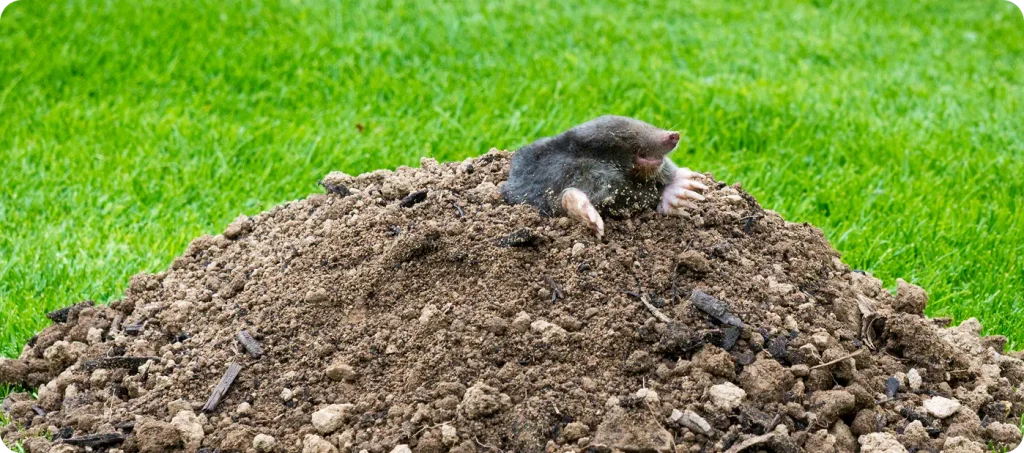
Repair without prevention means repeating the work. The prevention depends on which burrowing pest you had.
Mole Prevention
Moles eat insects (primarily earthworms and grubs). Prevention options:
- Grub control may reduce food supply for moles. Effectiveness varies.
- Underground barriers (hardware cloth or metal flashing 24+ inches deep) for small areas.
- Habitat modification (reducing irrigation to dry out soil) limits moles in severe cases.
- Ongoing trapping readiness — set and monitor periodically.
Moles are less preventable than gophers and voles because their food source is pervasive in healthy soil.
Gopher Prevention
Gophers eat plant roots. Prevention options:
- Hardware cloth beneath new planting beds (1/2 inch mesh, buried with edges extending up 6 inches).
- Wire baskets for individual specimen plants.
- Raised beds with hardware cloth bottoms.
- Perimeter fencing with underground barriers for dedicated garden areas.
- Ongoing trapping readiness.
Vole Prevention
Voles prefer dense ground cover and travel in surface runways. Prevention:
- Remove mulch within 12 inches of tree and shrub bases.
- Clear dense ground cover along walks and structures.
- Reduce leaf litter.
- Hardware cloth cylinders around young tree trunks.
- Maintain short grass along property edges.
Plant Selection for Resistance
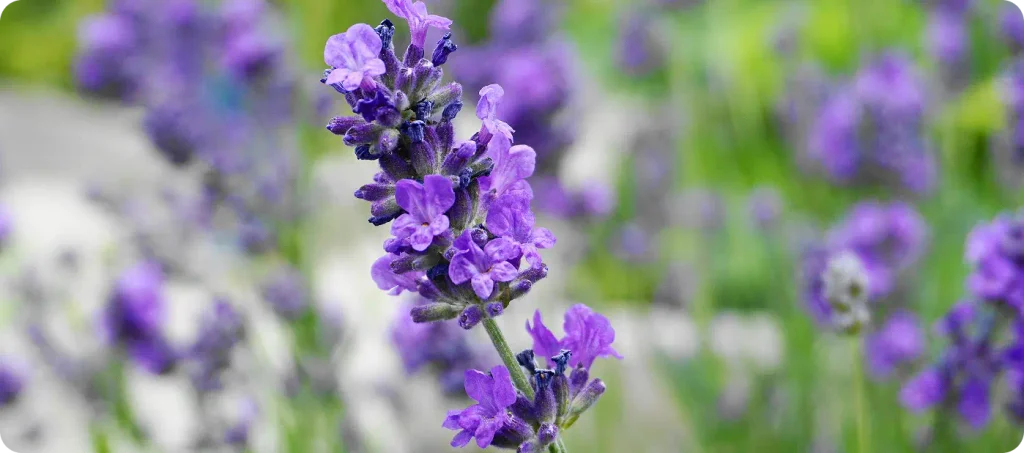
Some plants are more resistant to burrowing pests than others:
Gopher-Resistant Plants
- Daffodils (toxic to gophers, not eaten).
- Lavender.
- Rosemary.
- Oregano.
- Salvias.
- Ornamental grasses (varies).
No plant is completely gopher-proof, but some are rarely consumed.
Gopher-Attractive Plants (Avoid or Protect)
- Tulips, crocus, hyacinth.
- Carrots, parsnips, sweet potatoes.
- Hostas.
- Many roses.
- Fruit trees (especially young).
If these are priorities, plan for root protection from the start.
Vole-Resistant Trees
- Trees with thick bark more resistant to girdling.
- Young trees with smooth bark are most vulnerable regardless of species.
Planting Strategy
- Place vulnerable plants in protected locations.
- Use hardware cloth baskets routinely for valuable plants.
- Mix resistant species with vulnerable species to reduce concentrated pest pressure.
Lawn Irrigation and Burrowing Pest Activity
Soil moisture influences burrowing pest activity:
- Moles are more active in moist soil where earthworms concentrate.
- Gophers may be attracted to irrigated areas with tender root systems.
- Dry conditions push activity to irrigated landscapes.
- Overwatering can create conditions favorable to multiple burrowing pest species.
Appropriate irrigation (deep infrequent watering rather than frequent light watering) reduces some of the conditions that concentrate activity.
Maintaining Repaired Areas
Monitoring
- Monthly inspection for new mounds, ridges, or bare patches.
- Early detection of new activity allows prompt response before damage accumulates.
Maintenance
- Regular mowing and watering maintains established new turf.
- Fall over-seeding thickens cool-season lawns.
- Fertilization per soil needs.
Ongoing Prevention
- Consider ongoing or periodic trapping as part of routine yard work in high-pressure properties.
- Natural predator habitat (owl boxes, preservation of gopher snakes).
- Barrier fencing maintenance.
When to Let Damage Stay
For properties where full cosmetic recovery isn’t critical:
- Small mole ridges in back lawn areas can be walked down and left.
- Gopher mounds in non-display areas can be spread as topsoil rather than replaced.
- Naturalizing some areas with wildflower meadow plantings tolerates burrowing activity better than manicured lawn.
Not every patch requires full restoration. For properties in rural or semi-rural settings, accepting some burrowing pest activity as part of the landscape can reduce stress and expense.
San Diego vs. Sacramento
In San Diego, year-round gopher and mole activity means ongoing vigilance rather than seasonal response. Warm-season grasses dominate, and repair timing targets late spring to early summer for best establishment.
In Sacramento, seasonal burrowing pest activity peaks in spring and fall. Cool-season grasses require fall or spring repair. The Sacramento climate also supports diverse cool-season and warm-season landscape plantings, so plant selection options are broader but repair timing matters more.
When Professional Work Is Worth It
For DIY-engaged homeowners with moderate damage, repair and prevention can be handled without professional help. Professional work earns its keep when:
- Damage is extensive and repair scope exceeds homeowner time.
- Multiple burrowing pest species are active simultaneously.
- Ongoing trapping and prevention management is needed.
- Landscape installation includes protection features (hardware cloth barriers, baskets) requiring professional installation.
- Lawn restoration requires significant soil work or grading.
The Tri-Zone™ Defense System addresses burrowing pest pressure at the fence line, yard, and foundation, which can include ongoing monitoring and preventive work after damage repair. Simple Pest handles gopher, mole, and vole work across San Diego and Sacramento with focus on identification-appropriate treatment and coordination with landscape repair where applicable.