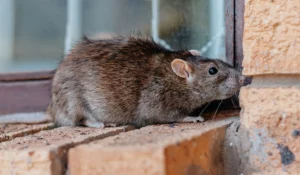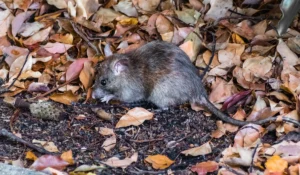

Halloween season is the moment when every household simultaneously stores large quantities of candy and sets out decorations that create ideal rodent harborage. Hay bales on the porch, scattered pumpkins on the walkway, candy bowls with open bags, and decorations that accumulate moisture — all in late October, when rodents are actively scouting for food and shelter.
The season doesn’t have to trigger a pest problem. A few decisions about where candy lives, how decorations are set up, and what happens after Halloween keep the month fun rather than eventful.
At Simple Pest we see the rodent call volume spike in late October and early November every year. Here’s what drives it and how to get through Halloween without contributing to the pattern.
Why Halloween Specifically Attracts Rodents

Outdoor Food Display
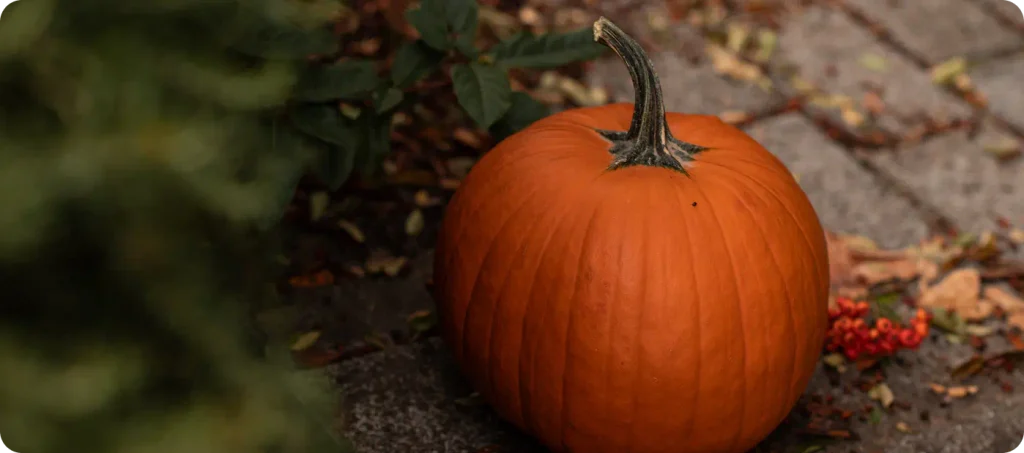
Pumpkins, gourds, and carved jack-o-lanterns attract rats and mice. Pumpkins are genuinely a food source, and outdoor display invites foraging animals.
Hay Bales and Cornstalks
Classic fall decorations provide:
- Food (seed remaining in straw, grain).
- Shelter.
- Nesting material.
A hay bale on the porch for three weeks becomes a rodent condominium.
Candy Storage
- Large purchases of bagged candy before Halloween.
- Opened bags sitting out in candy bowls during trick-or-treating.
- Leftover candy stored in ways that don’t exclude rodents.
Candy is calorie-dense food that rodents detect readily.
Pumpkin Decay
Post-Halloween pumpkins left on porches:
- Decay and attract flies and gnats.
- Attract rodents.
- Create mold issues.
Scattered Candy from Trick-or-Treating
Candy dropped by kids during trick-or-treating accumulates on porches and walkways. One or two missed pieces overnight is food available to rodents scouting the area.
Fall Season Timing
Halloween occurs during peak fall rodent migration. Rodents are actively scouting for winter shelter and food at the same time Halloween is creating enhanced outdoor food and shelter opportunities.
Outdoor Decoration Strategy
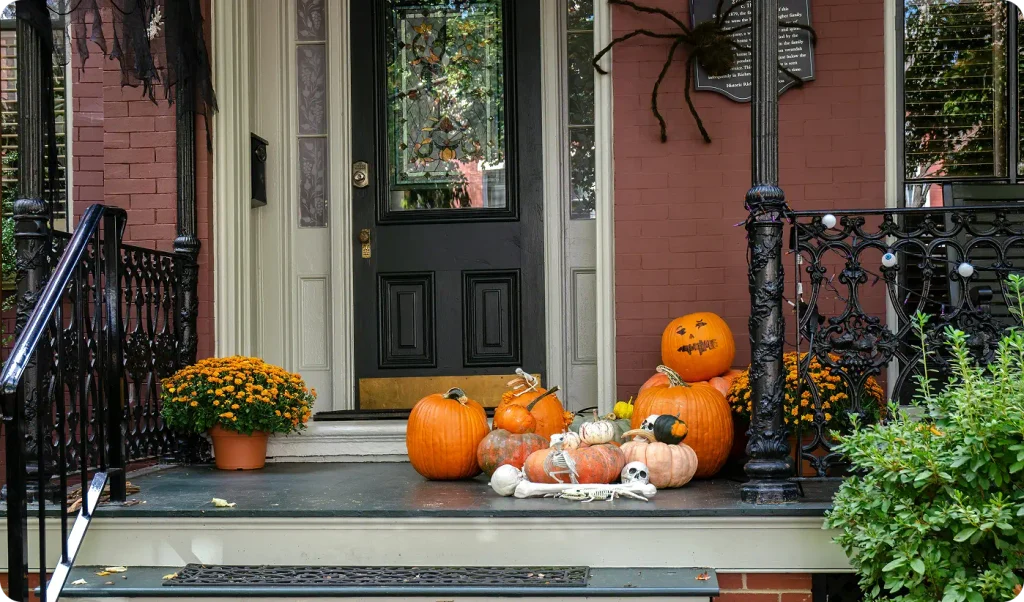
Pumpkins
- Display on porches rather than at ground level when possible.
- Inspect daily for rodent gnawing (distinctive chew marks).
- Remove damaged pumpkins promptly.
- After Halloween, dispose in outdoor trash — not in compost piles near the house.
- If composting, use enclosed bins, not open piles.
- Remove by November 1 or 2 at latest. Decaying pumpkins become a bigger attractant than fresh ones.
Hay Bales and Straw
- Avoid if rodent pressure is significant at the property.
- If using, elevate off the ground.
- Plan to dispose at the end of the season — don’t store through winter.
- Inspect for rodent activity during display.
Cornstalks and Dried Plants
- Similar considerations to hay bales.
- Dried corn on cobs is a significant attractant.
- Artificial versions eliminate the rodent risk.
Ground Decorations
- Tombstones, skeletons, and other ground decorations that sit on the lawn for weeks create harborage.
- Move or rotate periodically to disturb any establishing populations.
- Inspect before storing.
Lighting and Electronics
- Keep electrical cords and light strings off the ground where possible.
- Rodents gnaw on wiring.
- Inspect decorations during and after use for gnawing damage.
Candy Management

Storage Before Halloween
- Keep candy in sealed containers or in the refrigerator/freezer.
- Store away from exterior walls and utility penetrations.
- Don’t store candy in the garage.
- Large bulk purchases: use hard plastic bins rather than leaving in retail packaging.
During Trick-or-Treating
- Use a covered candy bowl rather than open container.
- Check the porch after each group of visitors for dropped candy.
- Bring the candy bowl inside at the end of the night, not the next morning.
- Sweep the porch and walkway before going to bed.
Post-Halloween Storage
- Seal opened candy bags in airtight containers.
- Don’t leave candy in bowls on counters where pests can access.
- Refrigerate or freeze leftover candy if planning to use over weeks.
- Dispose of unwanted candy in outdoor trash, not indoor.
Donation Options
- Military care package programs (Soldiers’ Angels and similar operations accept excess candy for troops).
- Operation Gratitude.
- Local dental offices sometimes run candy buyback programs.
- Schools with food drives may accept sealed candy.
Reduces both household candy volume and the pest attractant burden.
Porch and Entry Area Maintenance
Daily Cleanup
During decoration season:
- Sweep porch and entry walkway daily.
- Remove any dropped candy, fallen leaves mixed with candy wrappers.
- Inspect for fresh rodent evidence.
Weekly Deeper Cleaning
- Move decorations to clean underneath.
- Inspect decoration bases for rodent droppings or gnawing.
- Address any emerging issues promptly.
Lighting
- Porch lighting that stays on may attract insects and the rodents that follow.
- Motion-activated or timer-controlled lighting reduces continuous attraction.
Common Halloween Rodent Scenarios
Pumpkin on Doorstep with Bite Marks
Signs of rodent activity. Dispose of the pumpkin, inspect the area for droppings, and consider bait or snap traps if pressure is established.
Scratching Sounds in Walls Starting in November
Often traces to October entry via garage, utility penetrations, or crawl space. Inspect attic and crawl space, consider professional assessment.
Trail of Candy Wrappers Indoors
Rodents carrying candy to nesting areas. Follow the trail to identify entry point and nest location. Professional inspection may be needed.
Candy Bowl Knocked Over Overnight
Something accessed the bowl. Could be rodents, raccoons, or opossums. Review outdoor security and candy storage.
Scattered Birdseed or Candy Near Decorations
Rodents foraging. Remove source, clean thoroughly, and monitor.
Other Halloween-Adjacent Pest Issues
Gnats and Flies
- Associated with pumpkin decay and outdoor food display.
- Dispose of decaying produce promptly.
- Empty outdoor trash frequently during the season.
Ants on Candy
- Indoor ants can find candy spills quickly.
- Clean thoroughly after candy incidents.
- Store candy in sealed containers.
Moths in Bulk Candy
- Indian meal moths can develop in stored candy.
- Seal candy storage.
- Rotate through bulk purchases quickly.
Cockroaches in Kitchen Candy Storage
- Chocolate and sugar attract cockroaches.
- Sealed storage and daily cleaning prevent establishment.
After-Halloween Pest Prevention
Take Down Decorations Promptly
- Don’t leave Halloween decorations up through November.
- Each week of additional display is additional rodent opportunity.
- Inspect decorations as they come down for pests or damage.
Deep Clean Porch and Entry Areas
- Full sweep and wash of porch.
- Remove any debris that accumulated during the season.
- Inspect for rodent evidence or entry point indicators.
Candy Inventory
- Assess remaining candy.
- Donate, freeze, or consume on a reasonable timeline.
- Don’t store candy for months — it becomes an attractant.
Outdoor Trash Security
- Empty outdoor bins frequently through November.
- Ensure lids seal properly.
- Don’t allow accumulation of pumpkin and candy debris.
Fall Rodent Inspection
Halloween season is a good trigger for the broader fall rodent inspection:
- Check attic and crawl space for activity.
- Review exterior sealing work.
- Confirm bait stations are functional if present.
- Address any emerging issues.
For Properties with Ongoing Rodent Pressure
Households with historical rodent issues should be more aggressive during Halloween season:
- Minimize outdoor decorations.
- Use artificial pumpkins and gourds instead of real ones.
- Rigorous candy storage.
- Daily porch and walkway cleanup.
- Consider professional inspection timed to early October.
San Diego vs. Sacramento
In San Diego, fall rodent migration is less dramatic than in cooler climates, but Halloween-associated food and harborage still increase activity. Coastal and canyon-adjacent properties see the heaviest pressure. Mild fall temperatures extend the decoration season risk window.
In Sacramento, fall is prime rodent migration season and Halloween falls right in the middle. Foothill properties, rural and semi-rural residential, and older urban neighborhoods see the heaviest pressure. The week after Halloween is often when homeowners notice indoor rodent activity that actually began in October.
When Professional Work Is Worth It
For most households, Halloween pest management is homeowner-handled with the practices above. Professional work earns its keep when:
- Rodent activity is confirmed indoors during or after Halloween.
- Property has ongoing historical pressure that fall season amplifies.
- Exterior inspection reveals gaps requiring professional sealing before winter.
- Large or multi-structure properties where seasonal attention exceeds DIY capacity.
The Tri-Zone™ Defense System addresses rodent pressure at the fence line, yard, and foundation with timing coordinated to fall migration, including the Halloween risk window. Simple Pest handles fall rodent work across San Diego and Sacramento with emphasis on exclusion and perimeter management that carries the property through the season.