
Commercial buildings face a different rat problem than residential properties. Scale matters — a warehouse has more square footage, more entry points, more potential harborage, and more operational activity that complicates treatment. And the consequences of a visible rat in a retail space or food-adjacent facility are more immediate than in a home. Customers, employees, and inspectors all notice.
The good news is that commercial rat programs, done right, produce more predictable results than residential programs. The structure allows systematic exclusion, strategic bait station placement, and documented monitoring. The bad news is that programs done casually — “spray once a month, set some traps” — don’t match the scale of the problem and produce ongoing issues.
At Simple Pest we work with commercial clients across San Diego and Sacramento. Here’s what effective programs actually look like.
Why Commercial Buildings Attract Rats
Food Proximity
- Restaurants, grocery stores, and food service operations.
- Dumpsters and trash enclosures.
- Loading docks where food deliveries occur.
- Break rooms and employee food storage.
- Customer-dropped food in retail.
Harborage
- Stored materials.
- Utility spaces and mechanical rooms.
- Drop ceilings.
- Wall voids.
- Exterior landscape.
Structural Characteristics
- Large footprints with more potential entry.
- Loading dock doors with seal issues.
- Utility penetrations for commercial-scale systems.
- Complex rooflines.
Neighbor Pressure
- Adjacent commercial properties.
- Shared alleys and service areas.
- Building-to-building travel.
- Regional population pressure.
Transportation
- Deliveries from distribution centers.
- Shipping containers and packaging.
- Pallet and material staging.
The Commercial Rat Species Picture

Roof Rat (Rattus rattus)
- Dominant in most California commercial settings.
- Climb utility lines, trees, building exteriors.
- Prefer upper levels and roof areas.
- Primary species in warehouses, office buildings, retail.
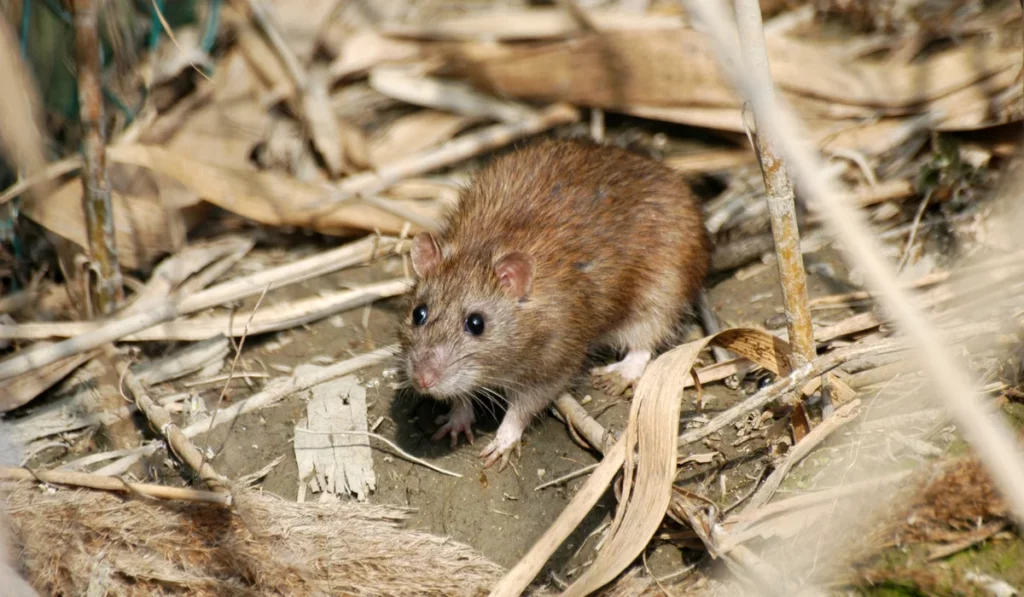
Norway Rat (Rattus norvegicus)
- Ground-level focus.
- Burrow in landscape and around foundations.
- Common around dumpsters and exterior storage.
- Warehouses and lower-level commercial spaces.
Urban Mouse Populations
- Often present alongside rats.
- Different control approach.
- Coordinated integrated program addresses both.
Risks of Inadequate Control
Health and Safety
- Contamination of stored goods.
- Pathogen exposure to employees and customers.
- Food safety violations.
- Allergen reactions to droppings and urine.
Property Damage
- Chewed wiring (fire risk).
- Damaged inventory and stored goods.
- Chewed HVAC components.
- Insulation damage.
- Structural damage in long-term infestations.
Business Impact
- Customer-facing incidents damage reputation.
- Social media amplifies visible pest issues.
- Employee morale and comfort.
- Lost productivity.
Regulatory Consequences
- Health department violations for food service.
- OSHA concerns for employee exposure.
- Lease and insurance implications.
- Local ordinance violations.
The Effective Program Structure
Assessment
Initial assessment covers:
- Building structure and potential entry points.
- Exterior conditions and landscape.
- Operational factors (food handling, deliveries, trash).
- Current rodent activity levels.
- Historical patterns.
Exclusion
Physical exclusion before treatment:
- Door sweeps and threshold seals.
- Loading dock dock levelers and seals.
- Utility penetrations.
- Roof-level gaps.
- Vent screening.
Exterior Management
- Bait stations at strategic perimeter locations.
- Tamper-resistant stations required for public-accessible areas.
- Professional placement according to labeling and local regulations.
- Regular inspection and maintenance.
Interior Management
- Snap traps or multi-catch traps in non-food areas.
- Sticky monitors for detection in food-storage and food-handling areas (no rodenticide).
- Strategic placement based on activity patterns.
Sanitation Consultation
- Food handling and storage practices.
- Trash management protocols.
- Cleaning schedules.
- Staff training.
Monitoring and Documentation
- Service reports for every visit.
- Trend tracking over time.
- Rodent activity log.
- Corrective action documentation.
Responsive Service
- Between-visit call response.
- Rapid response for active sightings.
- Escalation protocols for emerging issues.
Bait Station Strategy
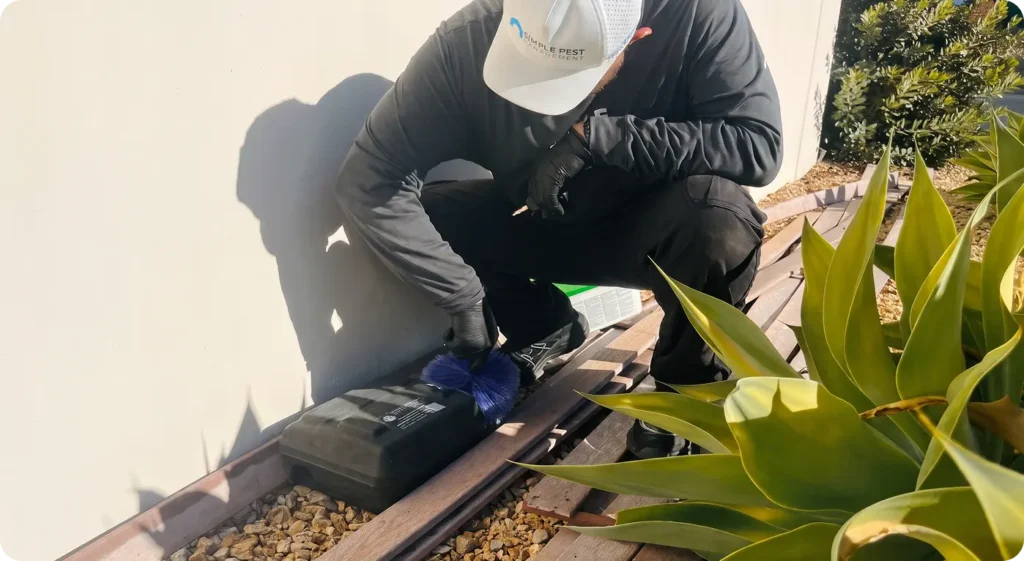
Exterior Placement
- Every 50-100 feet along building perimeter typically.
- Adjacent to potential harborage.
- Near entry points.
- Away from drainage and flooding areas.
- Secured to foundation or structure.
Interior Stations
- Limited in food-handling facilities.
- Allowed in mechanical rooms, basements, attics depending on regulations.
- Tamper-resistant only.
- Labeled and mapped.
Bait Selection
- EPA-registered products.
- Appropriate for target species.
- Rotation considered for long-term use.
- Label compliance.
Regulations
Commercial rodent control is subject to regulation:
- California Department of Pesticide Regulation licensing.
- EPA label compliance.
- Local municipality requirements in some cases.
- Ecological and non-target concerns driving responsible application.
Trapping Strategy
Snap Traps
- Most traditional approach.
- Effective for limited populations.
- Require regular service.
- Labor-intensive for large facilities.
Multi-Catch Traps
- Capture multiple rodents per station.
- Reduce service visit frequency.
- Longer intervals between checks.
- Used for mouse populations more than rat.
Glue Boards
- Monitoring tool.
- Ethical considerations for capture.
- Inspection-focused rather than elimination.
Placement
- Along wall lines.
- Behind equipment.
- In utility chases.
- Near suspected entry points.
- Rotate based on catch patterns.
Industry-Specific Considerations
Food Service

- Strict regulatory environment.
- No rodenticide in food prep or service areas typically.
- Intensive sanitation focus.
- Regular inspection requirements.
Food Manufacturing and Warehousing
- FSMA (Food Safety Modernization Act) and similar federal regulations.
- IPM program requirements.
- Documented pest management.
- Audit-ready programs.
Retail (Non-Food)
- Customer-facing considerations.
- Stockroom focus.
- Inventory protection.
Office Buildings
- Break room and food storage.
- HVAC and utility space.
- Less intensive than food operations but still systematic.
Warehouses
- Scale makes systematic approach essential.
- Loading dock critical zones.
- Stored goods protection.
- Delivery vehicle inspection.
Healthcare Facilities
- Patient safety considerations.
- Stricter protocols.
- Documentation requirements.
Schools
- Child safety primary.
- Limited rodenticide options.
- IPM mandates in many jurisdictions.
Hospitality
- Guest-facing considerations.
- Multiple floors and complex structures.
- Food service integration.
Sanitation Requirements
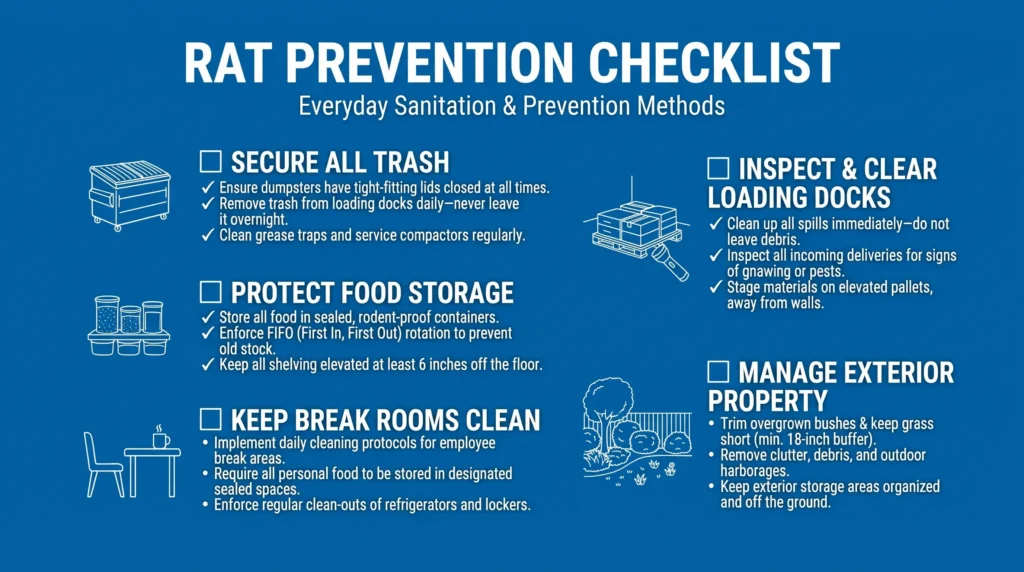
Trash Management
- Dumpsters with tight-fitting lids.
- Daily trash removal from loading docks.
- Grease trap maintenance.
- Compactors maintained and serviced.
Food Storage
- Sealed containers for stored food.
- FIFO rotation.
- Elevated shelving (off floor).
- Regular cleaning of storage areas.
Employee Areas
- Break room cleaning protocols.
- Food storage policies.
- Regular clean-out.
Loading Docks
- Immediate cleanup of spills.
- Inspection of deliveries.
- Staged materials off ground where possible.
- Proper rotation.
Exterior Property
- Vegetation management.
- Reduced harborage near building.
- Debris removal.
- Storage area management.
Documentation Standards
Service Reports
Every service visit should produce:
- Date and time.
- Technician name.
- Activity observed.
- Stations serviced and contents.
- Products applied (with EPA registration numbers).
- Recommendations for operator action.
Rodent Log
Operation-maintained log of:
- Sightings by staff.
- Evidence discovered.
- Actions taken.
- Resolution status.
Site Map
- Bait station locations numbered.
- Interior monitor locations.
- Updated as program changes.
Material Records
- Product labels accessible.
- SDS for all products in use.
- Application records.
Audit Readiness
- Files organized for third-party audits (FSMA, GFSI, etc.).
- Responsive to regulator requests.
- Historical records maintained.
Integration with Operations
Communication Protocols
- Operator-to-provider reporting.
- Emergency call procedures.
- Between-visit issue escalation.
Staff Training
- Sighting reporting.
- Basic pest identification.
- Sanitation responsibilities.
- Avoiding interference with bait stations and monitors.
Building Changes
- Renovations requiring pest control coordination.
- New equipment installation.
- Operational changes affecting pest pressure.
Tenant Coordination
Multi-tenant buildings:
- Property management as pest control contract holder typically.
- Individual tenant responsibilities.
- Common area coordination.
- Responsive service to tenant concerns.
Common Program Failures
Inadequate Frequency
- Monthly service for high-pressure facilities is insufficient.
- Bi-weekly or weekly appropriate for food service and high-volume operations.
- Frequency matched to activity levels.
Reactive Approach
- Waiting for visible issues rather than proactive management.
- Results in periodic outbreaks.
- Program fails to prevent visible activity.
Poor Exclusion
- Treating without sealing produces ongoing new entry.
- Long-term control requires physical exclusion.
Inadequate Sanitation
- Treatment without sanitation is temporary.
- Operations must own the sanitation work.
- Provider can consult but can’t force sanitation.
Documentation Gaps
- Missing service reports.
- Poor logs.
- Inability to demonstrate program due diligence in audits.
Provider Quality
- Inexperienced technicians.
- Provider not specialized in commercial work.
- Inadequate response to issues.
Emergency Response
Visible Rat During Operations
- Contain area if possible.
- Capture if safely doable.
- Call provider for emergency service.
- Document incident.
- Review contributing factors.
Customer Sighting
- Customer service protocols.
- Transparent communication.
- Documented response.
- Follow-up to confirm resolution.
Inspection Finding
- Cooperate fully with inspector.
- Document findings.
- Implement corrective action promptly.
- Coordinate with provider on structural and treatment issues.
Large-Scale Issue
- Facility shutdown may be appropriate for severe issues.
- Deep intervention with intensive treatment.
- Operations review to identify root causes.
- Prevention of recurrence.
San Diego vs. Sacramento
In San Diego, commercial rat pressure is year-round. Tourism-adjacent operations (Gaslamp, beach communities, Old Town) experience heavier pressure. Industrial areas (Miramar, Otay Mesa) have significant commercial rat populations. Roof rats dominate across the region.
In Sacramento, commercial rat pressure is substantial downtown and in older commercial neighborhoods. Seasonal peaks in fall affect commercial properties similar to residential. Industrial corridors (Sutter, Natomas, Power Inn) have their own population patterns. Both roof rat and Norway rat populations present.
When Professional Work Is Worth It
For commercial properties, professional rodent management is essentially required. The question is program structure and provider selection, not whether to engage professional service.
The Tri-Zone™ Defense System applied to commercial settings addresses rodent pressure at the fence line, yard, and foundation — including loading dock perimeters, dumpster areas, and landscape adjacencies. Simple Pest works with commercial clients across San Diego and Sacramento on structured programs that include documented monitoring, audit-ready reporting, responsive service, and the ongoing provider relationship that keeps facilities consistently clean.