

If you have ever reached for a favorite book on the shelf only to find mysterious holes in the pages, or pulled out a cherished sweater from storage and discovered it riddled with tiny irregular damage, you may have encountered one of California’s most elusive household pests: the silverfish. These nocturnal insects thrive in the Golden State’s diverse climates, from the coastal humidity of San Diego County to the warm, dry valleys of Sacramento and Riverside Counties. At Simple Pest Management, we help homeowners across California identify, prevent, and eliminate silverfish infestations before these secretive creatures cause significant damage to your belongings.
Unlike more obvious pests such as ants or cockroaches, silverfish operate almost entirely under the radar. They prefer darkness, move quickly when disturbed, and can live for months without food. This combination of traits makes them particularly challenging to detect until an infestation has already taken hold. In this comprehensive guide, we will explore everything California homeowners need to know about silverfish, including what attracts them to your home, the damage they can cause, and most importantly, how to get rid of them for good.
What Are Silverfish?
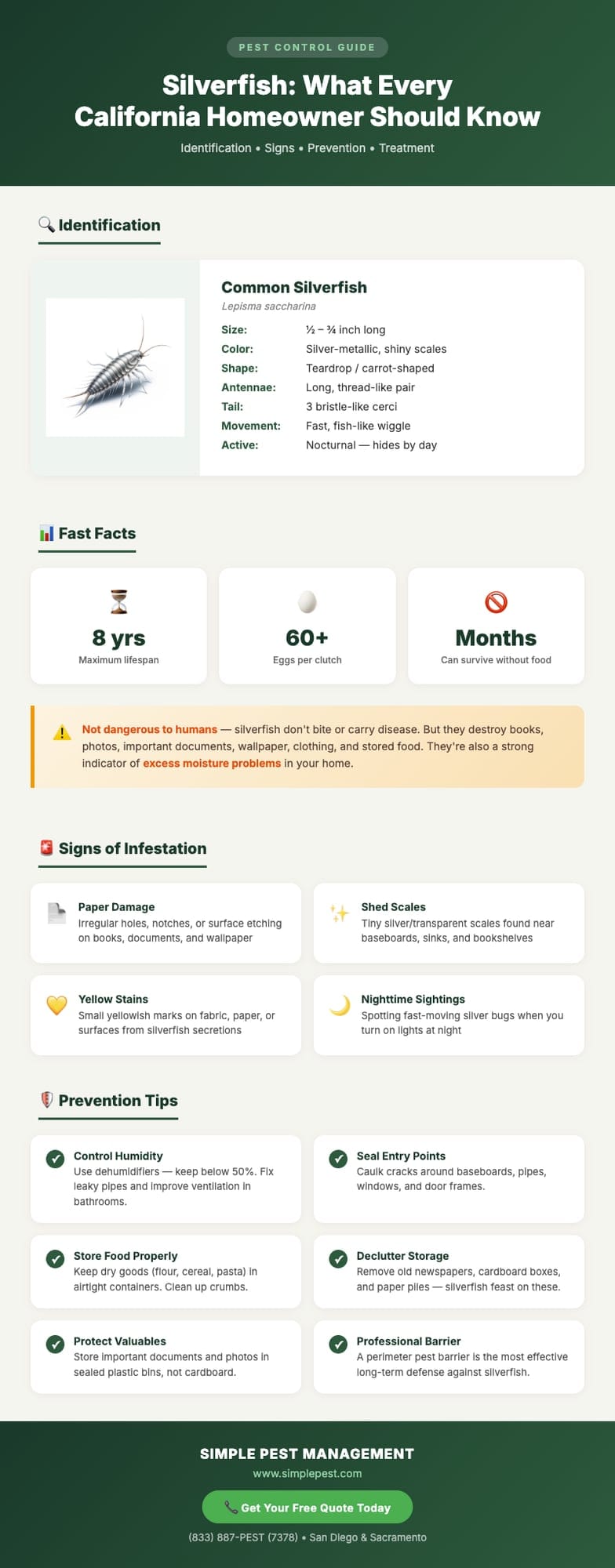
Silverfish (Lepisma saccharina) are small, wingless insects that get their name from their distinctive silvery-gray color and fish-like movements. These primitive insects have been around for over 400 million years, predating even the dinosaurs. An adult silverfish typically measures between half an inch to one inch in length and has a tapered, carrot-shaped body covered in fine scales. Three long, bristle-like appendages extend from the rear of their body, while two long antennae protrude from their head.
What makes silverfish particularly well-adapted to survival is their remarkable resilience. They can survive for up to a year without eating, though they prefer to feed regularly when food sources are available. They are nocturnal creatures, spending their days hidden in dark crevices and emerging at night to search for food and mates. Their quick, darting movements and preference for darkness mean that many homeowners only spot them by accident, often when turning on a light in a dark bathroom or storage area.
In California, silverfish populations can be found throughout the state, from the foggy coastal regions of Placer County to the warmer inland areas of Riverside and San Diego Counties. The state’s generally mild climate allows these insects to remain active year-round, unlike in colder regions where their activity may be more seasonal.
Why Silverfish Are in Your California Home
Understanding why silverfish choose to invade certain homes is the first step toward preventing an infestation. These insects are drawn to specific environmental conditions that, unfortunately, are common in many California residences.
Humidity and Moisture: Silverfish thrive in humid environments, typically preferring relative humidity levels between 75 and 95 percent. In California, this makes bathrooms, laundry rooms, basements, and areas beneath kitchen sinks particularly attractive to these pests. Coastal communities in San Diego County and areas with poor ventilation are especially susceptible. Even homes in drier regions like Sacramento can harbor silverfish in moisture-prone areas such as around water heaters, leaky pipes, or poorly ventilated crawl spaces.
Food Sources: Silverfish have an unusual diet that sets them apart from most household pests. They feed on starches and carbohydrates found in a variety of household materials, including paper, book bindings, wallpaper paste, fabric sizing, and even certain adhesives. Homes with extensive book collections, stored papers, or older wallpaper provide a veritable buffet for these insects. They will also consume dried foods like cereals, flour, and pasta if they can access pantry areas.
Shelter and Hiding Spots: California homes often feature the kinds of undisturbed spaces that silverfish love. Attics filled with cardboard boxes, garages with stored belongings, and closets packed with seasonal clothing all provide ideal hiding spots. The insects are particularly fond of areas where they can remain undisturbed for extended periods, which is why storage areas are common infestation sites.
What Silverfish Can Damage in Your Home
While silverfish do not bite humans or transmit diseases, they can cause significant damage to personal property. Understanding what these pests target can help you identify an infestation early and protect your most vulnerable belongings.
Books and Paper Products: For book lovers and collectors, silverfish represent a serious threat. These insects feed on the cellulose in paper and the starches in book bindings, leaving behind irregular holes, yellowed edges, and notched pages. They are particularly attracted to older books with traditional paste bindings. Important documents, photographs, and valuable papers stored in humid conditions are also at risk. If you have noticed damage to books or papers in your Sacramento or Riverside County home, silverfish may be the culprit.
Clothing and Textiles: Silverfish are known to damage a variety of fabrics, including cotton, linen, silk, and synthetic materials. They are attracted to the sizing agents and starches used in fabric processing, as well as any food stains or body oils on clothing. Damage typically appears as irregular holes or surface etching on fabric. Stored clothing, linens, and vintage textiles are particularly vulnerable, especially when kept in humid closets or storage areas.
Wallpaper and Wall Coverings: The paste used to adhere wallpaper contains starches that silverfish find irresistible. Infestations can result in wallpaper that peels, bubbles, or shows irregular feeding damage. This type of damage is often first noticed in bathrooms and kitchens where humidity levels are higher. Many homeowners in older homes throughout Placer County and San Diego have discovered silverfish damage behind peeling wallpaper.
Additional items that may be damaged include photographs, stamps, envelopes, cardboard boxes, and even certain types of paint. The cumulative damage from a long-term infestation can result in significant financial losses, particularly when valuable or irreplaceable items are affected.
Signs of a Silverfish Infestation
Because silverfish are nocturnal and excellent at hiding, detecting an infestation often requires looking for indirect evidence. Here are the key signs that indicate silverfish may be living in your California home:
Sightings: The most obvious sign is actually seeing a silverfish. If you spot one scurrying away when you turn on a light in your bathroom, kitchen, or storage area, there are likely more hiding nearby. A single sighting warrants further investigation.
Feeding Damage: Look for irregular holes, notches, or surface etchings on paper, books, wallpaper, and fabrics. The damage pattern is often distinctive, featuring irregular edges rather than the clean holes made by other pests.
Yellow Stains: Silverfish leave behind yellowish stains on paper and fabric, caused by their scales and excrement. These stains often appear alongside feeding damage and can help confirm an infestation.
Shed Skins: As silverfish grow, they molt their exoskeletons. Finding small, translucent shed skins in corners, behind furniture, or in storage areas indicates silverfish activity.
Fecal Matter: Silverfish droppings are small, pepper-like specks that may be found in areas where they are active. While tiny and easy to miss, these droppings can accumulate in infested areas.
Prevention Tips for California Homeowners
The best way to deal with silverfish is to prevent them from establishing themselves in your home in the first place. Here are practical steps that California homeowners can take to make their properties less attractive to these persistent pests:
Control Humidity: Use dehumidifiers in damp areas like basements, bathrooms, and laundry rooms. Ensure proper ventilation in bathrooms by running exhaust fans during and after showers. Repair any leaky pipes, faucets, or fixtures promptly. In humid coastal areas of San Diego County, maintaining indoor humidity below 50 percent can significantly reduce silverfish activity.
Eliminate Food Sources: Store books and important papers in sealed containers or climate-controlled areas. Keep pantry items in airtight containers. Vacuum regularly to remove food debris, dust, and dead insects that silverfish may feed on. Consider moving valuable book collections away from exterior walls and bathrooms.
Reduce Clutter: Silverfish love cluttered spaces that provide numerous hiding spots. Organize storage areas, replace cardboard boxes with plastic bins, and regularly clean out closets, attics, and garages. This is particularly important in the varied climates of Sacramento and Riverside Counties, where storage areas can provide ideal silverfish habitats.
Seal Entry Points: Inspect your home for cracks, gaps, and openings where silverfish might enter. Pay particular attention to areas around pipes, windows, doors, and foundation walls. Use caulk or weatherstripping to seal potential entry points.
Regular Cleaning: Frequent vacuuming and dusting can remove silverfish eggs, shed skins, and potential food sources. Pay special attention to corners, baseboards, and areas behind furniture and appliances.
When to Call the Professionals
While minor silverfish sightings can sometimes be addressed with DIY methods, there are situations when professional pest control becomes necessary. Consider calling Simple Pest Management if you experience any of the following:
You are seeing silverfish regularly, even after implementing prevention measures. A persistent presence despite your efforts suggests a larger infestation that requires professional treatment.
You have discovered significant damage to books, clothing, wallpaper, or other belongings. Extensive damage indicates an established population that has likely been present for some time.
You find silverfish in multiple areas of your home. When these pests appear in various rooms rather than a single location, the infestation has likely spread and will be difficult to control without professional intervention.
You have valuable collections of books, documents, textiles, or other items that silverfish target. Protecting irreplaceable items requires the thorough treatment that only professional pest control can provide.
Professional pest control offers several advantages over DIY approaches. Our trained technicians can identify all infestation sites, including hidden areas you might miss. We use targeted treatments that are effective against silverfish while being safe for your family and pets. Most importantly, we can address the underlying conditions that attracted silverfish to your home in the first place.
At Simple Pest Management, we have extensive experience dealing with silverfish infestations throughout California. Whether you are in San Diego County battling humidity-loving silverfish, addressing an infestation in your Sacramento home, or protecting your belongings in Riverside or Placer Counties, our team has the expertise to help.
Protect Your California Home Today
Do not let silverfish silently damage your cherished belongings. If you suspect a silverfish infestation or want to take proactive steps to protect your home, Simple Pest Management is here to help. We offer comprehensive inspections and customized treatment plans designed specifically for California homes and the unique challenges they face.