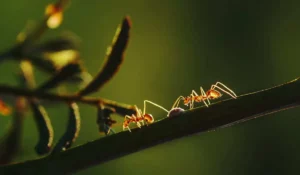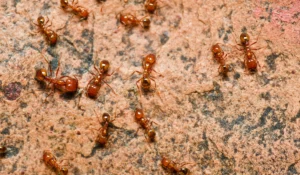
Ants that nest indoors are different from ants that wander in from outside looking for food. Indoor-nesting ants have committed to the structure — found moisture, established colonies in wall voids or behind appliances, and produce ongoing pressure that doesn’t end when outdoor conditions change. Spray treatment that kills visible ants doesn’t touch the colony, and the population rebuilds.
Prevention, detection, and treatment for indoor-nesting ants requires different work than perimeter ant management. Getting it right means understanding which species nest indoors and why, recognizing the signs, and committing to the specific treatment approach that actually reaches the colony.
At Simple Pest we handle ant work across San Diego and Sacramento. Here’s the guide to the work that actually eliminates indoor-nesting ants.
Why Ants Nest Indoors
Moisture
Most indoor ant colonies are associated with moisture:
- Plumbing leaks (active or past).
- Condensation on cold pipes.
- Bathroom moisture issues.
- Kitchen plumbing.
- HVAC condensate.
- Water damage in walls or subfloor.
Food Access
- Proximity to kitchens and pantries.
- Accessible food storage.
- Pet food left out.
- Garbage management.
Protected Nesting Sites
- Wall voids.
- Under appliances.
- In insulation.
- Behind cabinets.
- In ceiling spaces.
- Under flooring.
Stable Temperature
- Climate-controlled interior.
- Protection from weather extremes.
- Allows year-round colony activity.
Established Paths
- Once colonies establish, they develop foraging patterns.
- Self-reinforcing: more ants follow established trails.
- Expansion within structure over time.
Species That Nest Indoors
Argentine Ants
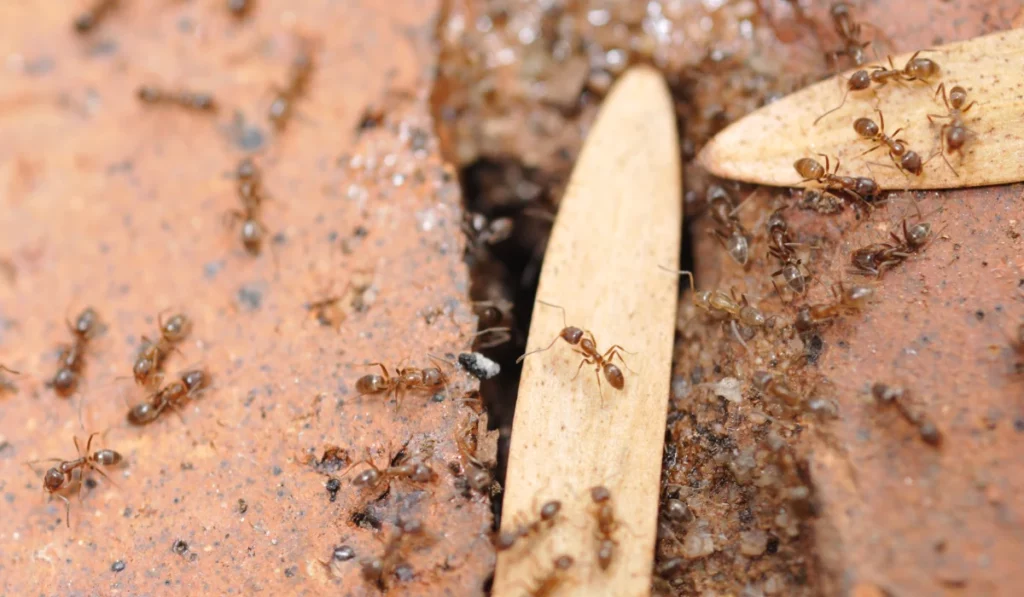
- Most common indoor-nesting ant in California.
- Small (1/8 inch), light to dark brown.
- Massive interconnected colonies.
- Multiple queens per colony.
- Move indoors during weather extremes but can establish permanently.
- Difficult to eliminate due to colony scale.
Odorous House Ants
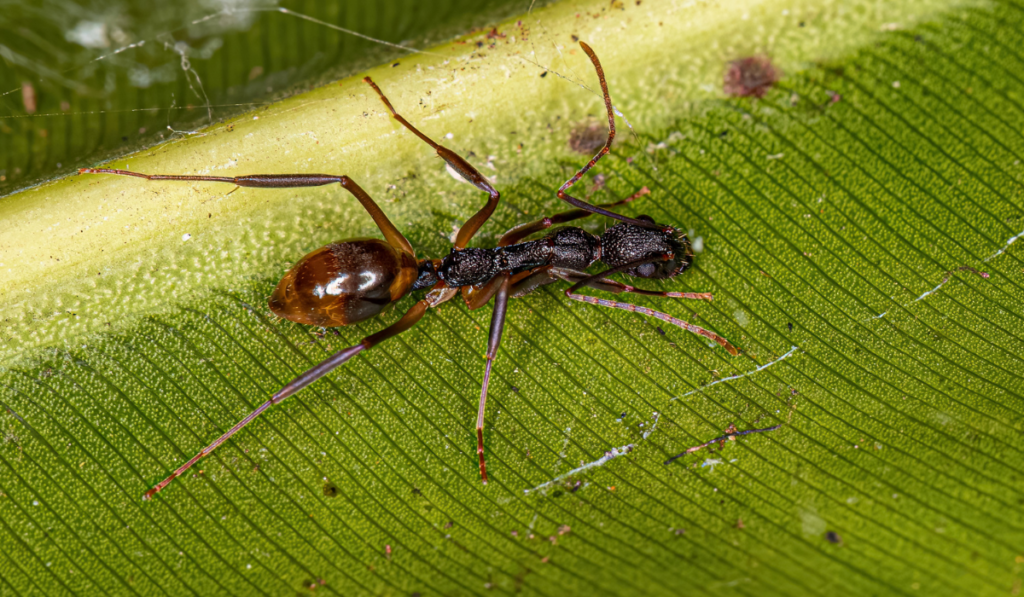
- Small (1/16 to 1/8 inch), dark brown to black.
- Characteristic rotten-coconut odor when crushed.
- Nest in wall voids, particularly near moisture.
- Multiple colonies can connect.
Pharaoh Ants
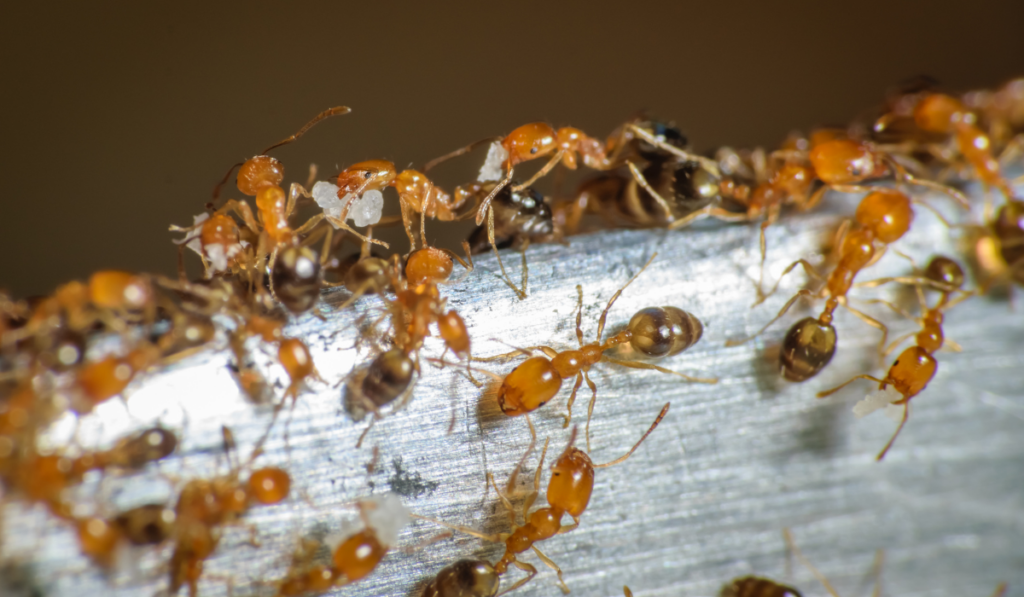
- Very small (1/16 inch), yellow to pale red.
- Primarily indoor species.
- Multiple queens and budding colonies.
- Particularly problematic in hospitals and multi-family housing.
- Resistant to many control approaches.
Ghost Ants
- Very small (1/16 inch), dark head and thorax with pale abdomen and legs.
- Established in parts of Southern California.
- Multi-colony (polygynous) structure similar to Argentine.
- Tropical preference, favor warm humid indoor areas.
Carpenter Ants
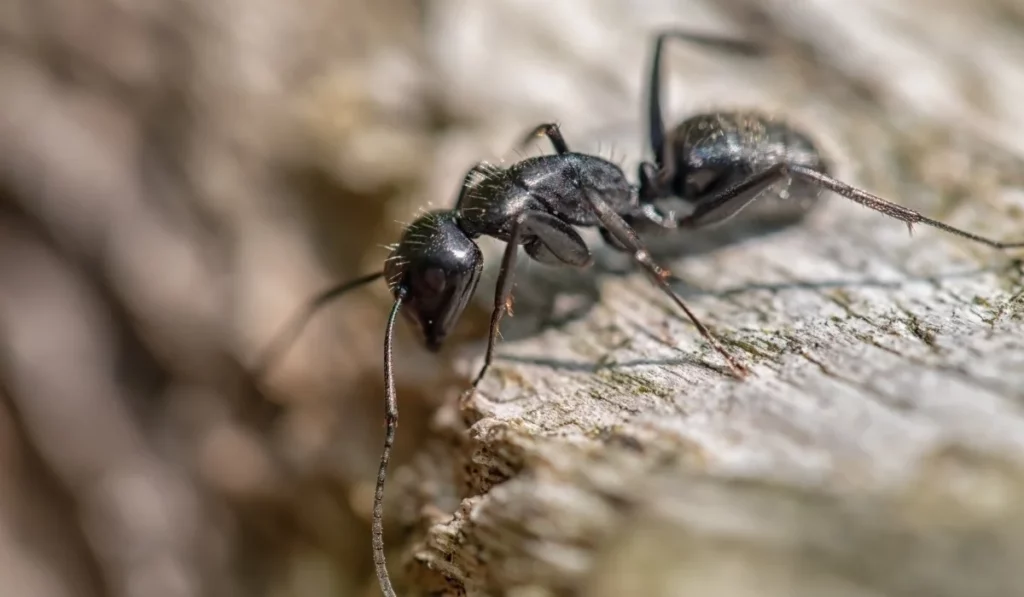
- Larger (1/4 to 1/2 inch), black or black-red.
- Nest in wood, often damaged or moisture-affected wood.
- Serious structural concern.
- Different treatment approach than other species.
Acrobat Ants
- Small to medium, often with distinctive heart-shaped abdomen.
- Sometimes nest indoors in wall voids with moisture.
- Confused with other species.
Identifying the Species
Size Comparison
- Carpenter ants: largest (clearly larger than other common indoor ants).
- Argentine, odorous: medium-small.
- Pharaoh, ghost: very small (among smallest common indoor ants).
Color and Pattern
- Solid color vs. distinctive markings.
- Head-thorax-abdomen color comparisons.
Trail Behavior
- Trail width and density.
- Movement pattern.
- Trail persistence.
Odor When Crushed
- Odorous house ants: characteristic rotten smell.
- Formic acid odor (various species).
Getting Species ID Right
- Affects treatment approach significantly.
- Photo to pest control professional for identification.
- Misidentification leads to wrong treatment approach.
Why Spray Treatment Often Fails
Doesn’t Reach Colony
- Visible ants are foragers.
- Colony is elsewhere (often in wall voids).
- Killing foragers doesn’t affect colony reproduction.
- Colony continues producing more foragers.
Colony Fragmentation
- Some ant species respond to chemical stress by budding.
- Original colony splits into multiple new colonies.
- Problem gets worse rather than better.
- Particularly problematic with Pharaoh and Argentine ants.
Resistance
- Some ant populations have developed resistance to common consumer products.
- Spray that worked last year doesn’t work this year.
- Professional products and rotation strategies needed.
Repellent Effects
- Consumer sprays often repel rather than kill.
- Ants avoid treated areas.
- Move to untreated paths.
- Appearance of success but population unchanged.
What Actually Works
Identify Species
Correct identification determines approach. Different species respond to different baits and treatments.
Locate Colony
Find where the colony is:
- Follow trails back to entry.
- Observe patterns over days.
- Look for moisture sources nearby.
- Identify harborage indicators.
Bait-Based Approach
For most indoor-nesting ant species, bait is the appropriate approach:
- Slow-acting poisoned food brought back to colony.
- Distributed throughout colony.
- Queen exposure eliminates reproductive capacity.
- Colony dies over days to weeks.
Bait Selection
Different species prefer different baits:
- Sugar baits for sweet-feeding species.
- Protein baits for protein-feeding species.
- Oil-based baits for lipid-preferring species.
- Some species shift preferences seasonally.
Don’t Spray the Trail
Critical: don’t spray ants following bait. Spraying kills foragers before they return bait to colony. Leave the trail active.
Monitoring
- Track bait consumption.
- Watch for population decline.
- Look for new trails indicating continued activity.
- Continue bait until activity ends.
Address Conditions
- Fix moisture issues.
- Repair water damage.
- Improve food storage.
- Seal entry points after colony elimination.
Moisture Investigation
Indoor-nesting ants almost always indicate moisture:
Plumbing Check
- Under sinks for slow leaks.
- Around toilet base.
- At tub and shower connections.
- At water heater.
- At washing machine and dishwasher connections.
Wall and Ceiling
- Water staining.
- Soft spots suggesting past damage.
- Areas with peeling paint.
- Musty odors.
Exterior Moisture Intrusion
- Roof leaks.
- Siding damage.
- Window flashing.
- Foundation moisture.
HVAC Issues
- Condensate line leaks.
- Drainage pan issues.
- Duct condensation.
Resolution Before Treatment
- Address moisture first or simultaneously.
- Ants return to moist conditions even after colony elimination.
- Without resolution, cycle continues.
Prevention Strategies
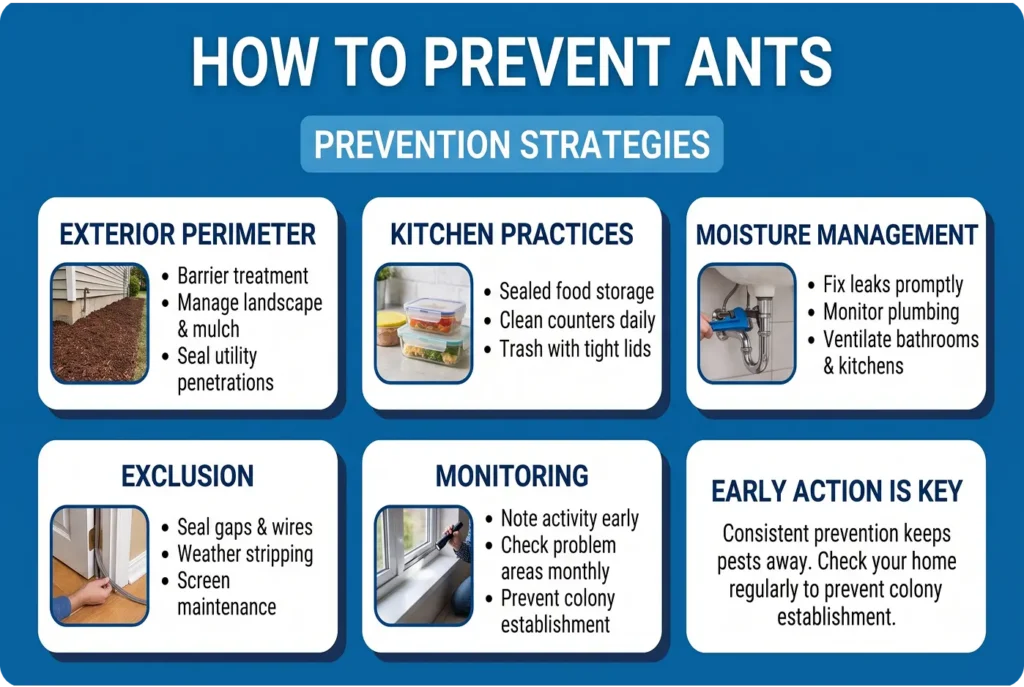
Exterior Perimeter
- Barrier treatment on exterior foundation.
- Landscape management (reduce dense vegetation against house).
- Mulch management (avoid deep mulch against foundation).
- Exclusion at utility penetrations.
Kitchen Practices
- Sealed food storage.
- Daily counter cleaning.
- Crumb and spill management.
- Pet food handling.
- Trash management with tight lids.
Moisture Management
- Fix leaks promptly.
- Monitor plumbing periodically.
- Address any water intrusion events thoroughly.
- Ventilate bathrooms and kitchens.
Exclusion
- Seal gaps around pipes and wires.
- Weather stripping on doors.
- Window seals.
- Screen maintenance.
Monitoring
- Note any ant activity promptly.
- Early response prevents colony establishment.
- Monthly check of common problem areas.
Specific Problem Scenarios
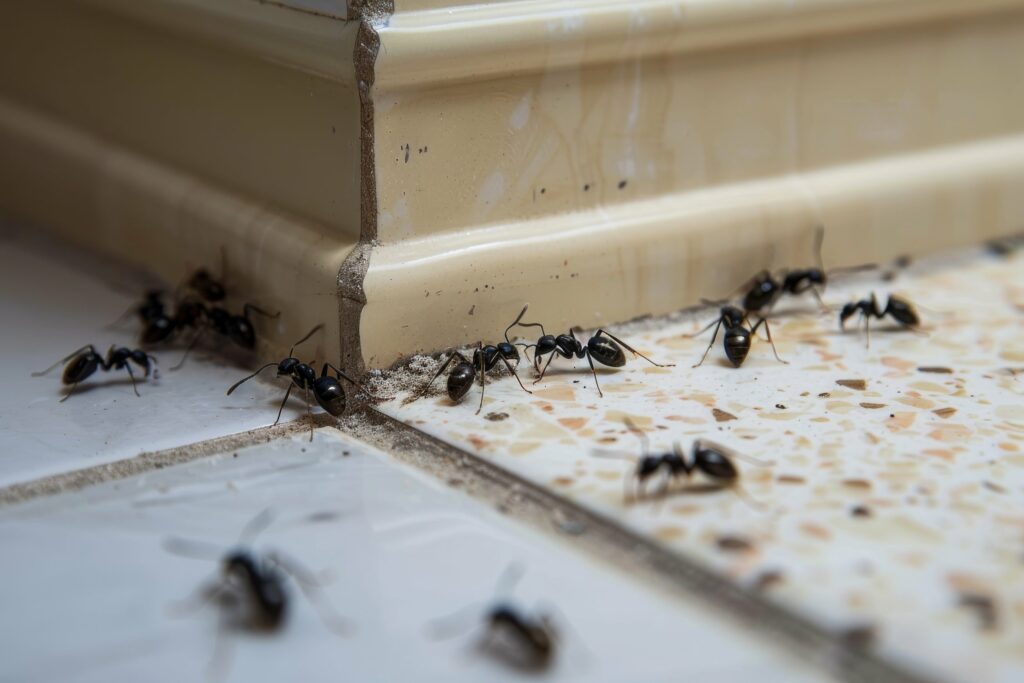
Ants Around Bathroom Sink
Moisture-related. Check plumbing, address any leaks, target with appropriate bait.
Ants in Pet Food
Daily pet food storage. Seal container, address any pet food attraction, bait ants at trail source.
Ants in Kitchen Counter
Food attraction. Clean counter, identify trail source, bait along trail (not on counter).
Ants in Electrical Outlets or Switches
Wall void colony. Professional assessment typically needed. Some ants damage electrical connections.
Ants Around Windows
Entry point. Seal gap, apply perimeter treatment, bait interior activity.
Ants Appearing After Rain
Seasonal indoor movement. Exterior perimeter treatment. Address any entry points discovered.
Ants in Bedroom (No Food Nearby)
Usually moisture-related (bathroom adjacent, HVAC issue, or water damage). Investigate moisture sources.
Ants Through Ceiling
Upper-level nesting. Roof and attic inspection. May indicate roof or upper-floor moisture issues.
Ants in Multi-Family Building
Often building-wide infestation. Coordinate with neighbors and management. Individual unit treatment has limits.
Carpenter Ant Considerations
Carpenter ants warrant specific attention because they damage wood:
Identification Confirmation
- Larger than other common indoor ants.
- Black or black-red coloration.
- Often produce sawdust-like debris (frass).
Damage Assessment
- Inspect wood members they associate with.
- Probe suspect wood with awl.
- Look for tunnels and galleries.
- Assess structural implications.
Treatment Approach
- Different bait preferences.
- Dust application into galleries often most effective.
- Professional treatment typically warranted.
- Address moisture supporting the nest.
Repair Considerations
- Damaged wood replacement.
- Structural assessment for significant damage.
- Source of moisture addressed.
Professional Treatment Approach
For established indoor colonies:
Assessment
- Species identification.
- Colony location attempts.
- Moisture source identification.
- Extent of infestation.
Targeted Treatment
- Species-appropriate bait selection.
- Multiple bait types for polygynous species.
- Minimal spray application (avoiding colony fragmentation).
- Dust in wall voids when accessible.
Follow-Up
- Bait replenishment as consumed.
- Re-assessment at 2-4 week intervals.
- Treatment continuation until activity ends.
Integration with Exterior
- Perimeter treatment to reduce external pressure.
- Landscape consultation.
- Exclusion after colony elimination.
Long-Term Management
After Colony Elimination
- Continue monitoring for 2-3 months.
- Watch for new trails or budded colonies.
- Address any recurring activity promptly.
Ongoing Prevention
- Quarterly perimeter service typical.
- Seasonal adjustments for peak activity times.
- Continued attention to moisture and food management.
Documentation
- Track which treatments worked for which species.
- Note problem areas for focused attention.
- Timeline of activity for trend awareness.
San Diego vs. Sacramento
In San Diego, Argentine ants dominate and include substantial indoor-nesting populations. Year-round pressure. Coastal and canyon-adjacent properties see heaviest indoor activity. Mediterranean climate conditions favor multiple species.
In Sacramento, Argentine ants present but less dominant than in Southern California. Odorous house ants more common indoors. Seasonal patterns more pronounced with spring and summer peaks. Central Valley heat drives ants toward moister indoor environments in summer.
When Professional Work Is Worth It
For occasional trailing ants with obvious food sources, basic exclusion and sanitation handle most situations. Professional work earns its keep when colonies appear established indoors, when species identification is uncertain, when moisture problems complicate treatment, when Pharaoh or carpenter ants are suspected, or when multi-family or commercial environments require coordinated response.
The Tri-Zone™ Defense System addresses ant pressure at the fence line, yard, and foundation — reducing exterior population and interior entry pressure. Simple Pest Management handles ant work across San Diego and Sacramento with species-appropriate treatment for indoor colonies plus the perimeter management that keeps exterior populations from establishing indoors in the first place.