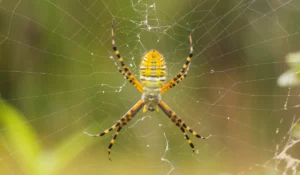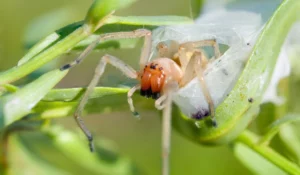


Spiders are part of life in Southern California, especially in places like San Diego County, where mild winters and plenty of indoor-outdoor spaces give these arachnids a reason to stick around.
Whether you’re spotting cobwebs in your garage, egg sacs in your eaves, or a jumping spider in your bathroom, it’s good to know which spiders you’re dealing with and how to respond.
Here are five of the most common house spiders in San Diego and what steps you can take to get rid of spiders for good.
Key Takeaways
- Black widow and brown widow spiders are common in San Diego and like to hide around garages and woodpiles.
- Cellar spiders, American house spiders, and jumping spiders are harmless but can leave cobwebs and messy webs indoors.
- Signs of spider activity include tangled webs, egg sacs, and movement near basements, eaves, and other quiet spaces.
- A spider problem gets worse without action, so check entry points, clean clutter, and call a local expert.
1. Black Widow Spider
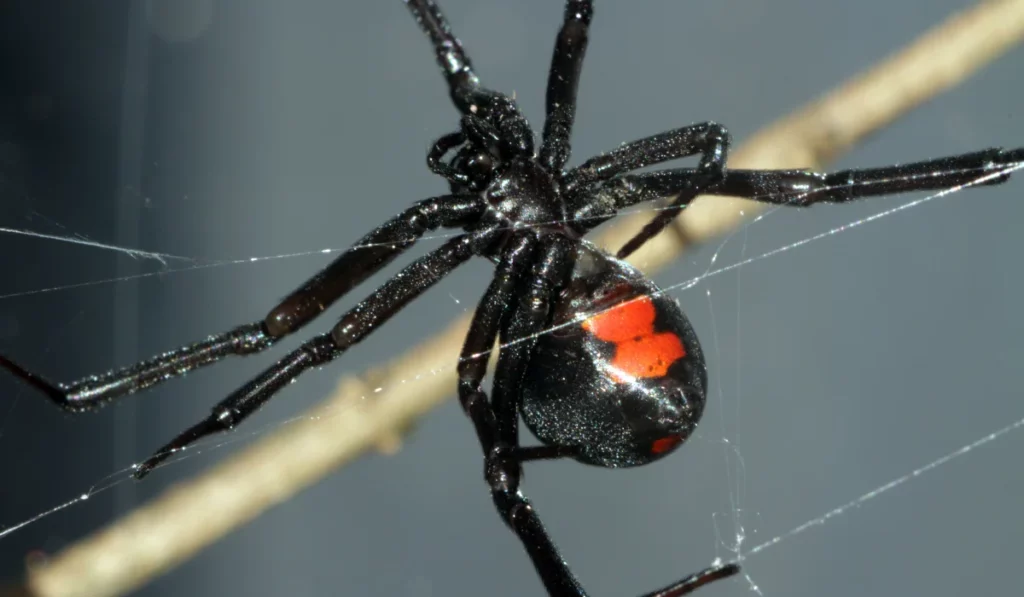
The black widow spider is the most well-known and feared spider in California. Recognizable by its shiny black body and distinct red hourglass marking, this spider often shows up in garages, woodpiles, and under patio furniture.
These venomous spiders are reclusive, but if you’re bitten, the venom can cause muscle cramps, nausea, and other serious symptoms.
Seek medical attention right away if bitten.
San Diego homes with cluttered outdoor areas are more likely to attract them, especially in tucked-away corners where spider webs go unnoticed.
2. Cellar Spiders (aka Daddy Long-Legs)

These spiders are commonly confused with other species, but cellar spiders (also known as daddy longlegs) are harmless.
You’ll often find them hanging out in basements, crawl spaces, or dark laundry rooms. They spin messy, tangled webs in corners and on ceilings.
Though these arthropods don’t pose a threat to humans, their webs can collect quickly and make a home look neglected.
3. Brown Widow Spider
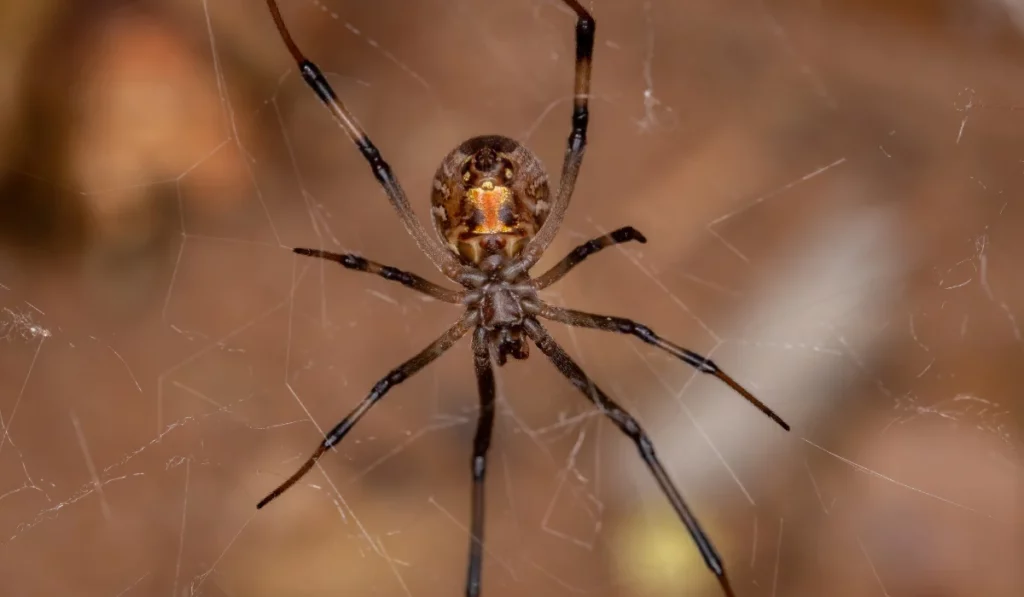
The brown widow spider is another spider gaining ground in San Diego County. It resembles the black widow but has a light brown to gray body and an orange-tinged hourglass marking.
While the brown widow’s venom is usually milder, its bite can still cause nausea, radiating pain, and muscle cramps. It often lays egg sacs in easy-to-reach places like patio furniture, mailboxes, and kids’ outdoor toys.
4. American House Spider
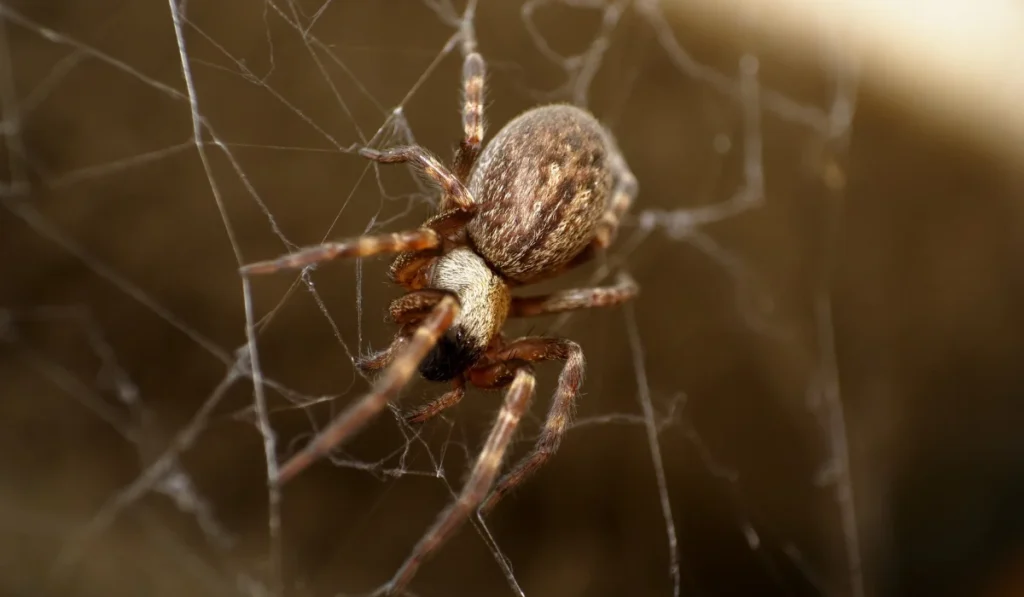
This common house spider is typically found indoors, especially in quiet areas like closets, window corners, or the attic.
Light brown, they spin webs in out-of-the-way locations and occasionally move around your home looking for a better place to settle.
The American house spider is closely related to orb weavers. These spiders are harmless but can contribute to the buildup of cobwebs over time.
5. Jumping Spiders

Jumping spiders are small, compact, and usually dark-colored with some variation in pattern. Known for their excellent vision and quick, jerky movement, they don’t spin traditional webs to catch prey. They stalk and pounce instead.
These hunters are commonly seen near windows or screen doors during daylight. While they’re technically a type of arachnid, they are not aggressive toward humans and rarely cause spider bites.
[elementor-template id=”4113″]
What to Do When You See One of These Spiders in Your San Diego Home
If you’ve spotted a spider in your San Diego home, don’t just squash it and move on. There’s a good chance it’s not alone.
Here’s what you can do to keep spiders out and stop an infestation before it starts.
Inspect for Activity and Look for Entry Points
When you spot one spider, there are often more.
Look for other signs like spider webs, egg sacs, or other species of spiders hiding nearby. Check high-traffic entry points like eaves, under sinks, or near baseboards.
Don’t forget the garage. It’s a hotspot for pests in many San Diego homes.
Avoid Over-the-Counter Solutions
Many DIY sprays are ineffective in San Diego’s warm climate.
Many spiders, especially venomous spiders like black widows and yellow sac spiders, can survive and retreat deeper into your home. Sprays may also interfere with professional pest control services if used improperly.
Reduce Clutter, Indoors and Outdoors
Spiders love woodpiles, cardboard boxes, and cluttered corners. Removing these makes your home less inviting to arachnids.
Clear out basements, clean up garden areas, and pull furniture away from the walls to spot hiding spiders more easily.
Seal Entry Points and Make Repairs
Use caulking and weather stripping to block gaps around doors, vents, and windows. Add mesh screens to attic vents and chimney openings.
Also, check sheds, fencing, and any outdoor structures where tarantulas or wolf spiders might be living nearby.
Bring in a Local Professional
At this point, if spiders keep showing up or you suspect an infestation, it’s time to call in the pros.
At Simple Pest Management, we offer same-day and next-day spider control services throughout San Diego County, using strategies that are tough on spiders but safe for your family.
We target areas like eaves, basements, and crawlspaces where spiders nest, and we treat both the interior and exterior of your property to break the breeding cycle.
Want to stop spiders before they take over your home?
Contact us today and schedule your pest control service with a local expert who knows exactly what’s crawling around in your neighborhood.