

You hear it first at night—a faint scratching in the walls, tiny footsteps scurrying across the attic. If this sounds familiar, you’re not alone. Nearly 3 in 10 American homes have rodents, and more than half of those infestations begin during winter months. As temperatures drop across San Diego, Sacramento, and the surrounding California counties, mice and rats are actively searching for one thing: your warm, cozy home.
Why Winter Is Peak Rodent Season in California
While California winters are milder than most states, the temperature drop is still enough to send rodents seeking shelter. Mice can squeeze through openings as small as a dime, while rats only need a quarter-sized gap to enter your home. Once inside, they’re not just looking for warmth—they’re searching for food, water, and a safe place to breed.
Here’s what makes winter particularly problematic:
Food scarcity outdoors: Natural food sources become limited, making your pantry irresistible.
Breeding season preparation: Rodents breed year-round indoors, with a single mouse producing up to 60 offspring per year.
Holiday gatherings: More food in the home means more attractants for hungry rodents.
Increased indoor time: Homes are warmer and more active, which rodents find appealing.
Warning Signs You Have Uninvited Guests
Rodent infestations often go unnoticed until they’ve become a serious problem. Here are the telltale signs every California homeowner should watch for:
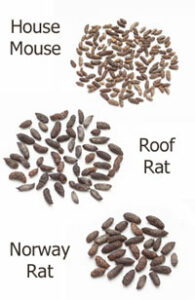
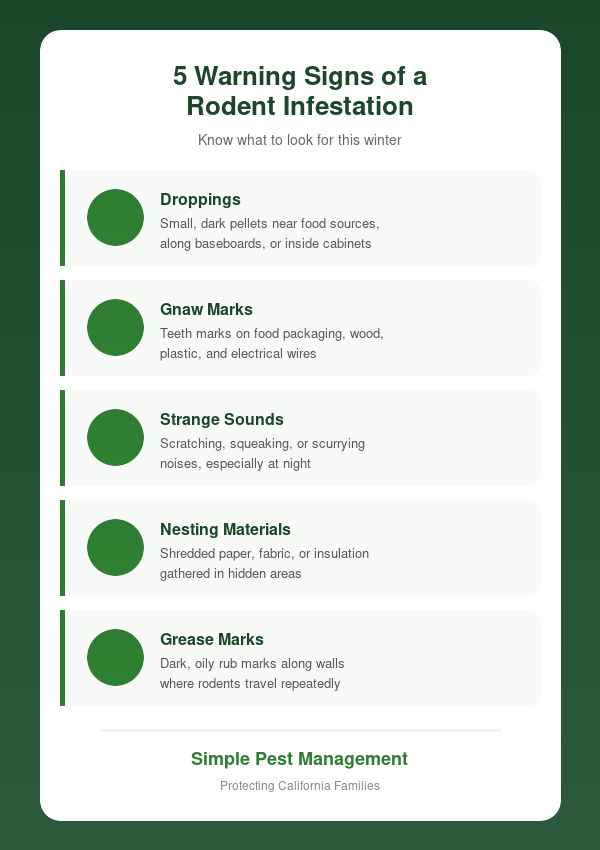
Droppings: Small, dark pellets near food sources, along baseboards, or in cabinets. Mouse droppings are about the size of a grain of rice, while rat droppings are larger and more capsule shaped.
Gnaw marks: Rodents must constantly chew to keep their teeth filed down. Look for teeth marks on food packaging, wood, plastic, and even electrical wires.
Strange sounds: Scratching, squeaking, or scurrying noises, especially at night when rodents are most active.
Nesting materials: Shredded paper, fabric, or insulation gathered in hidden corners, behind appliances, or in storage areas.
Grease marks: Dark, oily rub marks along walls and baseboards where rodents travel repeatedly.
The Hidden Dangers of a Rodent Infestation
Rodents aren’t just a nuisance—they pose real health and safety risks to your family:
Disease transmission: Mice and rats can carry hantavirus, salmonella, and leptospirosis, which can be spread through droppings, urine, and saliva.
Allergies and asthma: Rodent dander and droppings are known allergens that can trigger respiratory issues, particularly in children.
Fire hazards: Rodents chewing through electrical wires cause an estimated 20% of undetermined house fires in the United States.
Structural damage: From insulation to support beams, rodents can compromise your home’s integrity over time.
5 Proven Ways to Keep Rodents Out This Winter
Prevention is always easier than elimination. Here’s how to make your home less inviting to these unwanted visitors:
- Seal entry points: Inspect your home’s exterior for gaps around pipes, vents, doors, and windows. Use steel wool and caulk for small holes, and hardware cloth for larger openings.
- Eliminate food sources: Store food in airtight containers, clean up crumbs immediately, and don’t leave pet food out overnight.
- Reduce clutter: Rodents love hiding spots. Keep storage areas organized and elevate boxes off the floor.
- Maintain your yard: Trim vegetation away from your home’s foundation, remove fallen fruit, and store firewood at least 20 feet from your house.
- Address moisture issues: Fix leaky pipes and ensure proper drainage. Rodents need water to survive, so eliminating water sources makes your home less attractive.
When to Call a Professional
While DIY prevention methods can help, established infestations require professional intervention. If you’re seeing multiple signs of rodent activity, hearing sounds regularly, or have tried traps without success, it’s time to call in the experts.
At Simple Pest Management, our approach goes beyond just setting traps. We provide:
Thorough inspections to identify entry points and nesting areas
Strategic trapping using the most effective, humane methods
Exclusion techniques to seal your home and prevent re-entry
Ongoing monitoring to ensure the problem is fully resolved
Don’t Wait Until Spring
Rodent populations can explode quickly. A small problem in January can become a major infestation by March. The sooner you act, the easier and more affordable the solution.
Serving San Diego, Sacramento, Riverside, and Placer counties, Simple Pest Management is your local partner in keeping California homes rodent-free. Our team is fully licensed, bonded, and insured—and we stand behind our work with a pest-free guarantee.
Ready to reclaim your home from rodents?
Contact Simple Pest Management today for a free inspection.https://youtu.be/8uts9e8waFY