

For dog owners across California, tick prevention is a year-round concern that deserves serious attention. From the coastal regions of San Diego County to the foothills of Sacramento and Placer counties, ticks pose significant health risks to our four-legged family members. These tiny parasites can transmit dangerous diseases including Lyme disease, making effective prevention and prompt removal essential skills for every pet owner.
At Simple Pest Management, we work with homeowners throughout San Diego, Sacramento, Riverside, and Placer counties to reduce tick populations in residential landscapes. In this comprehensive guide, we’ll cover the tick species found in California, the diseases they carry, how to properly check and protect your pets, and professional prevention strategies that keep your entire family safe.
Common Tick Species in California
California is home to several tick species that affect dogs and other pets. Understanding which ticks are prevalent in your area helps you take appropriate precautions and recognize potential threats to your pet’s health.
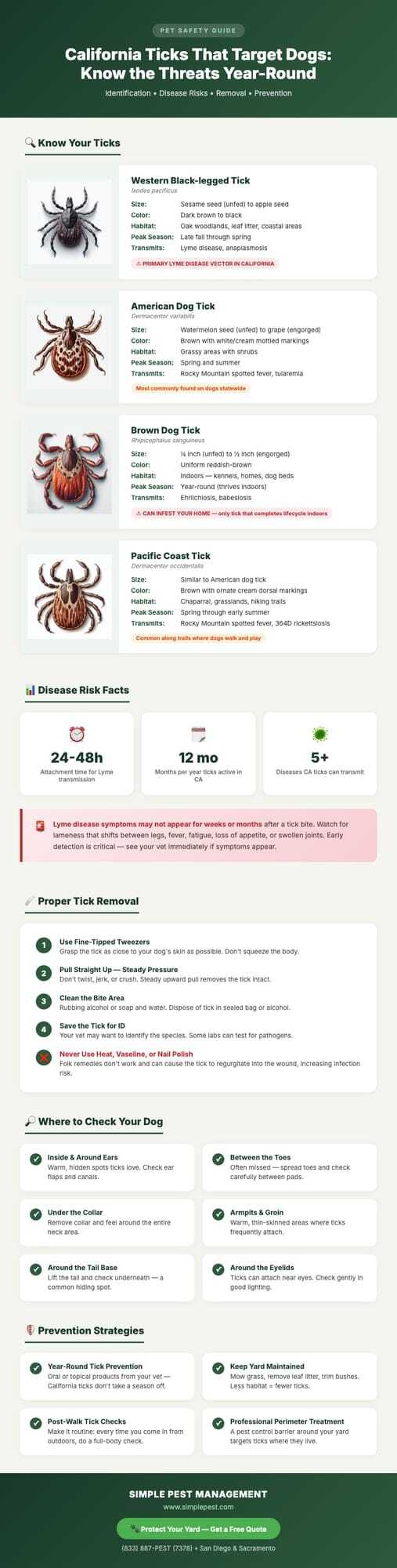
The Western black-legged tick (Ixodes pacificus) is the primary vector for Lyme disease in California. These ticks are most commonly found in the coastal and northern regions of the state, particularly in areas with oak woodlands, leaf litter, and dense vegetation. They’re most active during the cooler, wetter months from late fall through spring, though they can be encountered year-round in many California climates.
The American dog tick (Dermacentor variabilis) is widespread throughout California and commonly attaches to dogs. While less likely to transmit Lyme disease, this species can carry Rocky Mountain spotted fever and tularemia. American dog ticks prefer grassy areas with shrubs and are most active during spring and summer months.
The brown dog tick (Rhipicephalus sanguineus) is unique among California ticks because it can complete its entire life cycle indoors. This means it can establish infestations in homes, kennels, and other indoor environments. Brown dog ticks are a particular concern in San Diego and Riverside counties, where the warm climate allows them to thrive. They can transmit canine ehrlichiosis and babesiosis to dogs.
The Pacific Coast tick (Dermacentor occidentalis) is found throughout California and can transmit Rocky Mountain spotted fever and 364D rickettsiosis. This species is common in chaparral, grasslands, and along trails where dogs frequently walk and play.
Lyme Disease and Other Tick-Borne Illnesses
Lyme disease is the most well-known tick-borne illness affecting California dogs, and it’s a genuine cause for concern in many parts of the state. Caused by the bacterium Borrelia burgdorferi and transmitted primarily by Western black-legged ticks, Lyme disease can cause serious health problems if left untreated.
Symptoms of Lyme disease in dogs may include lameness that shifts from leg to leg, fever, loss of appetite, fatigue, and swollen joints. In severe cases, the disease can affect the heart and kidneys. The challenge with Lyme disease is that symptoms may not appear for weeks or even months after the initial tick bite, making early detection difficult.
Other tick-borne diseases found in California include canine anaplasmosis, which causes similar symptoms to Lyme disease; canine ehrlichiosis, which can lead to bleeding disorders and organ damage; and Rocky Mountain spotted fever, which can be fatal if not treated promptly. These diseases underscore the importance of both prevention and regular veterinary care for dogs in tick-prone areas.
How to Check Your Dog for Ticks
Regular tick checks should become part of your routine whenever your dog spends time outdoors, especially if you’ve been hiking, walking in tall grass, or visiting areas with dense vegetation. Catching ticks early—before they’ve had time to transmit disease-causing pathogens—significantly reduces health risks to your pet.
Begin by running your hands slowly over your dog’s entire body, feeling for any small bumps. Ticks range in size from a pinhead (unfed) to a grape (fully engorged), and they often feel like a small, firm lump on the skin. Pay special attention to areas where ticks commonly hide: inside and around the ears, around the eyelids, under the collar, between the toes, in the armpits, around the tail base, and in the groin area.
Use a fine-toothed comb to check through your dog’s coat, parting the fur to examine the skin closely. Ticks can be difficult to spot on dogs with dark or thick coats, so good lighting and patience are essential. If your dog has been in a heavily infested area, consider checking multiple times over the following few days, as you might miss newly attached ticks during the first inspection.
Create a tick-checking routine that your dog learns to expect and tolerate. Combining tick checks with positive experiences like treats and praise makes the process easier for both you and your pet. Many of our clients in Placer and Sacramento counties make tick checking part of their post-hike routine, examining their dogs before loading them back into the car.
Proper Tick Removal Techniques
If you find a tick attached to your dog, prompt removal is crucial. The longer a tick remains attached, the greater the risk of disease transmission—though it’s worth noting that for Lyme disease, transmission typically requires 24-48 hours of attachment. Proper removal technique matters, as improper methods can increase infection risk.
Use fine-tipped tweezers or a specialized tick removal tool designed for pets. Grasp the tick as close to your dog’s skin as possible, taking care not to squeeze the tick’s body. Pull upward with steady, even pressure—don’t twist, jerk, or crush the tick, as this can cause the mouthparts to break off and remain in the skin, increasing infection risk.
After removal, clean the bite area with rubbing alcohol or soap and water. Dispose of the tick by placing it in a sealed bag or container, submerging it in alcohol, or flushing it down the toilet. Never crush a tick with your bare fingers, as this can expose you to disease-causing organisms.
Consider saving the tick in a sealed container for identification, especially if your dog develops symptoms in the following weeks. Your veterinarian may want to know the species of tick involved, and some tick testing services can analyze the tick for the presence of disease-causing pathogens.
Avoid folk remedies like applying heat, petroleum jelly, or nail polish to an attached tick. These methods don’t work and may actually increase the risk of disease transmission by causing the tick to regurgitate into the bite wound. Stick with mechanical removal using proper tools and technique.
Prevention Strategies for Pet Owners
Preventing tick bites is far better than dealing with the consequences after the fact. A multi-layered approach combining veterinary products, environmental management, and behavioral strategies provides the best protection for your pets.
Consult with your veterinarian about tick prevention products appropriate for your dog’s age, size, and health status. Options include topical treatments, oral medications, and tick collars, each with different application schedules and mechanisms of action. Your vet can recommend products effective against the tick species most common in your area and advise on proper usage.
Modify your walking and hiking habits to reduce tick exposure. Stay on cleared trails rather than walking through tall grass or brush. Avoid areas with heavy leaf litter, especially during peak tick season. If possible, choose recreation areas that receive regular maintenance to reduce tick habitat.
Keep your own yard less hospitable to ticks. Maintain a mowed lawn, remove leaf litter, trim back overgrown vegetation, and create barriers between lawn areas and wooded sections. Consider creating a gravel or wood chip border between your lawn and adjacent wild areas—ticks are less likely to cross these dry, sunny barriers.
Professional Tick Control for Your Property
At Simple Pest Management, we offer professional tick control treatments that significantly reduce tick populations on residential properties. Our approach targets the areas where ticks live and breed, creating a safer environment for your pets and family.
Our technicians begin with a thorough property inspection to identify tick habitat areas including dense vegetation, leaf litter accumulation, wood piles, stone walls, and shaded perimeter areas. We assess the property’s overall risk level based on surrounding land use, wildlife activity, and landscape features.
Treatment programs typically include targeted applications to high-risk areas using products specifically formulated for tick control. We focus on the areas where ticks wait for hosts—along property borders, in transitional zones between lawn and woods, and around structures where wildlife may travel. Multiple applications throughout the active season provide sustained protection.
We also provide habitat modification recommendations tailored to your property. Simple changes in landscape maintenance can dramatically reduce tick pressure over time, complementing our treatment programs for comprehensive protection.
Protecting Your Pets and Family
Tick prevention is a shared responsibility that involves pet owners, veterinarians, and pest management professionals working together. By combining appropriate veterinary preventatives, diligent tick checking, proper removal techniques, and professional property treatments, you can significantly reduce the risk of tick-borne disease for your beloved pets.
At Simple Pest Management, we’re committed to helping California families enjoy their outdoor spaces without the worry of tick-borne illness. Our services throughout San Diego, Sacramento, Riverside, and Placer counties are designed to integrate with your overall pet health strategy, providing an important layer of protection for the animals you love.