





California is home to some of the most beautiful landscapes in the world, from the sun-drenched beaches of San Diego to the majestic Sierra Nevada mountains of Placer County. However, sharing this diverse environment are some less welcome residents, including the infamous black widow spider. Known for its distinctive appearance and potent venom, the black widow is the most medically significant spider species in California, making awareness and proper safety practices essential for every homeowner.
At Simple Pest Management, we understand that encountering a black widow spider can be frightening. Serving families throughout San Diego, Sacramento, Riverside, and Placer counties, we have helped countless homeowners protect their properties from these venomous arachnids. The good news is that with proper knowledge and precautions, you can significantly reduce your risk of black widow encounters and know exactly what to do if a bite occurs.
This comprehensive guide covers everything California residents need to know about black widow spiders: how to identify them accurately, where they tend to hide on your property, what symptoms to watch for if bitten, appropriate first aid measures, and most importantly, how to prevent infestations before they become a problem.
Identifying Black Widow Spiders: Know What You Are Looking For
Accurate identification is the first step in black widow safety. While many spiders are commonly mistaken for black widows, true black widows have distinctive characteristics that set them apart once you know what to look for.
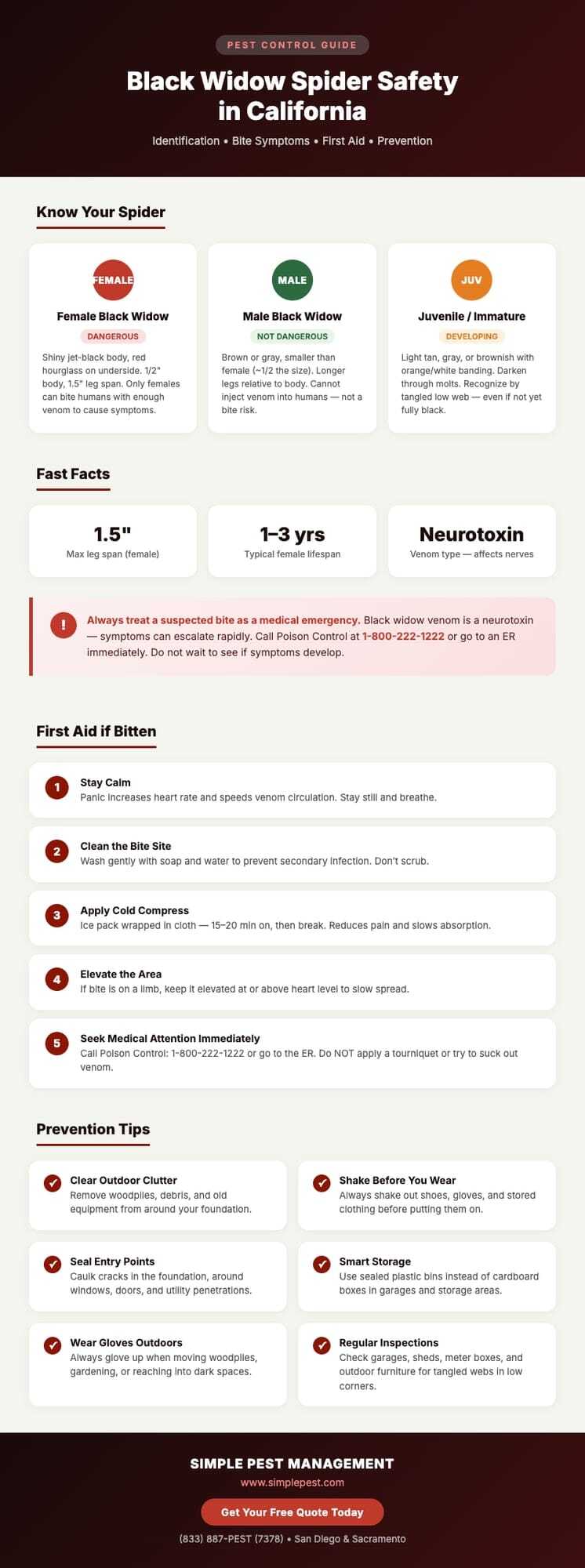
Female Black Widows: The female black widow is the one you need to be concerned about, as only females have fangs long enough to pierce human skin and inject venom. Female black widows are medium to large spiders, with body lengths of about half an inch and leg spans reaching up to one and a half inches. Their most distinctive feature is their coloring: a shiny, jet-black body with a bright red or orange hourglass marking on the underside of the abdomen. This hourglass is typically complete, though in some individuals it may appear as two separate triangles or dots.
The female’s abdomen is large and round, giving her a distinctive silhouette that is sometimes described as a black grape or marble. Young females and some adults may also have red or white markings on their backs in addition to the ventral hourglass. The legs are long and slender, typically solid black, though they may have slightly lighter coloring at the joints.
Male Black Widows: Males are much smaller than females, typically only about half the size, and are not considered dangerous to humans. Male black widows are lighter in color, often brown or gray with lighter streaking on the abdomen and red or orange spots. They have longer legs relative to their body size and look quite different from the glossy black females.
Juvenile Black Widows: Young black widows do not yet have the classic black and red coloring. Juveniles are often lighter colored, tan, gray, or brownish, with white, orange, or red bands and spots on their abdomens. They darken as they mature through successive molts, eventually developing the characteristic adult coloring.
Black Widow Webs: Another identifying feature is their distinctive web structure. Black widows spin messy, tangled, three-dimensional webs often described as cobwebs. Unlike the organized spiral webs of orb weavers, black widow webs are irregular and disorganized, typically built in low, protected locations. The silk is notably strong and sticky, with a characteristic crinkly sound when disturbed.
Where Black Widows Hide: Common Locations in California Homes
Black widows are secretive spiders that prefer dark, undisturbed areas where they can build their webs and wait for prey. Understanding their preferred habitats helps you know where to exercise extra caution and where to focus prevention efforts.
Outdoor Locations: In the yards and landscapes of California homes, black widows commonly establish webs in woodpiles, which provide ideal dark crevices and attract insects for food. They are frequently found in outdoor storage sheds and garages, particularly in cluttered areas with boxes, stored equipment, and infrequently moved items. Garden areas offer numerous hiding spots, including under planters and pots, inside meter boxes and electrical housings, beneath outdoor furniture, in irrigation valve boxes, and along fence lines and retaining walls.
Rock gardens and decorative stone features, which are popular in drought-tolerant California landscapes throughout San Diego and Riverside counties, can harbor black widows in the gaps between rocks. Sprinkler control boxes, pool equipment enclosures, and barbecue grill housings are all common black widow locations.
Indoor Locations: While black widows prefer the outdoors, they do enter homes, particularly in areas that mimic their preferred habitat. Garages are one of the most common indoor locations, especially in cluttered corners, along foundations, and in stored items. Basements and crawl spaces, with their dark, cool, undisturbed environments, are prime black widow territory.
Other indoor locations include closets and storage areas, particularly at floor level; behind and under furniture that rarely moves; in boxes, especially cardboard boxes stored for long periods; and in shoes, gloves, or clothing stored in garages or basements. Many bites occur when people put on shoes or gloves that have been sitting undisturbed in areas where black widows are present.
Regional Considerations: Black widow populations thrive throughout California’s varied climates. In the warmer regions of San Diego and Riverside counties, they may be active year-round. In Sacramento and Placer counties, activity typically peaks during the warmer months from spring through fall, though they remain present throughout the year in protected locations. Agricultural areas, common throughout these regions, often have higher black widow populations due to the abundance of insects and hiding spots.
Black Widow Bite Symptoms: What to Watch For
Black widow venom is a neurotoxin, meaning it affects the nervous system rather than destroying tissue at the bite site like some other venomous species. Understanding the progression of symptoms helps ensure appropriate medical response.
Immediate Symptoms: The initial bite is often described as feeling like a pinprick and may not be immediately painful. Some people do not realize they have been bitten until symptoms develop. The bite site typically shows two small fang marks, though these can be difficult to see. Within an hour of the bite, localized pain, redness, and swelling usually develop at the bite site.
Systemic Symptoms: As the venom spreads through the body, more serious symptoms may develop over the following hours. The most characteristic symptom is intense muscle cramping and pain, particularly in the abdomen, back, and legs. This cramping can be severe and is often described as wave-like, coming and going in intensity. Other systemic symptoms include sweating, often profuse; nausea and vomiting; headache; dizziness; elevated blood pressure; restlessness and anxiety; difficulty breathing in severe cases; and muscle weakness.
Symptoms typically peak within a few hours of the bite and may last from several hours to several days. The severity of symptoms varies based on factors including the amount of venom injected, the location of the bite, and the age and health of the person bitten. Children, elderly individuals, and those with compromised health are at greatest risk for serious reactions.
Important Note: While black widow bites are rarely fatal, especially with modern medical care, they should always be treated as a medical emergency. Do not wait to see if symptoms develop or worsen before seeking medical attention.
First Aid for Black Widow Bites: What to Do Immediately
If you suspect you or someone else has been bitten by a black widow spider, taking the right steps quickly can help manage symptoms and ensure proper medical treatment. Here is what to do:
Stay calm: While easier said than done, remaining calm helps slow the spread of venom through the body and allows you to think clearly about next steps. Panic increases heart rate and circulation, potentially speeding the venom’s progression.
Clean the bite area: Wash the bite site gently with soap and water to reduce the risk of secondary infection. This does not remove the venom but helps prevent bacteria from entering through the wound.
Apply a cold compress: Place an ice pack wrapped in a cloth on the bite site. The cold helps reduce pain and swelling and may slow the absorption of venom. Apply for fifteen to twenty minutes at a time, with breaks in between to prevent cold injury to the skin.
Elevate the affected area: If the bite is on an arm or leg, keep it elevated at or above heart level. This can help reduce swelling and may slow the spread of venom through the lymphatic system.
Identify the spider if possible: If you can safely capture or photograph the spider without risking additional bites, this information can be valuable for medical professionals. However, do not delay medical care to search for or capture the spider.
Seek medical attention immediately: Contact your doctor, go to an emergency room, or call Poison Control at 1-800-222-1222. All suspected black widow bites should be evaluated by medical professionals, even if symptoms seem mild initially.
What NOT to do: Do not apply a tourniquet, as this can cause more harm than good. Do not try to cut the bite site or suck out the venom, as these folk remedies are ineffective and can cause additional injury. Do not apply heat to the bite, as this may increase venom absorption. Do not take aspirin, which can thin the blood and potentially worsen bleeding.
Preventing Black Widow Infestations: Protecting Your California Home
Prevention is the most effective strategy for black widow safety. By making your property less hospitable to these spiders and reducing accidental encounters, you can significantly lower your risk of bites.
Reduce Outdoor Habitat: Remove or reorganize woodpiles, keeping them away from your home and elevated off the ground if possible. Clear debris, leaf litter, and brush from around your foundation. Remove old boards, unused equipment, and other items that create dark hiding spots. Keep grass trimmed and vegetation away from the house. Eliminate rock piles and fill gaps in decorative stone features where spiders may hide.
Reduce Prey Insects: Black widows go where the food is. Reducing the insect population around your home makes it less attractive to spiders. Switch outdoor lighting to yellow bug lights or sodium vapor lights that attract fewer insects. Address any outdoor insect problems, as abundant prey will attract spiders. Keep outdoor trash cans sealed and away from the house.
Seal Entry Points: Prevent spiders from entering your home by sealing cracks and gaps in the foundation, around windows and doors, and where utilities enter the building. Install or repair weather stripping on doors. Make sure screens on windows and vents are intact and fit tightly. Pay particular attention to garage doors, which often have gaps that allow spider entry.
Practice Smart Storage: Store items in sealed plastic containers rather than cardboard boxes that spiders can easily enter. Keep storage areas organized and clean, minimizing clutter where spiders can hide. Avoid storing items directly on the floor in garages and basements. Regularly inspect and rotate stored items to prevent undisturbed hiding spots.
Personal Safety Habits: Always shake out shoes, gloves, and clothing that have been stored in garages or closets before putting them on. Use caution when reaching into dark spaces, boxes, or areas where you cannot see clearly. Wear gloves when working in the garden, moving woodpiles, or handling stored items. Use a flashlight when entering dark areas like sheds, crawl spaces, or garage corners. Teach children to never touch spiders or webs and to tell an adult if they see a spider matching the black widow description.
Regular Inspections: Conduct regular inspections of common black widow habitats around your property. Check garage corners, storage areas, outdoor furniture, meter boxes, and other likely locations periodically. Look for their characteristic messy, tangled webs in low, protected areas. Early detection of black widow activity allows for prompt treatment before populations grow.
When to Call Professional Pest Control
While occasional black widow sightings outdoors are normal in California, certain situations warrant professional pest control intervention. Contact a professional if you find black widows inside your home, if you discover multiple spiders or egg sacs indicating an established population, if black widows are found in high-traffic areas where encounters are likely, or if you have young children, elderly family members, or individuals with health conditions that make bites more dangerous.
Professional pest control for black widows involves thorough inspection to identify all harborage areas, targeted treatment of spider populations and egg sacs, treatment of prey insect populations that attract spiders, recommendations for exclusion and habitat modification, and ongoing monitoring and follow-up treatments as needed.