

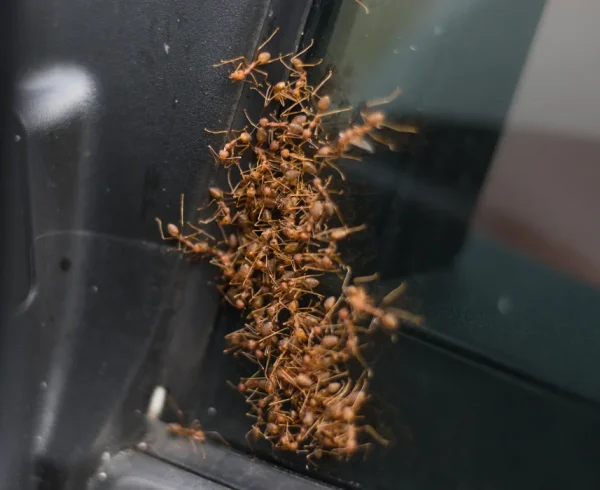


Discovering an ant infestation in your car can be both frustrating and confusing.
Unlike your home, your car is constantly exposed to different environments, making it an easy target for ants searching for a food source. Whether it’s sugar ants, carpenter ants, or even fire ants, these pests can invade your car interior, creating an ongoing ant problem.
If you’re asking, how do I get rid of ants in my car? Follow these five effective tips to remove ants and keep them from coming back.
Key Takeaways
- Seeing ants in your car means there’s a bigger problem, and ignoring them will only make things worse.
- Cleaning up food, vacuuming thoroughly, and avoiding ant-infested parking spots help stop an infestation before it starts.
- Ant baits, essential oils, and diatomaceous earth work better than bug sprays to eliminate ants at the source.
- If ants keep coming back, check for hidden nests, wash your car, or call a pest control expert.
1. Eliminate the Food Source
Ants are always on the hunt for a source of food, and even the smallest crumbs can attract a trail of worker ants.
To prevent an ant infestation in the first place, start by removing all potential food sources. Some of the most common culprits are candy wrappers, fast food bags, and spilled drinks.
With a vacuum cleaner, clean your car interior thoroughly, paying close attention to crevices, car seats, upholstery, and floor mats.
Additionally, consider where you park.
If you’re regularly parking near an ant hill or an area with an established ant colony, you’re increasing the chances of ants invading your vehicle.
If possible, move your parking spot away from heavily infested areas.
2. Use Ant Baits and Traps
Cleaning alone may not be enough to remove ants completely.
Setting up ant bait stations inside your car is an effective way to kill ants at the source. Worker ants will take the bait back to the ant colony, eliminating the problem at its root.
Gel bait products, such as Terro, are particularly effective against sugar ants and other common species.
Ant traps can also help, but make sure to place them in strategic areas where you’ve seen ant activity. Under car seats, inside cup holders, and along door panels are common places to place ant bait stations.
Avoid using bug sprays directly inside the car, as they can leave behind strong odors and harmful residues.
3. Disrupt Pheromone Trails with Essential Oils
Ants navigate using pheromone trails, which they leave behind to guide other ants to a food source.
If you don’t disrupt these trails, the ants will keep coming back.
A simple DIY solution is to mix water and peppermint essential oil in a spray bottle and apply it to areas where you’ve seen ants. It acts as a natural deterrent, making your car less appealing to ants.
For a stronger approach, try using diatomaceous earth.
This natural powder can kill ants by dehydrating them, making it a safe and non-toxic alternative to harsh products. Lightly sprinkle it in areas where ants are active, such as under floor mats and in wheel wells.
4. Inspect for Ant Nests in Hidden Areas
If you continue to see ants even after cleaning and using ant baits, there could be an ant nest inside your car.
Some types of ants, like carpenter ants, prefer to build nests in hidden areas such as the engine bay, wheel wells, or inside door panels.
Carefully inspect these areas for signs of nesting.
If you find an ant nest, you may need to use a stronger solution like an EPA-approved ant spray. Be cautious when applying any treatment near your engine bay, as certain products could damage car components.
If the infestation is severe, consider calling a pest control expert to handle the situation safely.
5. Wash Your Car and Seek Professional Pest Control
A thorough car wash can help remove lingering food particles and ant trails that may not be visible. Pay extra attention to the car interior, including upholstery, floor mats, and crevices where ants might hide.
If your ant problem persists, it may be time to call an exterminator.
A pest control professional can identify the species of ants you’re dealing with and recommend the best treatment plan.
This is especially important if you’re facing an infestation of fire ants or carpenter ants, which can be more aggressive and difficult to remove.
Take Back Your Car from Ants
Getting rid of ants in your car requires a combination of cleaning, baiting, and prevention. At Simple Pest Management, we provide expert ant control services to eliminate infestations quickly and effectively. We know how frustrating it is to deal with persistent ants in your car, which is why we offer safe, targeted treatments to remove ants and prevent them from coming back.
Whether you’re dealing with sugar ants, fire ants, or another species, our trained technicians will identify the problem and apply the best solution for long-term protection.
Give us a call today, and let’s get your car—and home—ant-free!