



As temperatures begin to rise across California, pet owners from San Diego to Sacramento know that flea season is just around the corner. These tiny, persistent pests can turn your comfortable home into a battleground, affecting not just your beloved pets but your entire family. At Simple Pest Management, we have helped countless California families take control of flea infestations before they spiral out of control. This comprehensive guide will walk you through everything you need to know to prepare for flea season and keep your home, yard, and pets protected.
Flea season in California typically runs from early spring through late fall, though our mild climate means these pests can remain active year-round in many areas. Whether you live in the coastal regions of San Diego County, the Central Valley around Sacramento, the inland areas of Riverside County, or the foothills of Placer County, understanding how to prepare for flea season is essential for every pet owner.
Understanding Flea Season in California
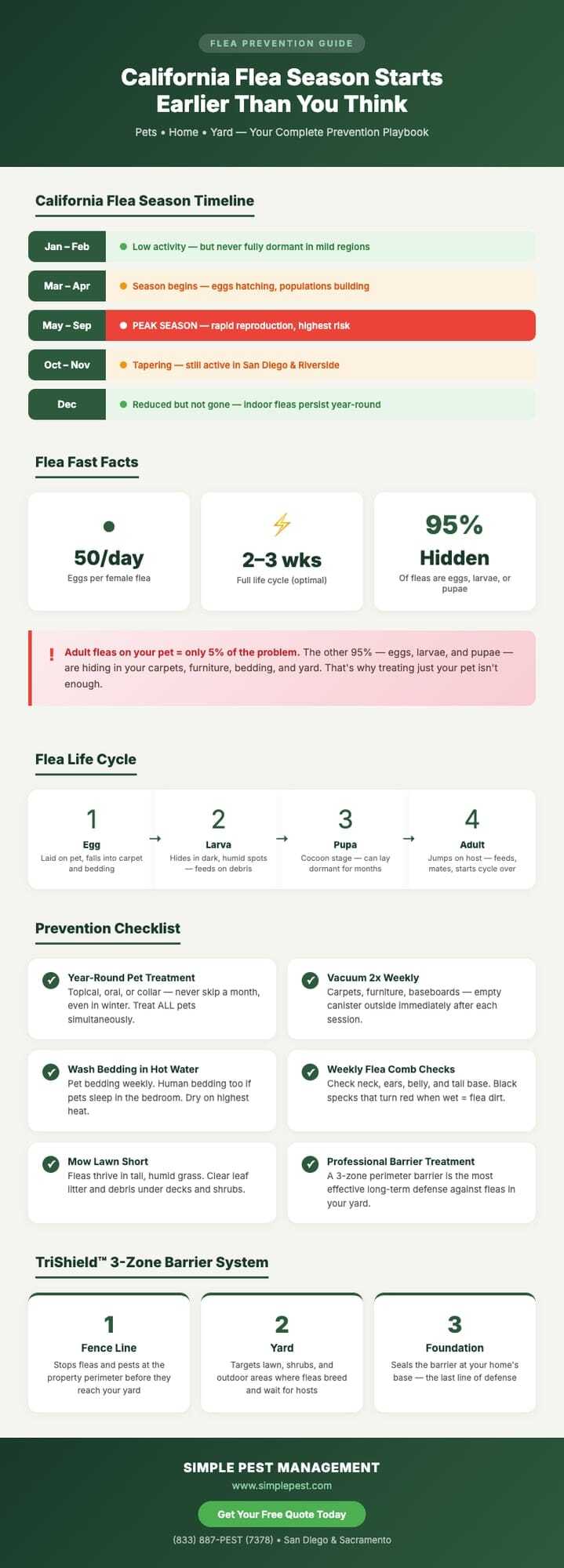
California’s Mediterranean climate creates ideal conditions for fleas to thrive. Unlike states with harsh winters that naturally reduce flea populations, our relatively mild temperatures allow these pests to remain active for extended periods. Fleas reproduce rapidly in temperatures between 65 and 80 degrees Fahrenheit with moderate humidity, conditions that are common throughout much of California for eight to ten months of the year.
The flea life cycle consists of four stages: egg, larva, pupa, and adult. A single female flea can lay up to 50 eggs per day, and under optimal conditions, fleas can complete their entire life cycle in as little as two to three weeks. This rapid reproduction rate means that a small problem can quickly become a full-blown infestation if not addressed promptly.
Peak flea season in California generally occurs from March through October, though activity can begin as early as February in warmer regions like San Diego and Riverside counties. In Sacramento and Placer counties, where winters are slightly cooler, flea activity may decrease during December and January but rarely stops entirely.
Complete Pet Treatment Guide
Your pets are often the first line of defense against fleas, and keeping them protected is crucial for preventing infestations. A comprehensive pet treatment plan should address prevention, detection, and treatment.
Year-Round Prevention
The most effective approach to flea control is consistent prevention. Work with your veterinarian to select a flea prevention product that suits your pet’s needs. Options include:
● Topical treatments applied monthly to the skin between the shoulder blades
● Oral medications that provide systemic protection against fleas and their eggs
● Flea collars that release active ingredients over several months
● Injectable preventatives administered by your veterinarian
Regardless of which prevention method you choose, consistency is key. Set reminders on your phone or calendar to ensure you never miss a treatment dose. Even one missed month can create an opportunity for fleas to establish themselves.
Regular Grooming and Inspection
Regular grooming helps you detect fleas early before they become a major problem. Use a fine-toothed flea comb to check your pets weekly, paying special attention to warm areas where fleas like to hide: around the neck, behind the ears, along the belly, and at the base of the tail. If you find black specks that turn reddish-brown when wet, this is flea dirt, a sure sign of flea activity.
Bathing your pets regularly with a gentle pet shampoo can help reduce flea populations, though bathing alone is not sufficient to control an infestation. Some pet owners find that adding a few drops of dish soap to bath water helps drown fleas, but always consult your veterinarian before using any home remedies.
Treating All Pets in the Household
If you have multiple pets, treat all of them simultaneously. Fleas can easily jump from one untreated pet to another, making partial treatment ineffective. This includes indoor-only cats, as fleas can enter your home on shoes, clothing, or other animals and quickly find their way to any unprotected pet.
Comprehensive Home Treatment
Even if your pets are protected, fleas can still infest your home. In fact, adult fleas on your pets represent only about five percent of the total flea population in your home. The remaining 95 percent exists as eggs, larvae, and pupae hidden in carpets, furniture, bedding, and cracks in flooring.
Deep Cleaning Strategies
A thorough cleaning routine is essential for controlling fleas in your home. Follow this comprehensive checklist:
● Vacuum all carpets, rugs, and upholstered furniture thoroughly at least twice per week during flea season
● Pay special attention to areas where pets spend time, including their favorite sleeping spots
● Vacuum along baseboards, in corners, and under furniture where flea larvae tend to hide
● Immediately empty the vacuum bag or canister outside to prevent captured fleas from escaping back into your home
● Wash all pet bedding in hot water weekly, drying on the highest heat setting
● Launder human bedding regularly if pets sleep in your bedroom
● Steam clean carpets and upholstery periodically, as the heat kills all flea life stages
Targeting High-Risk Areas
Focus your cleaning efforts on areas where flea activity is most likely. Flea larvae avoid light and seek out dark, humid environments where they can feed on organic debris. This means paying extra attention to:
● Beneath and behind furniture that is rarely moved
● Pet sleeping areas and crates
● Carpeted closets and under beds
● Areas near exterior doors where fleas may enter
● Laundry rooms and mudrooms where pet items are stored
Home Treatment Products
For existing infestations or added protection, consider using home treatment products. Flea sprays containing insect growth regulators (IGRs) prevent flea eggs and larvae from developing into adults. Powders and foggers can treat larger areas but must be used carefully according to manufacturer instructions.
When using any chemical treatment, remove all pets, children, and sensitive individuals from the area. Cover aquariums and food preparation surfaces. Always read and follow product labels completely.
Yard Treatment and Prevention
Your yard can serve as a reservoir for flea populations, reinfesting your pets and home throughout the season. Outdoor flea control is an essential but often overlooked component of comprehensive flea management.
Lawn and Garden Maintenance
Proper yard maintenance creates an environment less hospitable to fleas. Keep your lawn mowed short, as fleas thrive in tall grass where humidity levels are higher. Remove leaf litter, wood piles, and other debris where fleas and their host animals (like rodents and feral cats) may shelter.
Pay attention to shaded, moist areas where fleas are most likely to survive. This includes:
● Under decks, porches, and patios
● Along fence lines and beneath shrubs
● Around dog houses and outdoor pet areas
● In crawl spaces and under mobile homes
Outdoor Treatment Options
Several treatment options can help control outdoor flea populations. Beneficial nematodes are microscopic worms that prey on flea larvae and can be applied to shaded areas of your yard. Cedar chips or cedar oil sprays can deter fleas naturally when used in pet areas and around the perimeter of your home.
For severe outdoor infestations, professional yard treatments may be necessary. At Simple Pest Management, we use targeted applications that effectively control fleas while minimizing impact on beneficial insects and the environment.
Wildlife Management
Wild animals like raccoons, opossums, feral cats, and rodents can continuously reintroduce fleas to your property. Discourage wildlife by securing trash cans, removing fallen fruit, and eliminating other food sources. Consider fencing to keep stray animals out of your yard, and seal any openings under decks or sheds where animals might shelter.
Your Flea Season Preparation Checklist
Use this comprehensive checklist to prepare for flea season in California:
Before Flea Season Begins
● Schedule a veterinary visit to discuss flea prevention options for all pets
● Purchase a three to six month supply of your chosen flea prevention products
● Deep clean your entire home, including a thorough vacuuming of all carpeted areas
● Wash all pet bedding and blankets in hot water
● Inspect your yard and address any areas where fleas might thrive
● Consider preventive yard treatments in high-risk areas
Throughout Flea Season
● Administer flea prevention to all pets on schedule without missing doses
● Check pets weekly with a flea comb
● Vacuum carpets and pet areas at least twice weekly
● Wash pet bedding weekly in hot water
● Maintain your lawn and remove yard debris regularly
● Watch for signs of flea activity, including scratching, flea dirt, or bites on family members
If You Suspect an Infestation
● Contact your veterinarian immediately to ensure all pets receive appropriate treatment
● Increase vacuuming frequency to daily
● Consider professional pest control treatment for your home and yard
● Treat all areas simultaneously to prevent reinfestation
When to Call a Professional
While many flea problems can be managed with consistent prevention and home treatment, some situations require professional intervention. Contact a pest control professional if:
● Over-the-counter treatments have not resolved the problem after several weeks
● You or your family members are experiencing flea bites despite treatment efforts
● The infestation is widespread throughout your home
● You have a severe outdoor infestation from wildlife activity
● You want a comprehensive treatment plan for lasting results
Professional pest control technicians have access to more effective products and can develop a customized treatment plan based on your specific situation. At Simple Pest Management, our experienced team understands the unique challenges California homeowners face during flea season.
Protect Your Family and Pets This Flea Season
Preparing for flea season takes effort, but the payoff is a comfortable home free from these irritating pests. By treating your pets consistently, maintaining a clean home, and addressing outdoor flea populations, you can prevent infestations before they start.
Remember that flea control is an ongoing process, not a one-time event. California’s mild climate means fleas can be active for most of the year, requiring year-round vigilance. Starting your prevention efforts early, before flea populations explode in spring, gives you the best chance of staying flea-free all season long.
If you are struggling with a flea problem or want professional help preparing for flea season, Simple Pest Management is here to help. Our team serves homeowners throughout San Diego, Sacramento, Riverside, and Placer counties with effective, environmentally responsible pest control solutions.