





As temperatures drop across California during the winter months, you might notice some eight-legged visitors making themselves at home in your living spaces. If you’ve been spotting more spiders in your house this winter, you’re not alone. Many California homeowners experience an uptick in spider sightings between November and February, and there’s a fascinating reason behind this seasonal phenomenon.
At Simple Pest Management, we’ve been helping families throughout San Diego, Sacramento, Riverside, and Placer counties deal with unwanted spider guests for years. In this comprehensive guide, we’ll explain why spiders seek indoor shelter during winter, help you identify the most common California house spiders, and share expert prevention tips to keep your home spider-free.
Why Do Spiders Come Inside During Winter?
Contrary to popular belief, most spiders you encounter indoors during winter aren’t necessarily escaping the cold outside. The truth is a bit more nuanced, and understanding spider behavior can help you better manage these unexpected houseguests.
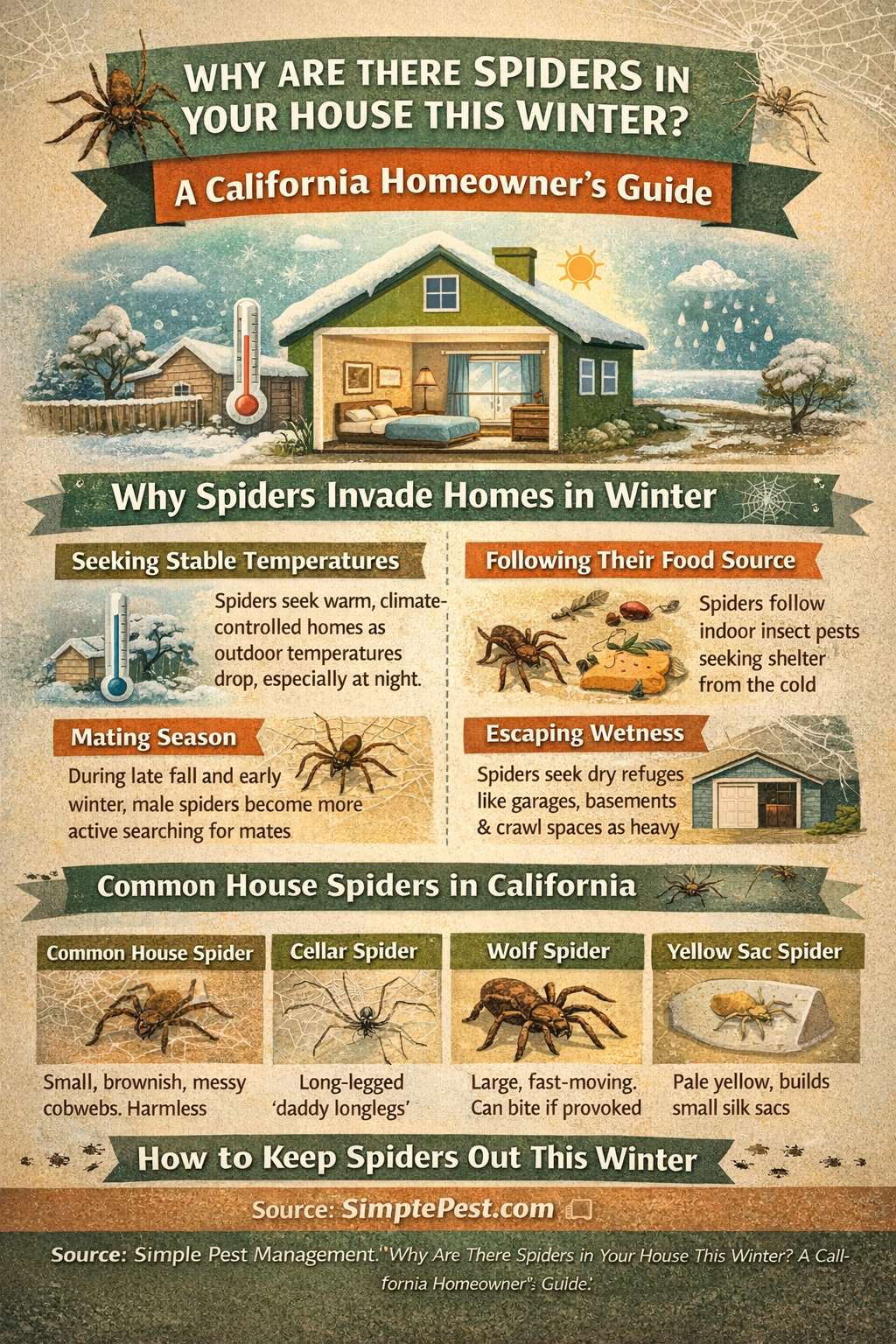
Seeking Stable Temperatures
While California winters are milder than many other states, nighttime temperatures can still drop significantly, especially in areas like Sacramento and the Sierra Nevada foothills. Spiders are cold-blooded creatures, meaning their body temperature depends on their environment. When outdoor temperatures fluctuate, your climate-controlled home becomes an attractive refuge offering consistent warmth and humidity levels.
Following Their Food Source
Where there are insects, spiders will follow. During winter, many insects seek shelter indoors to escape the cold and rain. This creates a convenient food source for spiders, who are opportunistic hunters. If you’re noticing more spiders, it might also indicate you have other pest issues that need addressing.
Mating Season Timing
For many spider species, late fall and early winter coincide with mating season. Male spiders become more active and mobile as they search for female partners, which increases the likelihood of encounters with humans. This natural behavior pattern often leads to more spider sightings inside homes during the cooler months.
Escaping Wet Conditions
California’s rainy season brings moisture that can flood spider habitats and destroy their webs. Your dry, sheltered home provides the perfect alternative to soggy outdoor conditions. Garages, basements, attics, and crawl spaces are particularly attractive entry points and hiding spots for spiders seeking refuge from the rain.
Common California House Spiders You Might Encounter
California is home to numerous spider species, but only a handful regularly make their way into our homes. Here are the most common species you’re likely to encounter during the winter months:
Common House Spider (Parasteatoda tepidariorum)
As their name suggests, these spiders are the most frequent indoor visitors. They’re small to medium-sized with brownish coloring and build messy, tangled webs in corners, windows, and undisturbed areas. While they look intimidating to some, common house spiders are harmless and actually help control other household pests.
Cellar Spider (Pholcus phalangioides)
Often called “daddy longlegs spiders” (not to be confused with harvestmen), cellar spiders have extremely long, thin legs and small bodies. They prefer dark, damp areas like basements, cellars, and garages. These spiders are completely harmless and are known for shaking vigorously in their webs when disturbed.
Wolf Spider (Lycosidae family)
Wolf spiders are larger, hairy spiders that don’t build webs. Instead, they actively hunt their prey. You might spot them running across floors or walls, especially at night. While their size can be startling, wolf spiders are not aggressive toward humans and their bite, though painful, is not medically significant.
Yellow Sac Spider (Cheiracanthium inclusum)
These pale yellow to light green spiders are common throughout California. They create small silk sacs in corners and along ceiling lines where they rest during the day. Yellow sac spiders are nocturnal hunters and can deliver a mildly painful bite if accidentally pressed against skin, but they’re not considered dangerous.
How to Identify Spiders in Your Home
Being able to identify the spiders in your home can help you determine if professional intervention is needed. Here are some key features to observe:
Size and Body Shape: Note the overall size including leg span. Is the body round, elongated, or flat? Most harmless house spiders are small to medium-sized with proportional bodies.
Color and Markings: Pay attention to the spider’s coloring and any distinctive patterns. Brown, tan, and gray are common colors for house spiders. Look for stripes, spots, or other unique markings.
Web Type: The type of web can help identify the spider. Orb weavers create classic circular webs, while house spiders make messy cobwebs. Some spiders, like wolf spiders, don’t make webs at all.
Location Found: Where you find the spider can provide identification clues. Cellar spiders prefer damp, dark areas. House spiders favor corners and window frames. Wolf spiders are often found at ground level.
Behavior: Observe how the spider moves and reacts. Does it stay in its web or roam freely? Does it move quickly or slowly? Is it active during the day or night?
Are California House Spiders Dangerous?
The good news is that the vast majority of spiders found in California homes are completely harmless to humans. Most spiders are shy, non-aggressive creatures that would rather flee than bite. When bites do occur, they’re usually the result of accidental contact, such as rolling onto a spider in bed or putting on shoes where a spider has taken shelter.
However, California is home to two medically significant spider species that homeowners should be aware of:
Black Widow Spider (Latrodectus hesperus)
The Western black widow is found throughout California. Females are shiny black with the distinctive red hourglass marking on their abdomen. They prefer dark, undisturbed areas like garages, woodpiles, and outdoor storage. While their venom is potent, black widows are not aggressive and bites are rare. Seek medical attention immediately if bitten.
Brown Recluse Spider (Loxosceles reclusa)
Despite common fears, brown recluse spiders are actually quite rare in California. They’re not native to the state, and established populations are uncommon. However, they can occasionally be transported in boxes or furniture from other regions. Brown recluses are light to medium brown with a violin-shaped marking on their back. If you suspect you’ve found one, contact a pest professional for proper identification.
If you’re unsure whether a spider in your home is dangerous, it’s always best to err on the side of caution. Take a photo if possible and contact Simple Pest Management for expert identification assistance.
Expert Prevention Tips to Keep Spiders Out This Winter
While completely eliminating spiders from your home is nearly impossible, there are many effective strategies to significantly reduce their numbers and discourage them from taking up residence:
Seal Entry Points
Inspect your home’s exterior for cracks, gaps, and openings. Pay special attention to areas around windows, doors, pipes, and utility lines. Use caulk to seal small gaps and weatherstripping around doors and windows. Install door sweeps on exterior doors and repair or replace damaged screens.
Reduce Clutter
Spiders love hiding in cluttered areas. Keep storage spaces organized and use sealed plastic containers instead of cardboard boxes. Regularly clean out garages, attics, basements, and closets. Remove piles of newspapers, magazines, and other materials that provide shelter.
Control Other Pests
Since spiders follow their food source, reducing other insect populations will make your home less attractive. Keep kitchens clean, store food properly, and address any existing pest problems. Consider switching to yellow or sodium vapor light bulbs outside, which attract fewer insects.
Regular Cleaning
Vacuum regularly, including corners, under furniture, and along baseboards. Remove webs as soon as you spot them, as this discourages spiders from staying. Dust frequently to eliminate both webs and egg sacs. Don’t forget to clean behind large appliances and furniture periodically.
Manage Outdoor Landscaping
Keep vegetation, shrubs, and trees trimmed away from your home’s exterior. Remove leaf litter, woodpiles, and debris from around your foundation. Store firewood at least 20 feet from your home and elevate it off the ground. These measures reduce spider habitats near entry points.
Control Moisture
Many spiders prefer humid environments. Use dehumidifiers in damp areas like basements and crawl spaces. Fix any leaking pipes or faucets promptly. Ensure proper ventilation in bathrooms and kitchens. Good moisture control helps deter spiders and the insects they feed on.
When to Call Professional Pest Control
While occasional spider sightings are normal, there are certain situations where professional pest control becomes necessary:
You’re seeing large numbers of spiders: If you’re encountering multiple spiders daily or finding them in nearly every room, you likely have an infestation that requires professional treatment.
You’ve identified dangerous species: If you’ve spotted black widows or suspected brown recluse spiders, don’t attempt to handle the situation yourself. Professional treatment is essential for your family’s safety.
DIY methods aren’t working: If you’ve tried prevention strategies and over-the-counter treatments without success, it’s time to bring in experts who can identify the root cause and implement effective solutions.
You’re finding egg sacs: Spider egg sacs can contain hundreds of spiderlings. If you’re discovering egg sacs around your home, professional treatment can prevent a small problem from becoming a major infestation.
Family members have allergies or phobias: Some people have severe reactions to spider bites or debilitating arachnophobia. Professional pest control provides peace of mind and ensures thorough elimination.
Trust Simple Pest Management for Spider Control in California
At Simple Pest Management, we understand that sharing your home with spiders isn’t anyone’s idea of a comfortable winter. Our experienced technicians serve homeowners throughout San Diego County, Sacramento County, Riverside County, and Placer County with safe, effective spider control solutions tailored to your specific situation.
We use integrated pest management techniques that not only eliminate current spider populations but also address the underlying conditions that attract them. Our family-friendly treatments are designed to be safe for children, pets, and the environment while delivering lasting results.
Don’t let spiders take over your home this winter. Contact Simple Pest Management today for a FREE inspection and customized treatment plan. Our friendly team is ready to help you reclaim your space and enjoy a spider-free home all season long.
Schedule Your FREE Spider Inspection Today!
Call us or visit our website to book your complimentary home inspection.
Serving San Diego, Sacramento, Riverside, and Placer Counties