

Few pests are as universally despised as the mosquito. These tiny bloodsuckers turn pleasant California evenings into itchy ordeals, transforming backyard gatherings into retreats indoors. But mosquitoes are far more than just a nuisance—they’re disease vectors capable of transmitting serious illnesses to you and your family. Understanding where mosquitoes breed, the dangers of standing water, the diseases they carry, and how to prevent their proliferation is essential knowledge for every California homeowner.
Understanding Mosquito Breeding Habits
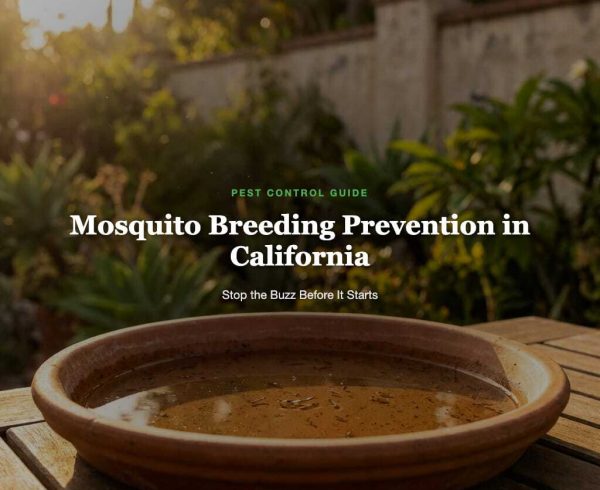
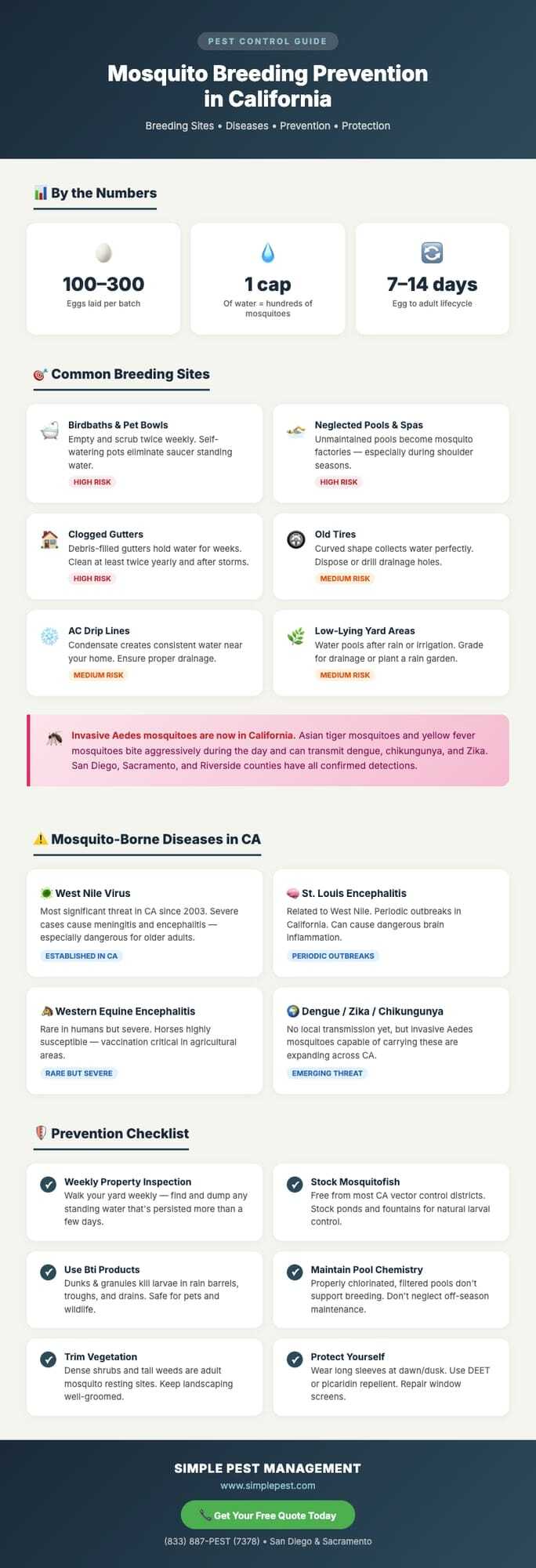
Mosquitoes have a remarkably simple breeding requirement: standing water. Female mosquitoes—the ones that bite—need just a small amount of stagnant water to lay their eggs. A bottle cap full of water can produce hundreds of mosquitoes. This means that breeding sites are often hiding in plain sight throughout California properties from San Diego to Sacramento, Riverside to Placer County.
The mosquito life cycle moves quickly in California’s warm climate. Eggs laid on standing water hatch into larvae within days. These larvae, often called wigglers, live in the water and feed on organic matter. Within a week or two, they transform into pupae and then emerge as adult mosquitoes. A single breeding site can produce generation after generation of mosquitoes throughout the warm season.
Female mosquitoes can lay 100 to 300 eggs at a time and may do so multiple times during their lifespan. A single neglected breeding site can therefore produce thousands of mosquitoes over the course of a summer. Understanding this reproductive potential underscores why eliminating breeding sites is so critical.
Common Mosquito Breeding Sites Around Your Home
Obvious Water Sources
Some mosquito breeding sites are easy to identify. Birdbaths, pet water bowls, and plant saucers are common culprits. While these serve important purposes, they require regular attention to prevent mosquito breeding. Empty and refill birdbaths and pet bowls at least twice weekly. Pour out plant saucers after watering or use self-watering pots that don’t create standing water.
Swimming pools and spas can become mosquito factories if not properly maintained. Pools that are used regularly and appropriately chlorinated don’t support mosquito breeding. However, neglected pools—especially during the shoulder seasons when they may not be in regular use—can quickly become prime breeding habitat. In Sacramento and Riverside’s hot summers, abandoned or foreclosed properties with neglected pools create significant neighborhood mosquito problems.
Decorative ponds and water features add beauty to California landscapes but require careful management. Stock ornamental ponds with mosquitofish, which are available free from many California vector control districts. Ensure fountains and waterfalls keep water moving—mosquitoes prefer still water for egg-laying.
Hidden Breeding Sites
Many mosquito breeding sites go unnoticed because they’re not obviously water-holding containers. Clogged gutters are among the worst offenders. When gutters fill with debris, they hold water that can persist for weeks, producing mosquitoes continuously. Clean gutters at least twice yearly and after major storms.
Old tires are notorious mosquito breeding sites. Their curved shape collects and holds water effectively, and the dark interior provides ideal conditions for mosquito larvae. If you have old tires on your property, dispose of them properly or drill drainage holes to prevent water accumulation.
Tarps and covers can collect rainwater in their folds and depressions. Pool covers, boat covers, and tarped equipment all create potential breeding sites after rain. Ensure covers are tightly secured and properly sloped for drainage. Regularly check for and eliminate any accumulated water.
French drains, catch basins, and drainage structures often hold standing water that’s out of sight. These require periodic inspection and may benefit from treatment with biological mosquito control products. In San Diego and coastal communities, underground drainage structures can be particularly problematic.
Structural and Landscape Issues
Low-lying areas of your yard where water pools after irrigation or rain become temporary breeding sites. Grade these areas to promote drainage or convert them to rain gardens with plants that tolerate periodic flooding and help absorb excess water.
Tree holes, bamboo stumps, and hollow fence posts can all collect water and support mosquito breeding. Fill tree holes with sand or mortar. Cut bamboo at angles so water drains rather than collects. Cap or seal hollow posts and pipes.
Air conditioning drip lines and condensate drains create consistent water sources near homes. Ensure these drain into areas that absorb water quickly or into proper drainage systems. Standing water beneath AC units is a common and often overlooked breeding site.
The Dangers of Standing Water
Standing water doesn’t just create mosquitoes—it creates ideal conditions for mosquito populations to explode. Even small amounts of stagnant water provide everything female mosquitoes need: a place to lay eggs, nutrients for larvae, and protection from predators.
California’s climate makes standing water particularly problematic. Our mild temperatures allow mosquito breeding to occur for much of the year—not just during summer. In San Diego, mosquito activity occurs nearly year-round. Even Sacramento and Placer County, with cooler winters, see extended mosquito seasons compared to other parts of the country.
Water quality actually matters less than many people assume. Mosquitoes can breed in relatively clean water as well as in polluted, nutrient-rich water. Some species prefer cleaner water, while others thrive in storm drains and neglected pools. This means that almost any standing water source is a potential breeding site.
The organic matter that accumulates in standing water—leaves, grass clippings, algae—provides food for mosquito larvae. This is why neglected water sources are often worse than fresh standing water. A birdbath filled with leaves is more productive for mosquitoes than a clean one.
Mosquito-Borne Diseases in California
California mosquitoes are more than just annoying—they can transmit serious diseases that affect humans and animals. Understanding these health risks emphasizes why mosquito prevention is so important.
West Nile Virus
West Nile virus is the most significant mosquito-borne disease threat in California. First detected in the state in 2003, it has since become established throughout California. The virus is maintained in a cycle between mosquitoes and birds, with humans and horses as incidental hosts.
Most people infected with West Nile virus experience no symptoms or only mild flu-like illness. However, a small percentage develop severe neurological disease including meningitis and encephalitis. Severe cases can be fatal, particularly in older adults and those with compromised immune systems. Sacramento, Riverside, and San Diego counties have all reported significant West Nile virus activity in recent years.
St. Louis Encephalitis
St. Louis encephalitis is closely related to West Nile virus and is transmitted by similar mosquito species. While less common than West Nile, outbreaks occur periodically in California. Like West Nile, most infections are mild, but severe cases can cause dangerous brain inflammation.
Western Equine Encephalitis
Western equine encephalitis is another viral disease transmitted by California mosquitoes. While human cases are relatively rare, the disease can be severe. Horses are particularly susceptible, making vaccination important for horse owners in mosquito-prone areas like Placer County’s agricultural regions.
Invasive Aedes Mosquitoes and New Threats
California has seen the establishment of invasive Aedes mosquito species in recent years. The Asian tiger mosquito and yellow fever mosquito are now found in many California communities. These aggressive, day-biting mosquitoes are capable of transmitting diseases including dengue, chikungunya, and Zika virus.
While local transmission of these diseases hasn’t yet occurred in California, the potential exists as these mosquito populations expand. Prevention becomes even more critical as these new vector species establish themselves. San Diego, Riverside, and Sacramento counties have all detected invasive Aedes mosquitoes.
Effective Mosquito Prevention Strategies
Source Reduction: Eliminate Breeding Sites
The most effective mosquito control strategy is eliminating breeding sites before mosquitoes can develop. Conduct weekly inspections of your property, especially after rain or irrigation. The goal is to find and eliminate any standing water that persists for more than a few days.
Create a checklist of potential breeding sites specific to your property and check them regularly:
● Empty and scrub birdbaths, pet bowls, and plant saucers twice weekly
● Clear gutters and downspouts of debris
● Maintain swimming pools with proper filtration and chlorination
● Remove or properly store items that collect water
● Fix leaky outdoor faucets and irrigation systems
● Fill low spots in the yard where water collects
Biological and Chemical Controls
For water sources that cannot be eliminated—ponds, fountains, rain barrels—biological controls offer effective solutions. Mosquitofish are voracious consumers of mosquito larvae and are available free from most California vector control districts. Stock ornamental ponds with these hardy fish for natural, ongoing control.
Bacillus thuringiensis israelensis, commonly known as Bti, is a naturally occurring bacterium that kills mosquito larvae without harming fish, wildlife, or pets. Bti products are available as dunks, granules, or bits that can be added to standing water. They provide weeks of control and are particularly useful for rain barrels, animal troughs, and drainage structures.
Methoprene and similar insect growth regulators prevent mosquito larvae from developing into adults. These products are also safe for use around fish and wildlife and can be effective for difficult-to-drain water sources.
Personal Protection Measures
While working to reduce mosquito populations, protect yourself from bites. Wear long sleeves and long pants during peak mosquito activity periods—typically dawn and dusk for most species, though invasive Aedes mosquitoes bite throughout the day.
Use EPA-registered insect repellents containing DEET, picaridin, IR3535, or oil of lemon eucalyptus. Apply according to label directions. Repellents are particularly important when engaging in outdoor activities in mosquito-prone areas.
Install or repair screens on windows and doors to keep mosquitoes out of your home. Even small tears or gaps can allow mosquitoes to enter. Consider using air conditioning when possible, as mosquitoes are less active in cooled indoor air.
Yard Management
Reducing adult mosquito resting sites helps decrease mosquito pressure around your home. Mosquitoes rest in dense vegetation, particularly during the heat of the day. Trim shrubs and bushes, eliminate tall weeds, and maintain a well-groomed landscape.
Outdoor fans can create enough air movement to make areas less hospitable to mosquitoes, which are weak fliers. Ceiling fans on porches and patios provide both cooling comfort and mosquito deterrence.
Some plants are marketed as mosquito repellents, including citronella, lavender, and marigolds. While these may have some minor deterrent effect, they don’t provide reliable protection. Don’t rely on plants alone for mosquito control.
Working with Your Community
Mosquitoes don’t respect property lines. Effective mosquito control requires neighborhood and community effort. Talk to neighbors about eliminating breeding sites on their properties. Report neglected pools and severe mosquito problems to your local vector control district.
California’s vector control districts provide valuable resources including free mosquito fish, public education, and area-wide mosquito surveillance and control. Take advantage of these services—they exist to protect public health and reduce mosquito populations throughout communities in San Diego, Sacramento, Riverside, Placer, and other California counties.
Support community efforts to eliminate mosquito breeding sites in public spaces. Abandoned properties, vacant lots, and neglected infrastructure can be significant mosquito sources that affect entire neighborhoods. Community awareness and action are essential components of effective mosquito management.