
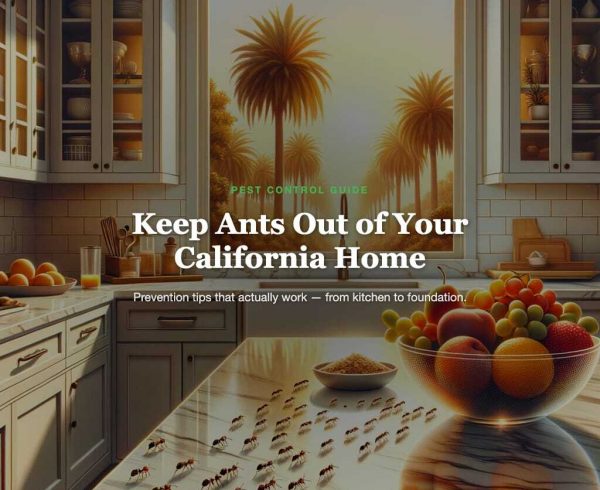

Ants are among the most persistent and frustrating pests California homeowners face. One day your kitchen is spotless; the next, a trail of tiny invaders marches across your counter toward a single crumb you didn’t even know existed. From San Diego’s coastal communities to Sacramento’s valley homes, Riverside’s inland properties to Placer County’s foothill residences, ant invasions are a universal California experience. This comprehensive guide will help you understand why ants invade, how they operate, and most importantly, how to keep them out of your home for good.
Understanding Why Ants Invade Your Home
To effectively prevent ant invasions, you must first understand what drives ants indoors. Ants are highly social insects that live in colonies ranging from a few hundred to millions of individuals. These colonies have constant, pressing needs for food, water, and in some cases, shelter. Your home provides all three, making it an irresistible target.
The Search for Food
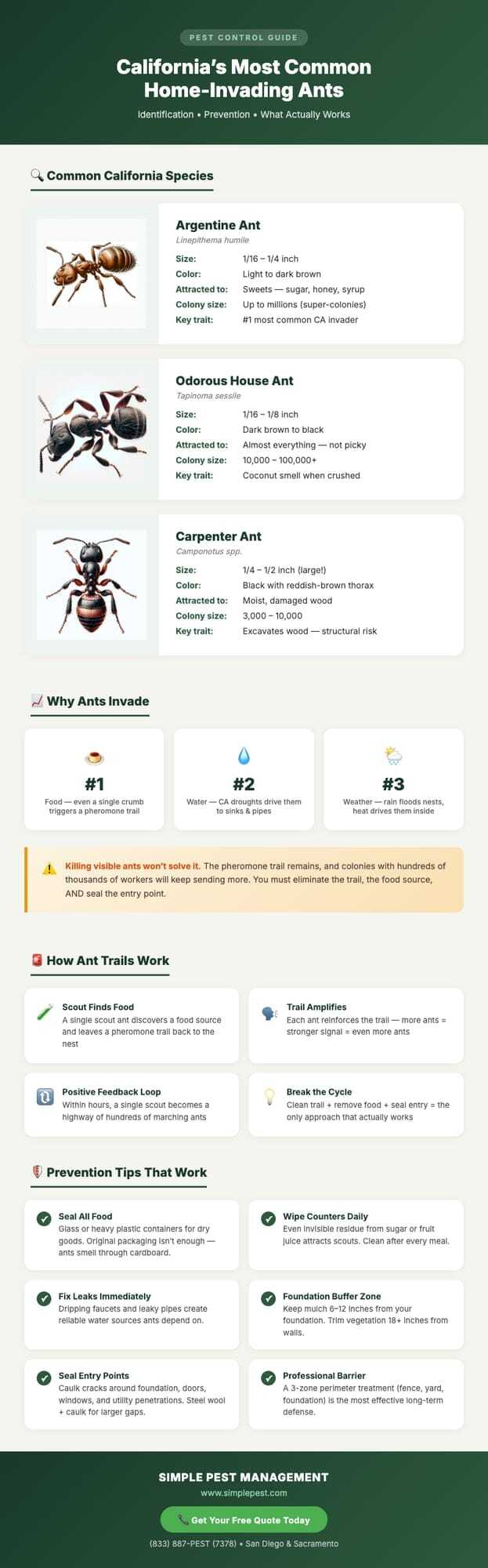
Food is the primary driver of ant invasions. Scout ants constantly patrol in search of sustenance to bring back to the colony. When a scout discovers a food source—even something as small as a drop of honey or a few cookie crumbs—she returns to the nest leaving a chemical trail of pheromones. Other workers follow this trail to the food, reinforcing it with their own pheromones as they go. Within hours, what started as a single scout becomes a highway of ants.
Different ant species have different food preferences. Argentine ants, the most common household invaders in California, have a sweet tooth and are particularly attracted to sugary substances. Grease ants prefer proteins and fats. Odorous house ants, named for the coconut-like smell they produce when crushed, will eat just about anything. Understanding what attracts the ants you’re dealing with helps in developing prevention strategies.
Water Requirements
Ants need water to survive, and during dry periods, this need drives them indoors. California’s Mediterranean climate, with its long, dry summers and periods of drought, makes water a critical attractant. Bathrooms, kitchens, and laundry rooms with their ready moisture sources become ant magnets during dry spells.
In Sacramento and Riverside, where summer temperatures regularly exceed 100 degrees, ants’ water needs intensify. Even homes with minimal food attractants can experience ant invasions when colonies are desperately seeking moisture. This is why you might find ants in bathrooms even when there’s no food present.
Weather and Environmental Pressures
Weather events frequently trigger ant invasions. Heavy rains saturate soil, flooding underground nests and forcing ants to higher ground—often directly into your home. This is particularly common in California’s rainy season, when sudden storms can send waves of ants seeking refuge indoors.
Conversely, extreme heat and drought drive ants inside seeking cooler conditions and moisture. The ants aren’t just uncomfortable—their eggs and larvae can die if conditions become too hot and dry. Your climate-controlled home offers the moderate, stable conditions that ant colonies need to thrive.
In San Diego’s coastal areas, marine layer moisture and moderate temperatures create year-round comfortable conditions for ants. In Placer County’s higher elevations, winter cold drives ants to seek warmer shelter. Understanding your local climate’s effect on ant behavior helps you anticipate and prevent invasions.
How Ant Trails Work: The Key to Control
The trails of ants you see marching through your home aren’t random wanderings—they’re sophisticated chemical highways. Understanding how these trails work is essential for effective ant control.
Pheromone Communication
Ants communicate primarily through pheromones—chemical signals that convey information to other colony members. When a foraging ant finds food, she deposits a trail pheromone as she returns to the nest. Other ants detect this pheromone with their antennae and follow it to the food source.
The trail pheromone system creates a positive feedback loop. The more ants that travel the trail successfully, the stronger the pheromone concentration becomes, attracting even more ants. This explains why ant trails seem to appear suddenly and grow rapidly—the trail-building process accelerates as more ants join.
Simply killing the ants you see rarely solves the problem. The trail remains, and more ants from the colony—which may contain hundreds of thousands of workers—will continue following it to the food source. Effective control requires eliminating both the trail and the attractant.
Trail Disruption Strategies
Cleaning ant trails with soap and water disrupts the pheromone signal, at least temporarily. However, scouts will eventually re-discover the food source and establish new trails. Trail cleaning must be combined with eliminating the food attractant and sealing entry points to be effective.
Vinegar solutions, while popular as natural cleaning agents, provide mixed results. The strong smell may temporarily mask pheromone trails, but the effect is short-lived. White vinegar can be useful as part of a cleaning regimen but shouldn’t be relied upon as a standalone ant control method.
The most effective approach is three-fold: clean the trail to remove the pheromone signal, eliminate the food source that attracted ants, and seal the entry point they used to access your home. This comprehensive approach addresses all aspects of the trail system.
Kitchen Ant Prevention: Your First Line of Defense
Kitchens are ground zero for ant invasions. The combination of food, water, and warmth makes them irresistible to foraging ants. Implementing thorough kitchen prevention measures is the single most important step you can take to keep ants out.
Food Storage Best Practices
Proper food storage denies ants access to the resources that attract them. Store all dry goods—cereals, flour, sugar, pasta, pet food—in sealed containers made of glass or heavy plastic. Original packaging, even when closed, rarely provides adequate protection. Ants can detect food odors through cardboard and thin plastic, and their tiny size allows them to find gaps in packaging that seem secure.
Pay special attention to sweet substances, which are irresistible to many California ant species. Honey jars, syrup bottles, and jam containers should be stored with their caps tightly secured. Wipe the outsides clean, as sticky residue provides a food source and a trail marker for ants. Consider storing these items in the refrigerator if ant pressure is high.
Fruit bowls are common ant attractants, especially as fruit ripens and begins to produce sweet odors. Store ripe fruit in the refrigerator or consume it promptly. If you prefer fruit at room temperature, check daily for soft spots or overripe pieces that will attract ants and fruit flies alike.
Daily Cleaning Habits
Develop daily habits that eliminate ant attractants before they draw scouts to your kitchen. Wipe countertops after food preparation and after meals. Even invisible residue from sugar, fruit juice, or grease can attract ants. Pay attention to areas around the stove, toaster, and other appliances where crumbs and spills accumulate.
Sweep or vacuum floors daily, focusing on areas under tables, along baseboards, and beneath appliances. Crumbs that fall into cracks and crevices can sustain ant activity for days. Periodic deep cleaning under the refrigerator and stove eliminates the accumulated debris that attracts pests.
Wash dishes promptly rather than leaving them in the sink. Even rinsed dishes with food residue provide ant food sources. Run the garbage disposal after each use to eliminate food waste that accumulates in the drain.
Garbage and Recycling Management
Trash cans are major ant attractants that many homeowners overlook. Use trash cans with tightly fitting lids, and empty them regularly—daily if they contain food waste. Rinse containers before placing them in recycling bins; soda cans and food jars with residue attract ants just as readily as fresh food.
Keep trash and recycling bins clean. Wipe them down regularly to remove food residue, spilled liquids, and odors. Place bins away from entry doors when possible—outdoor bins near doorways create convenient paths for ants to enter your home.
Compost bins require special attention. While composting is environmentally beneficial, poorly managed compost can become an ant magnet. Bury food scraps under brown material, maintain proper moisture levels, and locate bins away from your home’s foundation.
Sink and Water Source Management
Keep sinks dry when not in use. Wipe up standing water and fix any leaky faucets promptly. Even small drips create reliable water sources that sustain ant activity. The area around the base of the faucet and the sink drain are common ant activity sites.
Don’t overlook pet water bowls as attractants. While you need to keep your pets hydrated, place water bowls away from walls and entry points. Consider using moats—placing the water bowl inside a larger dish filled with water—to create a barrier that ants cannot cross.
Outdoor Ant Prevention: Stop Them Before They Enter
Effective ant prevention extends beyond your home’s walls. The ants invading your kitchen come from outdoor colonies, and managing conditions around your home’s exterior significantly reduces invasion pressure.
Foundation and Perimeter Management
Create a barrier zone around your home’s foundation that discourages ant activity. Remove leaf litter, mulch, and debris directly against the foundation—these materials provide shelter and moisture that ants favor. Maintain a 6-inch to 12-inch gap between mulch and your foundation.
Trim vegetation away from your home’s exterior. Branches and shrubs touching walls or roofs create bridges that ants use to access your home. Plants against the foundation also maintain higher moisture levels that attract ants and other pests. Maintain at least 18 inches of clearance between landscaping and your home.
Inspect the foundation regularly for cracks and gaps that provide entry points. Fill small cracks with caulk. For larger gaps, use a combination of steel wool and caulk, or expanding foam. Pay particular attention to areas where pipes, wires, and cables penetrate the foundation.
Entry Point Sealing
Ants can enter through incredibly small openings—any gap an ant can fit through is a potential entry point. Conduct a thorough inspection of your home’s exterior, looking for:
● Cracks in foundation walls and slabs
● Gaps around doors and windows
● Openings where utilities enter the home
● Torn or missing screens
● Gaps in siding and trim
● Spaces around exterior faucets and vents
Seal identified entry points with appropriate materials. Silicone caulk works well for most gaps. For larger openings or areas requiring flexibility, use expanding foam and trim after it cures. Ensure door sweeps and weather stripping are in good condition and create complete seals.
Outdoor Food Source Elimination
Reduce food attractants around your home’s exterior. Keep outdoor garbage cans clean and tightly covered. Clean up fallen fruit from trees promptly—rotting fruit is highly attractive to ants. If you have fruit trees, consider placing barriers around trunks to prevent ant access to ripening fruit.
Pet feeding stations outdoors require careful management. Feed pets at specific times rather than leaving food out continuously. Clean feeding areas after each use, removing any spilled food. Store pet food in sealed containers inside your garage or home.
Aphids and other plant pests produce honeydew, a sweet substance that many ant species actively cultivate. In fact, some ants protect aphid colonies like ranchers protect livestock. Managing plant pests around your home indirectly reduces ant populations by eliminating this food source.
Moisture Management
Address irrigation and drainage issues that create moist conditions attractive to ants. Adjust sprinklers so they don’t create wet areas against your foundation. Ensure gutters and downspouts direct water away from your home. Grade soil so water flows away from rather than toward your foundation.
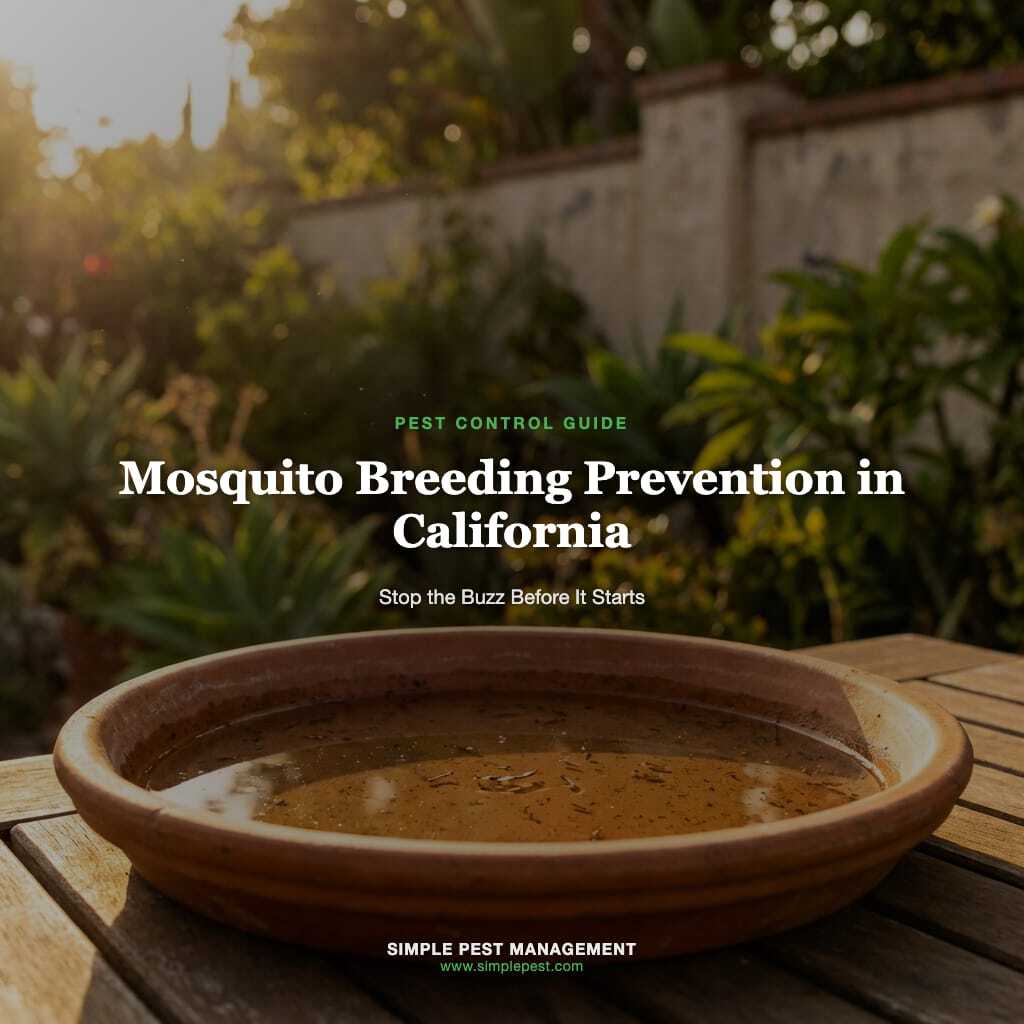
Repair leaky outdoor faucets and irrigation systems promptly. Even small drips create reliable moisture sources that ants will exploit. Standing water in plant saucers, bird baths, and low spots also attracts ants seeking water.
In California’s varied climate zones—from San Diego’s mild coast to Sacramento’s extreme summer heat, Riverside’s desert edges to Placer County’s mountain influences—moisture management needs vary. Understand your local conditions and manage moisture accordingly.