


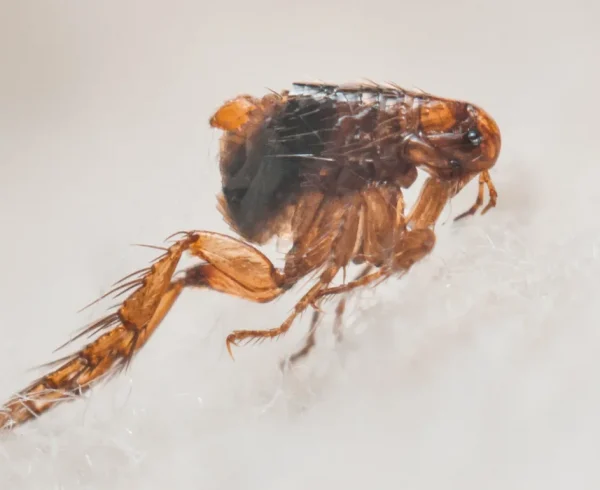


If you’ve ever noticed tiny, jumping critters in your living room or found yourself scratching mysterious bites, you may have wondered, “Can fleas live on furniture?” The short answer is yes. Fleas can infest upholstered furniture, carpets, and even cracks in hardwood floors.
Here’s everything you need to know about fleas on furniture, their life cycle, and how to tackle the problem.
Key Takeaways
- Fleas get on furniture when pets bring them, and their eggs settle into carpets and upholstery.
- Furniture provides a hiding place for flea eggs, larvae, and pupae, helping them survive and grow.
- Signs of fleas include bites, flea dirt, jumping fleas, and larvae or pupae in furniture seams.
- Removing fleas needs vacuuming, cleaning, treating pets, washing fabrics, and calling pest control for help.
How Do Fleas Get on Furniture?
Fleas don’t choose furniture as their primary habitat. They rely on an animal host to survive and reproduce. But they often find their way onto sofas, chairs, and carpets when pets with fleas jump on furniture.
Here’s how each stage of a flea’s development makes your furniture a potential hotspot for an infestation.
Female fleas lay eggs on pets, but these smooth, oval-shaped eggs easily fall off and settle into soft surfaces like carpets, pet bedding, and upholstery.
This is often the first stage of a flea problem in your home. Once the eggs hatch, larvae emerge and burrow into dark crevices, feeding on flea dirt (feces) and other organic debris hidden in furniture seams and cracks.
Larvae spin cocoons, becoming flea pupae. These are especially tricky because they can stay dormant for weeks in furniture, waiting for vibrations, warmth, or carbon dioxide to signal the presence of a host.
Furniture provides the perfect environment for pupae to remain hidden and protected.
When conditions are right, adult fleas emerge from their cocoons and jump onto a host—often your pet or even you—to take a blood meal.
They can then lay more eggs, perpetuating the flea life cycle and increasing the infestation.
Signs of a Flea Infestation
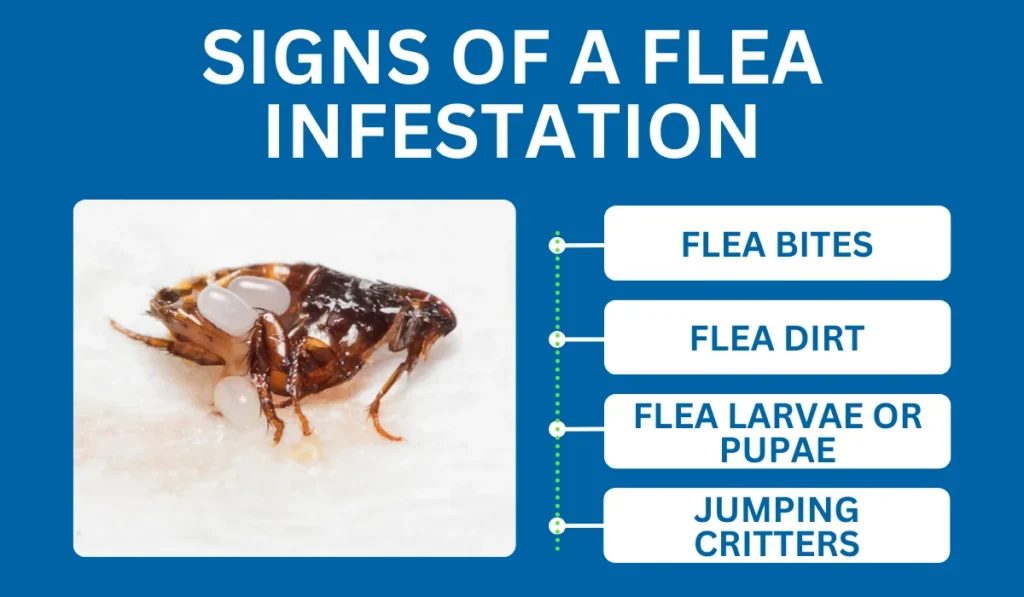
If you suspect fleas in your home, here are the signs of flea infestations to watch for:
- Flea Bites: These itchy, red welts are often found on your ankles, legs, or other exposed skin. Pets may have bites around their bellies or tails.
- Flea Dirt: Look for dark specks resembling pepper on your furniture or pet bedding. These are flea droppings, which turn red when wet.
- Flea Larvae or Pupae: These can be harder to spot but may appear in the seams of furniture or dark crevices.
- Jumping Critters: Adult fleas are small, fast, and capable of jumping long distances.
How to Get Rid of Fleas on Furniture
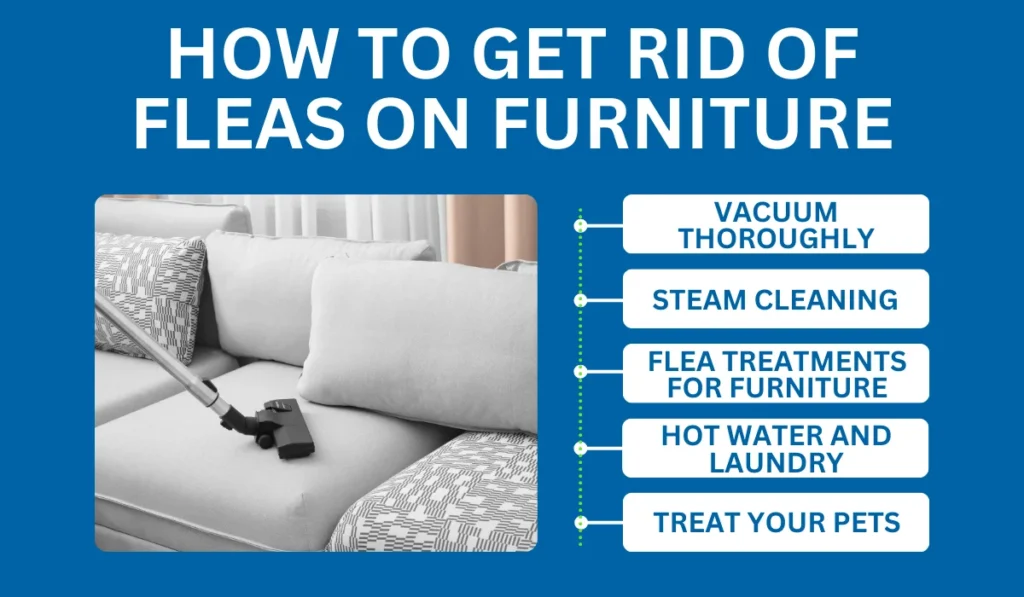
If you can’t get rid of fleas in one go, tackling the problem in your furniture may require a multi-step approach:
Vacuum Thoroughly
Use a powerful vacuum cleaner to remove flea eggs, larvae, and dirt from all furniture and floors. Be sure to clean under cushions and in crevices. Empty the vacuum bag into a sealed bag and dispose of it outside.
Steam Cleaning
High heat kills fleas in all stages of their life cycle, including eggs, larvae, and pupae. Steam clean your upholstered furniture, carpets, and pet bedding.
Flea Treatments for Furniture
Besides repellents, use a pet-safe flea spray designed for furniture to kill fleas on contact. Read labels carefully to ensure safe usage around your pets.
Hot Water and Laundry
Wash all removable fabrics, such as cushion covers and pet bedding, in hot water. The heat helps destroy fleas and their eggs.
Treat Your Pets
While home remedies can help, protect your pets with vet-approved flea collars or topical treatments to prevent them from bringing fleas back into your home.
How to Prevent Fleas Year-Round
To avoid a recurring flea problem, take these preventive measures:
- Wash pet bedding regularly and dry it at high temperatures.
- Vacuum frequently, especially in areas where pets rest, such as the living room.
- Treat your yard to reduce outdoor flea populations.
- Consider professional pest control services for long-term flea management.
When to Call Professional Flea Control
Sometimes, fleas can be tough to eliminate on your own as a homeowner.
If fleas persist despite your best efforts, contacting a professional pest control company is the most effective solution.
At Simple Pest Management, our pro exterminators can treat your furniture, carpets, and pet areas thoroughly, ensuring that all fleas—including those hiding in pupae—are eradicated.
Contact us today to schedule an inspection!