
If you’ve noticed unsettling noises in your attic or discovered droppings around your home, you might have a rat problem. These clever critters can squeeze through surprisingly small spaces to invade your living space.
Let’s explore how rats are getting into your house, the risks they bring, and, most importantly, how you can keep them out.
Key Takeaways
- Cracks, gaps, roof vents, crawl spaces, and utility openings are the most common ways rats enter homes.
- Small droppings, gnawing, nesting materials, noises, smudges, and footprints are clear signs of a rat infestation.
- Properly sealing entry points, removing food and water sources, managing trash, and trimming vegetation help prevent rats.
- Traps, bait stations, and professional pest control services are effective methods for removing rats from your home.
5 Common Ways Rats Enter Your Home
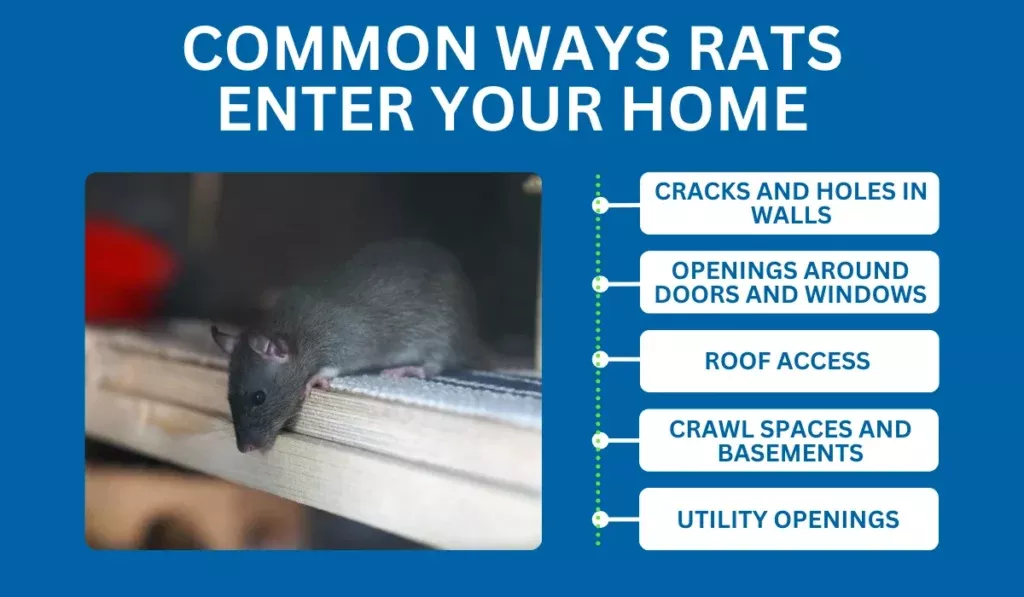
Different rat species are resourceful creatures in their ways, and their ability to find entry points is remarkable. Here are the most common ways they gain access:
1. Cracks and Holes in Walls
Rats can squeeze through holes as small as a quarter inch. Cracks in your foundation or exterior walls are prime entry points.
2. Openings Around Doors and Windows
Gaps under doors or around poorly sealed windows provide an easy way in. Weatherstripping and proper sealing can help.
3. Roof Access
Roof rats are excellent climbers. They can scale trees, utility lines, or drainpipes to access your roof and enter through vents or damaged shingles.
4. Crawl Spaces and Basements
Dark, quiet areas like crawl spaces and basements are inviting to rats. They often enter through cracks in the foundation or poorly sealed access doors.
5. Utility Openings
Rats can slip through gaps around pipes, cables, or vents. These are often overlooked areas that need sealing.
How to Identify a Rat Infestation in Your House
Before you take action, confirm the presence of rats in your home. Here are some telltale signs of a rodent infestation:
- Small, dark, pellet-shaped rat droppings near food sources or trash cans.
- Gnaw marks on wood, wires, or food packaging.
- Shredded paper, fabric, and other nesting materials in hidden areas.
- Scratching, squeaking, or scurrying sounds, especially at night.
- Greasy smudge marks or footprints along walls and floors.
How to Prevent Rats from Entering Your House
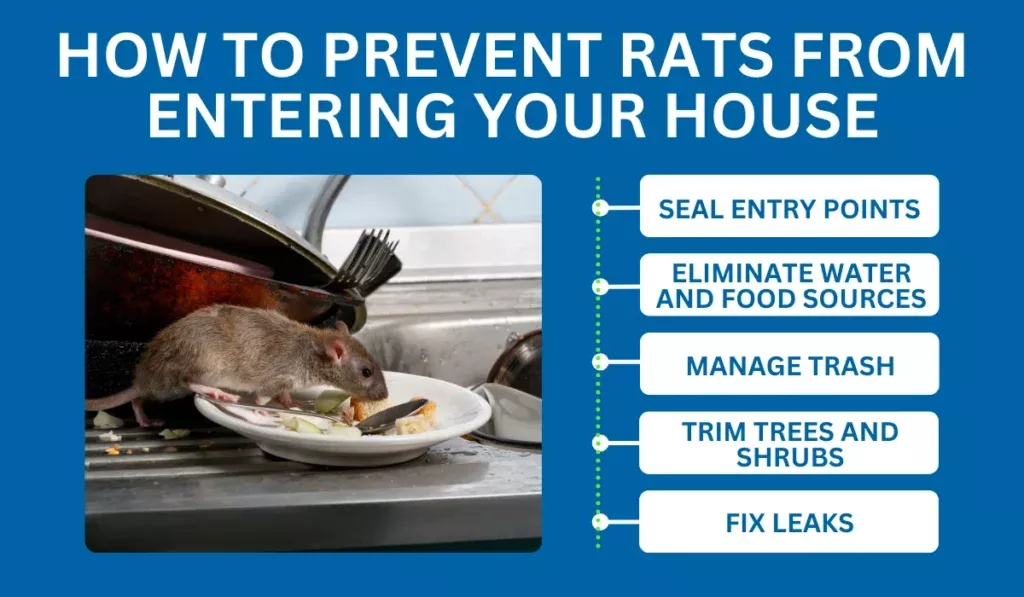
Rats aren’t just a nuisance. They pose serious health risks. Their droppings, urine, and saliva can spread diseases like hantavirus, leptospirosis, and salmonella.
Keep them out by removing what attracts them and blocking their access:
Seal Entry Points
Begin by filling small holes and cracks with steel wool or caulk to make them impenetrable.
Add weatherstripping under doors and around windows to close gaps, and cover vents and utility openings with hardware cloth to block any overlooked entryways.
Eliminate Water and Food Sources
Once your home is secure, shift your focus to food storage.
Keep all pet food in airtight containers, clean up crumbs and spills right away, and don’t forget to store food securely after meals. Cleaning water bowls also helps reduce attraction.
Manage Trash
Managing trash is equally important in keeping rats away.
Always use trash cans with tight-fitting lids, take the garbage out regularly, and keep bins far from your home’s exterior walls to discourage rats from lingering nearby.
Trim Trees and Shrubs
Outside, be sure to trim back tree branches at least three feet from your roof to remove climbing routes. Clear out dense vegetation around the exterior of your home, reducing hiding spots.
Fix Leaks
Finally, eliminate water sources that can attract rodents by repairing leaking pipes and dripping faucets promptly.
How to Get Rid of Rats Out of Your House
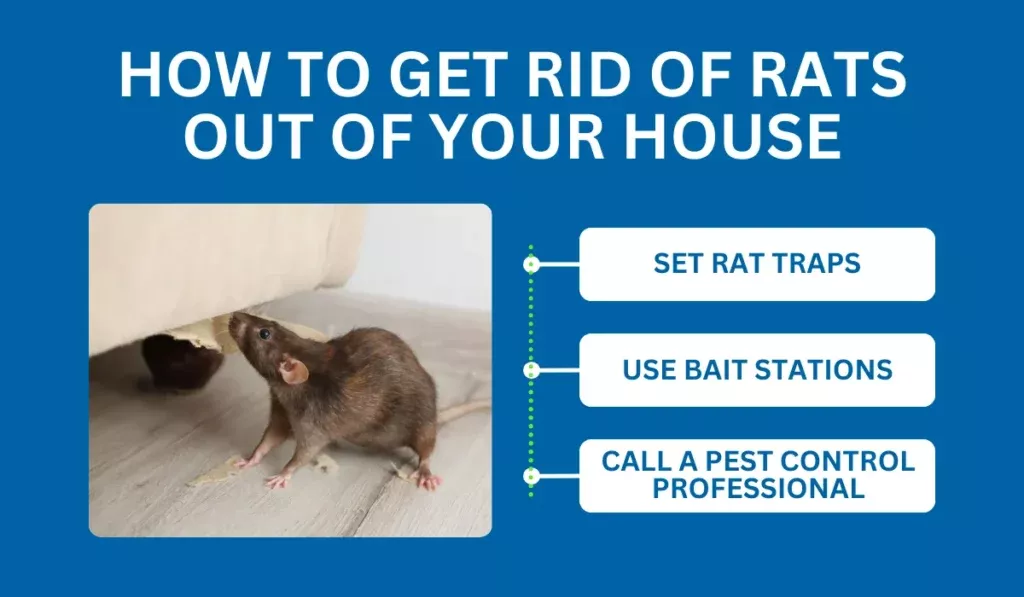
If rats have already invaded your home, here’s how to remove them without using rat poison:
Set Rat Traps
One of the most effective methods is setting snap traps, which work well when baited with peanut butter. These traps should be placed along walls or in areas where you’ve noticed signs of rat activity.
Use Bait Stations
Another option is using enclosed bait stations, which can reduce the rat population while being safer for homes with pets or children.
Call a Pest Control Professional
For severe infestations, it’s best to contact a professional pest control service.
Rat control experts can provide a thorough inspection, seal entry points, and safely remove these pests to restore your home’s safety and peace of mind.
Take Action Today With Your Rodent Problems
Rats are more than just unwelcome guests. They can compromise your health and safety. As homeowners, you can take steps to control rats. However, professional help is often necessary for lasting results.
If you need expert assistance, Simple Pest Management provides comprehensive rodent control solutions to protect your home and family.
Contact us today for a free estimate!